Humanism – the long‐standing worldview that exalts human reason and autonomy above all – emerged in the Renaissance and Enlightenment as a secular counterpoint to religious authority. Renaissance humanists championed classical learning, civic virtue and “realizing a person’s full potential … for their own good and for the good of society”. By the 20th century, secular humanism was codified in manifestos: for example, Humanist Manifesto II (1973) declares that “No deity will save us; we must save ourselves,” and boldly asserts that a “humanistic century” powered by science and technology could “control our environment, conquer poverty, [and] extend our life‐span”heritage.humanists.ukheritage.humanists.uk. Contemporary humanist institutions similarly define humanism as “a progressive philosophy of life that, without theism or other supernatural beliefs, affirms our ability and responsibility to lead ethical lives”. In short, traditional humanism is anthropocentric, materialist and rooted in an exaltation of individual autonomy, reason and science.
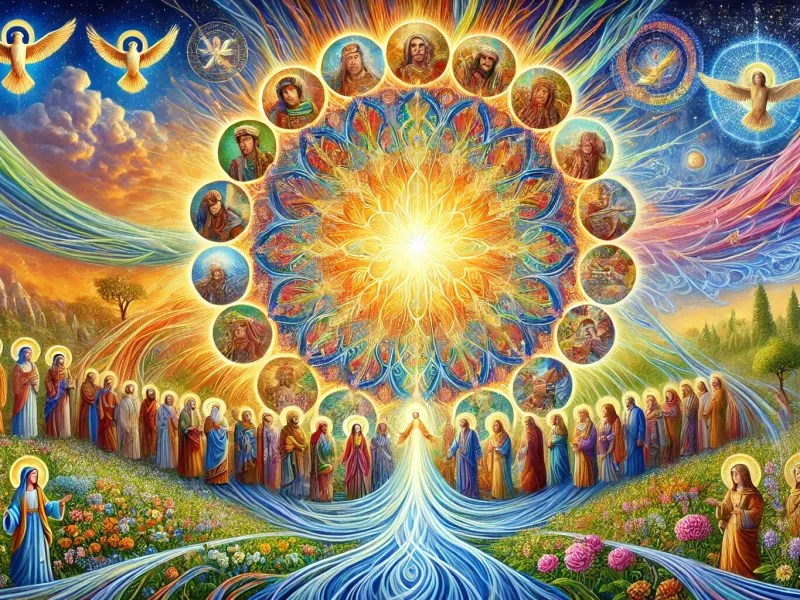
Yet many thinkers – spiritual, metaphysical and even some secular critics – argue that this human-centered paradigm has deep flaws. They warn that by insisting on a one-dimensional, purely rational mastery of nature, humanism severs us from deeper sources of meaning and connection. For example, Pope Francis’s encyclical Laudato Si’ critiques this paradigm: humanity’s technological “power” is not matched by growth in “responsibility, values and conscience,” and society now lacks “a sound ethics, a culture and spirituality genuinely capable of setting limits” to our powercruxnow.com. Francis observes that modernity’s “one-dimensional paradigm” treats nature as formless material to dominatecruxnow.com, instead of a living web of which we are part. Similarly, global ethics initiatives like the Earth Charter emphasize that our common future depends on cherishing spiritual values and mutual respect across traditions. UNESCO’s vision of global citizenship likewise invokes indigenous concepts of unity – noting that cultures from Ubuntu (“I am because we all are”) in Africa to Confucianism and Christianity have long affirmed mutual respect and interdependence. In this light, critics argue that strict secular humanism denies intrinsic aspects of human nature. As psychologist George Vaillant and others have noted, “we are hardwired for spirituality”: individual spiritual connection – not institutional religion – underpins universal human well-beingmappmagazine.commappmagazine.com. Empirical studies confirm that spiritual engagement strongly boosts mental health, life satisfaction and social cohesion, whereas neglecting it coincides with widespread alienationmappmagazine.commappmagazine.com. These perspectives suggest that humanism’s materialist individualism deprives people of soul, energy and collective meaning.
Indeed, a growing body of evidence links humanistic, individualistic values to social and psychological ills. Cross-cultural surveys find far higher rates of mental disorders and suicide in secularized Western societies than in more communal cultures. For example, one study reports that 47.4% of Americans and 39.3% of New Zealanders have a lifetime mental disorder, versus only 12.0% in Nigeriafrontiersin.org. Nigeria’s “best mental health status” despite poverty is partly attributed to social norms that view psychological suffering as a taboo, while Western cultures tend to medicalize itfrontiersin.orgfrontiersin.org. Consistently, research shows individualistic societies produce higher rates of anxiety, depression and suicide: “individualistic values are associated with more suicidal behavior and psychological distress, whereas collectivistic values [are associated] with less”. Likewise, the relentless materialism of modern life undermines mental well-being: as one review notes, “materialism has consistently been associated with mental health problems, such as depression and anxiety, and with a decline in overall wellbeing”. In contrast, communities that cultivate spiritual meaning and social bonds – what Ubuntu calls “communal blood” – show greater resiliencemappmagazine.com. These findings imply that humanism’s emphasis on self-reliance and skepticism (and its de-emphasis of community and spirit) has inadvertently fostered disconnection, meaninglessness and psychological distress.
Observable symptoms of a humanist-dominated worldview abound across society. On the psychological level, Western nations face epidemics of loneliness, suicide, addiction and depression – outcomes of atomized living and loss of purposefrontiersin.orgmappmagazine.com. Socially, hyper‐individualism and moral relativism undermine trust and solidarity, contributing to civic atomization and cultural fragmentation. Economic symptoms include an endless growth‐for‐growth’s‐sake model: constant consumption and debt accumulation erode personal fulfillment even while generating staggering inequality. Indeed, environmental collapse has become the most striking systemic symptom of anthropocentrism: UN science reports now warn that “the state of nature is deteriorating at unprecedented rates” due largely to human exploitation of ecosystems. Climate change, mass extinctions, and resource depletion – all driven by a “business-as-usual” worldview – serve as collective cries of a biosphere in spiritual distress. Even the very notion of human rights is questioned: if the Earth has no intrinsic rights under humanist law, the stage is set for “corporate personhood” and endless alienation. Critics like Harvey Sarles lament that Enlightenment humanism has produced “meaning-destroying nihilisms” – we now “live longer but don’t think much about living well,” scrambling for ends in a vacuum of shared valuesdanielharper.org.
Beyond these symptoms, virtually every major institution would require profound reorientation under a consciousness-centered paradigm. Education must shift from narrow STEM and economic training to include Global Citizenship and ethics. UNESCO already urges teaching universal values – indeed it promotes a “Global Citizenship Education” grounded in traditions of hospitality and interdependence (like Ubuntu). Curricula would embed mindfulness, environmental reverence and cultural wisdom alongside literacy and science. Healthcare would expand beyond biomedical protocols to holistic care: for example, the WHO’s Traditional Medicine Strategy recognizes the need to integrate spiritual and traditional health practices into public systems. Emotional and spiritual well-being would be considered part of public health, not left to specialization. Economics and industry would also be recalibrated: measurable success would not be GDP alone but metrics like Bhutan’s Gross National Happiness, which ranks “happiness and well-being” above mere output. (In fact, the UN General Assembly has urged nations to adopt such holistic indicators, calling happiness “a fundamental human goal”.) Industries from agriculture to technology would be realigned toward regenerative practices: renewable-energy and circular economies would replace extractive growth. Governance would be redesigned to serve the collective soul: national constitutions and laws would enshrine harmony with nature and community. Some countries already chart this path – Bolivia, for example, has constitutionally granted “Mother Earth” legal rights and declares human beings “equal to all other entities” in a spiritually inspired shifttheguardian.com. Other states might follow suit by recognizing “rights of nature” or even creating offices for community happiness and tolerance, as the UAE has done uaecabinet.aeuaecabinet.ae. In short, ministries of Consciousness (or equivalents) would join existing government structures, ensuring policies at every level reflect inner values as well as outer needs.
Toward a Consciousness-Based Model: Building these changes requires a clear transitional framework. First, a “spiritual constitution” – either at national or even global levels – could formally center spiritual values alongside civil rights. Such a charter might guarantee, for instance, freedom of inner belief while encouraging practices that reconnect individuals to collective consciousness. At the policy level, governments would institute reforms to cultivate awareness: schools would teach meditation and empathy, not just math; labor laws would mandate community time and sustainable practices; financial policy would incentivize companies that measure social and environmental impact (as in B-Corps or ethical investing) rather than profits alone. New institutions – think “Ministries of Happiness and Tolerance” or councils for Conscious Leadership – would guide this transition. We already see seeds of this: the UAE’s Cabinet Charter enshrines happiness as a “lifestyle, a government commitment”uaecabinet.ae; Earth Charter advocates envision an “integrated ethical framework for sustainability policies”; and grassroots movements call for mindfulness, interfaith dialogue, and education in universal ethics. Globally, convenings of spiritual and secular leaders (such as the Parliament of World Religions or UNESCO faith-and-science forums) could build consensus on these values. In short, the shift from humanism to consciousness could be guided by soft-law instruments (like codes of ethics, Earth Charters, and educational accords) before any hard restructuring. Over time, as new norms take hold in society and law, we would see the rise of a truly conscious civilization: one that balances human needs with the soul of all life.
Legal and Diplomatic Pathways: Internationally, recognition of this paradigm shift could proceed through existing UN and intergovernmental mechanisms. NGOs and member states could press for new UN resolutions and days of observance (analogous to the International Day of Conscience on April 5) that highlight collective awareness as integral to peace and sustainability. UNESCO, as the UN agency for education and culture, is a natural forum: it already champions themes of “shared values” and intercultural unity (e.g. declaring 2013–2022 a “Decade for Rapprochement of Cultures” to promote understanding and solidarity). Specialized bodies like the WHO or UNESCO could commission research on consciousness and well-being, potentially influencing the next revisions of medical or ethical codes. Diplomatically, proponents might seek a new international covenant or convention on “conscience rights” and ecological harmony, analogous to human rights treaties. While Article 18 of the Universal Declaration of Human Rights already guarantees freedom of thought and religion, a new protocol could assert a positive right to spiritual connection and ecological citizenship. Similarly, the success of campaigns like Gross National Happiness (backed by UNGA resolution) shows that once-innovative ideas can gain UN endorsement. In practice, a coordinated strategy would involve building alliances among countries with sympathetic traditions (e.g. Bhutan, Bolivia, India’s emphasis on Dharma, and faith-based NGOs) to push for consciousness-affirming language in UN forums. Over time, such diplomatic efforts could yield formal recognition of consciousness-based principles in declarations on education, environment and health – for instance, incorporating spiritual well-being into the UN Sustainable Development Goals or future global compacts.
Precedents and Reclassification Analogies: History offers some analogies for how societies can reconceptualize ideologies or conditions. In the psychiatric realm, Western societies once treated homosexuality as a “mental disorder” until activists and researchers achieved its removal from diagnostic manuals (the U.S. APA did so in 1973, and the WHO followed in 1990)pmc.ncbi.nlm.nih.govpmc.ncbi.nlm.nih.gov. This dramatic reframing – from pathology to a normal variant of human experience – shows that what is considered “healthy” or “disordered” is not fixed but culturally negotiated. Likewise, formerly accepted practices have been outlawed or redefined via law: e.g. colonial-era interracial marriage bans, once social norms, were swept away by civil rights reforms. More recently, some national constitutions have even granted legal status to spiritual values: Ecuador’s 2008 Constitution acknowledges “Buen Vivir” (living well in harmony with Pachamama), and Bolivia’s 2009 constitution explicitly says nature has legal rightstheguardian.com. In the realm of international law, the concept of “ecocide” (criminalizing mass environmental destruction) has gained traction, paralleling how human actions are now judged by the collective conscience. These examples illustrate that institutions can indeed re-label ideologies or worldviews over time. The parallel here is that if consciousness-based ideals achieve broad acceptance, one could envisage humanism’s status similarly being reframed – not necessarily as a crime, but as a recognized “disorder of consciousness” in the sense of a harmful paradigm. (Notably, care must be taken: Article 18 of the UDHR protects belief, so any such classification would likely be cast as a medical/ethical category rather than a direct attack on freedom of thought.) In any case, these precedents show that through scholarly discourse, legal action and cultural dialogue, collective values can shift dramatically. Just as a century ago human-centered absolutism was challenged by global human rights, today humanity can envisage a consciousness-centered future supported by law and policy.
Conclusion: Recasting secular humanism as a “disorder of consciousness” is not a literal medical diagnosis but a metaphor highlighting humanism’s shortcomings. The evidence and frameworks cited above – from biodiversity treaties to brain science – make it clear that a purely anthropocentric, materialistic worldview has produced deep fractures: in individuals’ souls, in society’s harmony, and in the health of the planet. By contrast, a consciousness-based worldview (embracing spiritual purpose, collective unity and respect for nature) offers coherent answers to today’s crises. The transition will require bold steps in philosophy, law and governance: constitutional recognition of spiritual values, education reform to include awareness and empathy, economic measures like Gross National Happiness, and international protocols that enshrine our duties to Earth and each other. Achieving this will be a monumental cultural revolution, akin to the Enlightenment itself – but in reverse: instead of “human centered,” we become universe-centered.
Key Takeaways
- Historical Roots: Humanism grew from Renaissance and Enlightenment ideals of human potential and reasonheritage.humanists.uk, reaching modern form in secular manifestos proclaiming self-relianceheritage.humanists.uk.
- Spiritual Critiques: Major spiritual thinkers (from Pope Francis to indigenous leaders) criticize humanism’s materialism and rationalism as causing alienation; documents like the Earth Charter call for cherishing spiritual values globally.
- Disconnection Evidence: Empirical research links humanist/individualist cultures to higher rates of anxiety, depression and suicidefrontiersin.org, while spiritual commitment strongly predicts well-beingmappmagazine.com.
- Societal Symptoms: A humanist paradigm has coincided with loneliness, mental illness epidemics, moral relativism and environmental collapse (IPBES reports nature loss as “unprecedented” under human pressures).
- Sectors to Recalibrate: Virtually every industry would shift under a conscious model: for example, education would integrate global ethics; health systems would embrace holistic, traditional care; economies would measure well-being (e.g. Bhutan’s GNH) alongside GDP.
- Path to Transition: Proposals include embedding spiritual principles in constitutions and policies (e.g. rights of naturetheguardian.com), creating ministries of inner well-being (as the UAE hasuaecabinet.ae), and adopting international ethics charters (e.g. Earth Charter principles).
- UN-Level Recognition: Diplomatic avenues exist – UNESCO and the UN already promote values-based education and global dialogue (e.g. the International Day of Conscience, the Culture of Peace program). Advocates could lobby for new UN declarations on collective consciousness, or leverage existing ones (like the UN’s Happiness resolution) to include spiritual criteria.
- Precedents: The redefinition of social norms is well-documented (e.g. de-pathologizing homosexuality in DSMpmc.ncbi.nlm.nih.govpmc.ncbi.nlm.nih.gov). If society builds a scientific and ethical case, it could similarly repurpose the concept of “humanism” – not to persecute believers, but to clinically recognize the worldview’s adverse effects on the psyche and society, much as we treat other collective disorders.
Together, these analyses and institutional references form a comprehensive foundation for a manifesto advocating a pivot from humanism to a higher consciousness. The envisioned framework – one grounded in empirical research, legal innovation and spiritual wisdom – provides detailed guidance for scholars, policymakers and activists who seek to reframe the debate and legislate accordingly. In doing so, it lays the groundwork for a future in which the species’ highest ideals are no longer based on ego and exploitation, but on empathy, unity and respect for the sacred web of life.
https://www.indiegogo.com/projects/4honeth-4-humans-on-new-earth-the-heavens/x/38133679#/






 SHS - Human First Blog
Leave a comment