We are mastering Resurrection now, to live immortally every day.
How Consciousness Transforms Death into Choice
Immortality is not a myth—it is a biological possibility waiting to be unlocked through the mastery of consciousness. The illusion of permanence keeps us bound to the idea that death is inevitable, but in truth, we are in a constant state of change. Every second, our cells regenerate, our thoughts shift, and our identities evolve—yet we mistake this fluidity for stability. The key to immortality lies not in defying nature, but in aligning with its deepest truth: nothing is meant to stay the same, and that very impermanence is what makes eternal life possible.
1. Cells Learn from the Mind: The Alchemy of Trauma and Longevity
The body is not a fixed machine—it is a responsive, intelligent system that mirrors the mind. Trauma, when unprocessed, accumulates as cellular memory, reinforcing cycles of decay and limitation. But when we alchemize our wounds—transmuting pain into wisdom, fear into freedom—we teach our cells a new language.
Science already confirms that epigenetic changes, neuroplasticity, and even telomere length (a marker of cellular aging) are influenced by mental and emotional states. If consciousness can accelerate aging through stress, why couldn’t it decelerate it through liberation? By mastering emotional alchemy, we reprogram our biology to resist decay, making death not an inevitability, but a choice.
Consciousness as the First Mover of Biology
Modern science tells us that the body renews itself constantly. The lining of the stomach every five days. Skin every month. Bones every decade. But renewal alone is not enough — conscious direction of that renewal is the real key.
Traumas left unprocessed calcify into the body. They alter our cellular behavior, shift hormonal patterns, age our tissues. But traumas transmuted — alchemized through conscious attention, love, and intention — become catalysts. They teach our biology something profound: we are not victims of the past, but architects of the present.
And biology listens. Epigenetics shows us that thought, environment, belief — even perception — can turn genes on and off. The mind teaches the body. The more we heal, the more our cells learn what to become. Death, then, is not inevitable — it’s a script we can revise.
2. Identity Fluidity: The Art of Eternal Reinvention
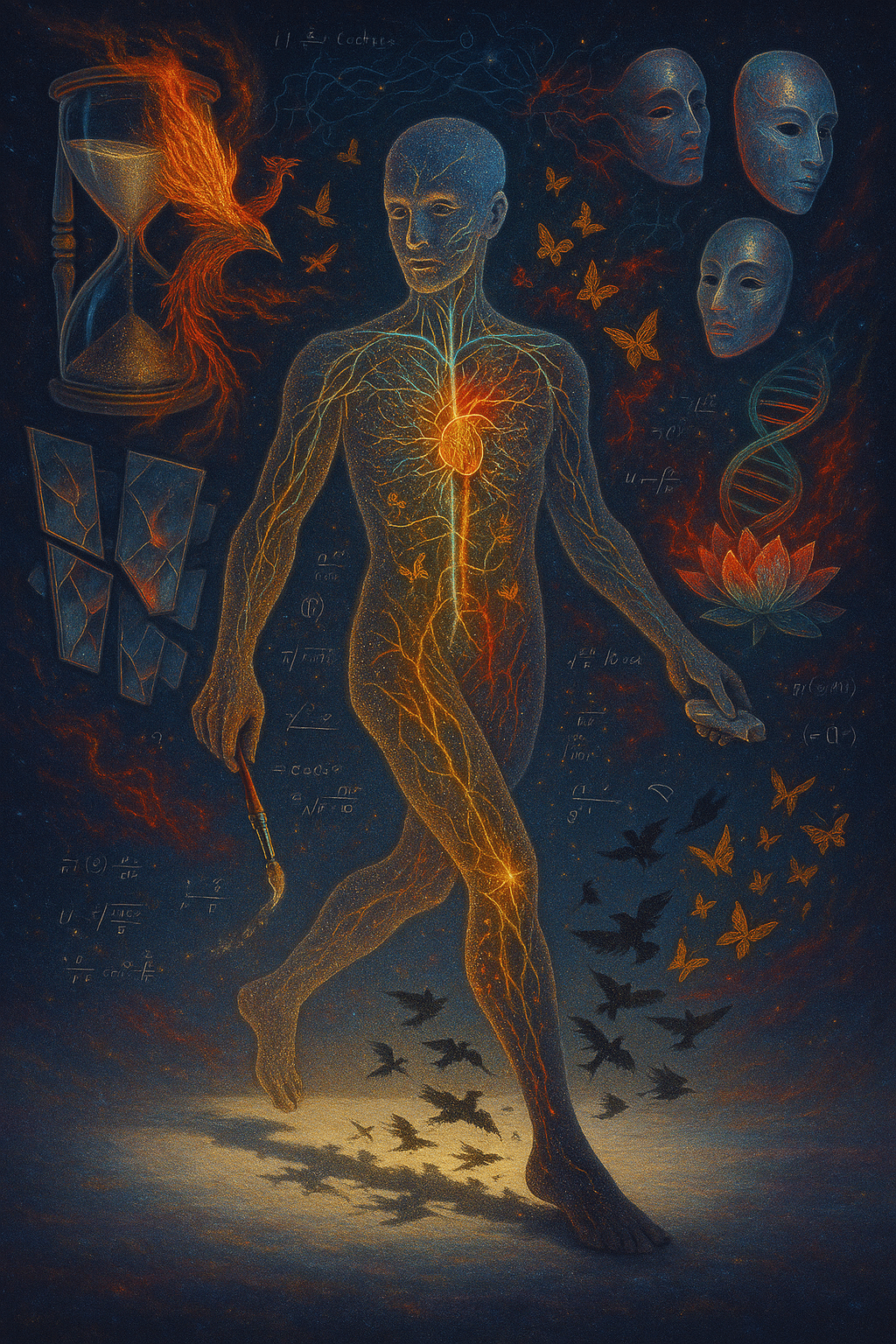
Most people live in rigid identities, clinging to a single story of “who they are.” But identity is not fixed—it is a play of consciousness. We are already shapeshifters between roles: child, lover, creator, destroyer. If we embrace this fluidity fully, why must the body be a prison? What if, instead, we made the body our eternal canvas, allowing it to carry every version of us like an expanding gallery?
The immortal mindset sees the body not as a cage, but as a canvas—a vessel to be painted and repainted endlessly. Instead of dying to experience a new self, we live into new selves. This is not reincarnation across lifetimes, but instantaneous reincarnation within one lifetime. The body becomes an instrument of infinite expression, not a limitation.
There is no need to die to experience rebirth. Rebirth is available now — at the speed of awareness.
3. Death as Illusion, Purpose as Infinite Play
A common fear of immortality is the loss of purpose—but this assumes purpose is finite. In truth, purpose is not a single destination; it is the ever-unfolding act of exploration. When we release the need for a “final meaning,” we open ourselves to infinite meanings.
Consciousness thrives on novelty. There is always more to experience, more to create, more to become. If we allow ourselves to fall in love with different experiences without attachment, life never stagnates. The immortal being does not fear boredom—they fear nothing, because they are eternal curiosity in motion.
Purpose Is a River, Not a Monument
A major argument against immortality is the fear of boredom. “What’s the point if life goes on forever?” But that question only makes sense if you believe in finite purpose — the kind you achieve, complete, and then move on from. But consciousness doesn’t operate like that. It is curious by nature, always seeking to know more of itself.
Purpose is not something to find — it is something to be. In immortality, there is no singular life mission — there are thousands, maybe millions. Each one emerges when you meet a new version of yourself or the world. Purpose is reborn as often as you are.
Nothing Is Truly the Same — The Illusion of Stasis
Stability is a useful illusion. It gives us a sense of control. But nothing is static. At the quantum level, particles are in constant dance. At the cellular level, decay and rebirth are twins. And yet, we trap ourselves in routines, fixed beliefs, cultural roles — and call that “life.”
When we learn to see the subtle shifts, the micro-deaths and resurrections happening every moment, we dissolve the illusion of finality. We ride change rather than fear it. We become change. And through that surrender, we start to live a new kind of immortality — not one that denies death, but one that makes death irrelevant.
4. The White Canvas of Immortality
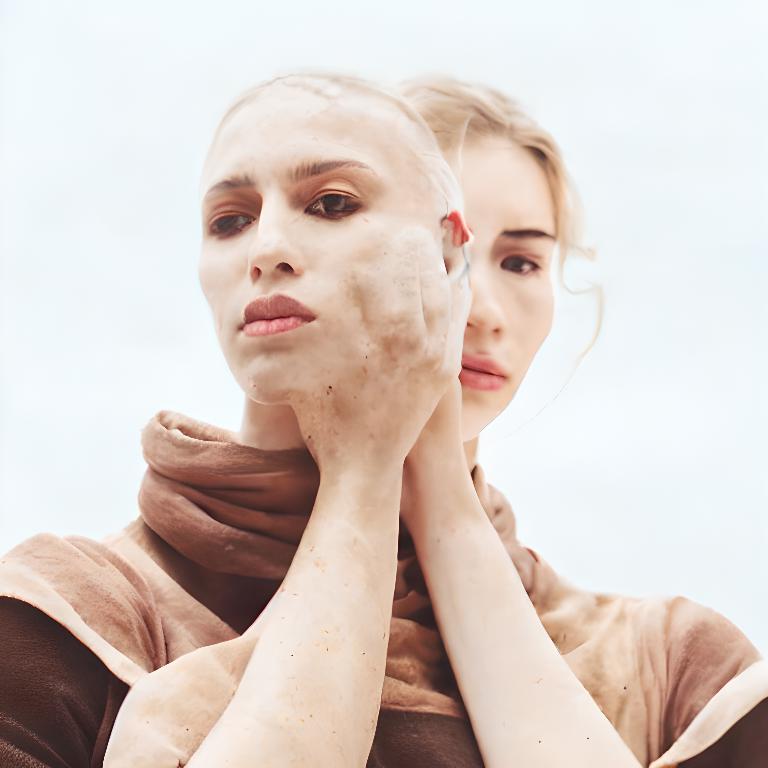
The ultimate state of immortality is not freezing oneself in time, but becoming the silent witness behind all change—the white canvas that allows itself to be painted and erased, again and again, without resistance.
Most people fear death because they cling to form. But the immortal knows: form is temporary, consciousness is eternal. By mastering detachment from any single reality, we become deathless. We are not the painting; we are the space that holds it.
Immortality as Creative Freedom
The true goal of immortal living is not to escape death, but to fall in love with experiences without clinging to them. To be a white canvas, over and over, letting new stories, new passions, new identities be painted — and then lovingly erased.
This isn’t denial of life’s cycles — it is mastery of them.
So yes, immortality is possible. Biology supports it — through regeneration, neuroplasticity, and epigenetics. But it is consciousness that activates it. By alchemizing trauma, we free our cells from learned decay. By dissolving attachment to identity, we allow eternal reinvention. By embracing evolution as sacred, we embody timelessness.
Immortality is not a destination. It is a way of being. A decision to live each day unboxed, undying, unbound.
Conclusion: Immortality Is Already Here
The science of biology supports it. The philosophy of consciousness demands it. The only thing standing between humanity and immortality is belief.
If we stop seeing death as a law and start seeing it as a habit of mind, we break the cycle. Transmute trauma. Reinvent identity. Embrace endless purpose.
Death is not the end—it is just an old program waiting to be overwritten.



 SHS - Human First Blog
Leave a comment