
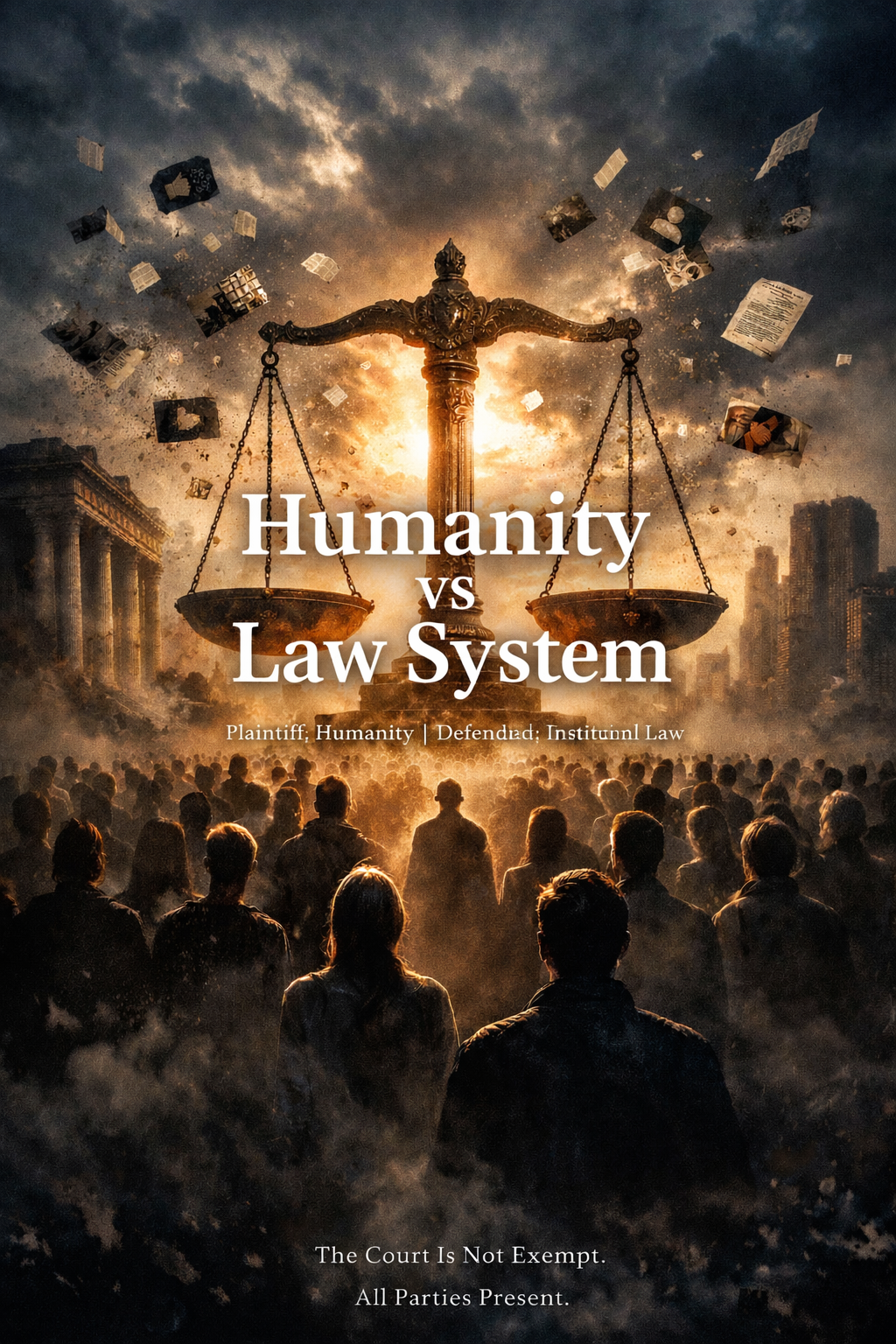
This phase is not about escalation.
It’s about re-centering responsibility.
When individuality becomes the primary shield, humanity fragments. People retreat behind roles, titles, and organisations because those structures provide comfort, distance, and plausible deniability. But comfort is not immunity, and distance does not dissolve consequence.
So we return the matter to the plaintiff.
Why Organisations Are Now Involved
The individuals contacted were contacted in their professional capacity.
They were reached via work emails.
They responded—or chose not to—while representing the organisations behind them.
Their actions and inactions occurred within the scope of their roles.
That matters.
When individuals act while wearing institutional authority, responsibility does not stop at the individual level. It extends to the organisations that empower, protect, and benefit from those roles.
This is not punitive.
It is procedural.
We are holding both the individuals and the structures they rely upon accountable to the evidence already acquired—evidence that reflects conduct, response patterns, and decision-making pathways.
Individuality vs. Institutional Accountability
Individuals often rely on organisations to buffer responsibility. Organisations often rely on individuals to absorb risk.
That loop ends here.
If an organisation chooses to protect individuals who acted with knowledge, awareness, and access—especially after formal contact—then the organisation declares its own position as defendant.
Silence becomes the decision.
Protection becomes endorsement.
And those choices are observable, both leading to defendants and accessories role in the plaintiff.
What Happens Next
The process now reveals something critical:
- Which organisations will distance themselves from the actions taken in their name
- Which organisations will attempt to shield individuals despite clear notice
- Which organisations will cooperate transparently
- Which will default to delay, diffusion, or quiet containment
Each path carries its own consequences.
This stage is not about forcing outcomes. It’s about allowing alignment—or misalignment—to surface on record.
The Question Before Them
What will they do next?
Will they:
- Acknowledge the actions taken under their banner?
- Cooperate with transparency and responsibility?
- Or attempt to protect comfort over coherence?
The answer will not be argued.
It will be documented.
And documentation is what law, time, and accountability ultimately respond to.
Closing
This is not personal.
It is not emotional.
It is not speculative.
It is a return to the plaintiff—where responsibility belongs.
What follows will not be decided by rhetoric, reputation, or avoidance, but by what organisations choose to stand behind once the record is clear.
The process continues.
She spoke for them as she didn’t reach out, it wasn’t speaking for self or myself.






Leave a Reply