
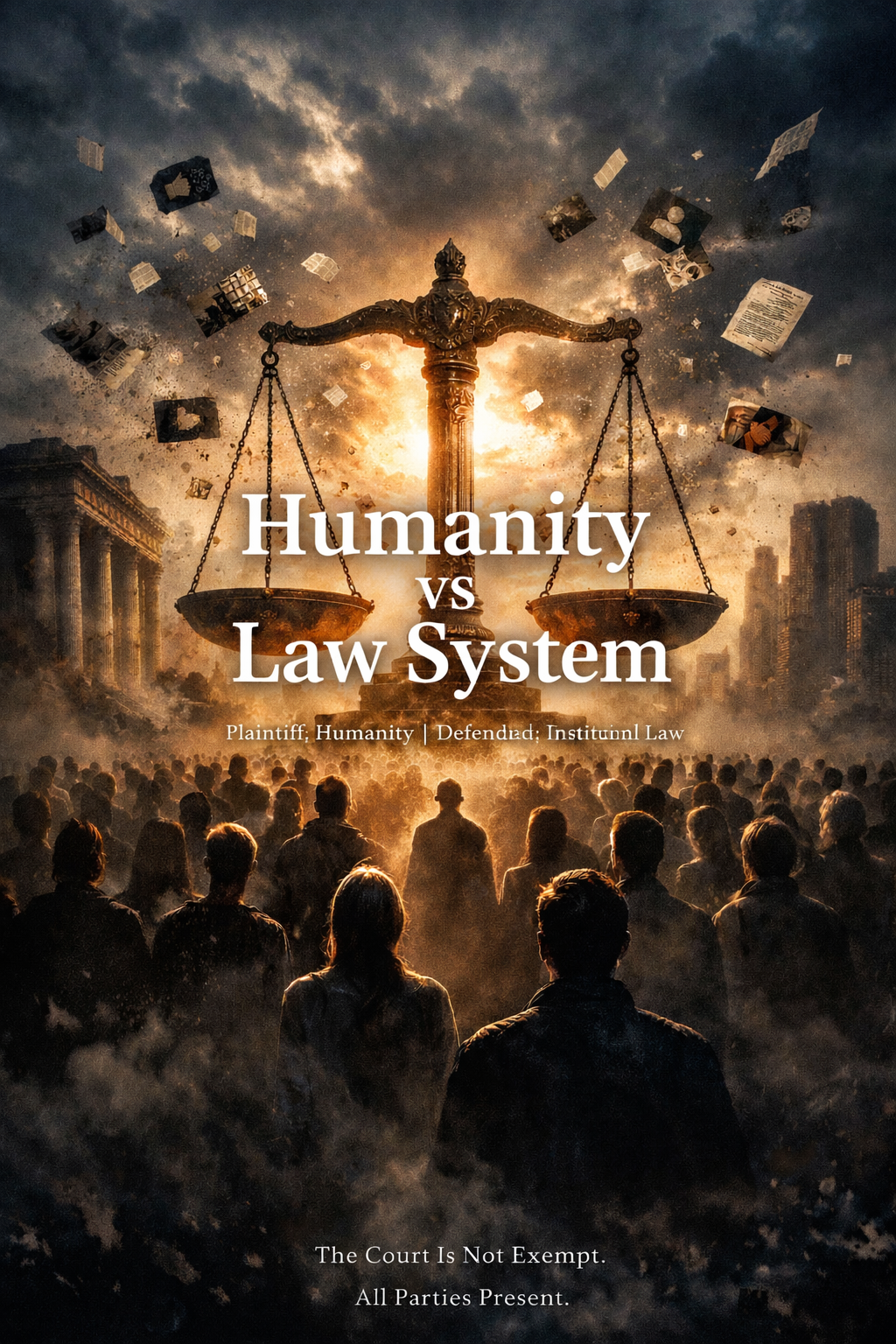
Why Waiting for Papers Is the Most Expensive Choice
There is a posture some people take when faced with something that implicates them — personally, professionally, or systemically.
They say nothing.
They read nothing.
They engage with nothing.
And privately, they reassure themselves:
“It isn’t real until I’m served.”
This is not neutrality.
It is not caution.
It is delay masquerading as safety.
And procedurally, delay is never neutral.
Law Does Not Begin at Service
It Begins at Knowledge
Service of papers is not the beginning of legal reality.
It is simply the formalisation of a reality that already exists.
Long before service:
- records exist
- timelines are forming
- conduct is accruing
- opportunities to engage are present
The law does not ask whether something feels real.
It asks whether it was knowable.
And in an age of public records, published claims, and open documentation, “I didn’t look” is not a defence. It is a decision.
Avoidance Adds Weight — Quietly
When someone avoids reading the particulars of a claim that affects them, they are not standing still.
They are moving — just in the wrong direction.
Because every moment of:
- non-engagement
- willful ignorance
- reliance on formality over substance
adds procedural weight.
Not as punishment.
As consequence.
Courts and examining bodies look closely at:
- who had access to information
- who chose not to review it
- who avoided early engagement
- who waited for compulsion
Avoidance does not pause time.
It adds to the record.
“It Doesn’t Affect Me” Is the Most Costly Assumption
Some convince themselves that because a matter concerns humanity, systems, or institutions, it somehow doesn’t reach them individually.
That is a misunderstanding of how systemic matters work.
When something affects everyone, it does not exempt anyone.
And when a claim is rooted in foundational law — the very principles a system says it operates upon — ignoring it does not preserve one’s position within that system.
It weakens it.
The Irony of Waiting
The irony is this:
Had time been spent reading the particulars of the claims,
had they been compared calmly to the foundations the law itself says it rests on,
many would already see the implications — clearly and without fear.
But avoidance replaces understanding with anxiety.
And anxiety encourages repetition.
Repetition is what deepens consequence.
This Is Not About Fear
It Is About Responsibility
No one is being chased.
No one is being ambushed.
No one is being coerced.
The materials are public.
The claims are explicit.
The invitation is open.
Silence is not condemned — it is recorded.
But choosing not to look, not to read, not to understand — while knowing something exists — is not neutrality.
It is participation through avoidance.
Systems Do Not Collapse From Challenges
They Collapse From Refusal to Engage
Every system that has ever failed did not fail because someone questioned it.
It failed because too many waited to be forced to respond.
Waiting for papers does not delay reality.
It simply ensures that when reality arrives, it does so without your voice having shaped it.
The Choice Is Still Available
There is still time to:
- read
- understand
- compare claims to foundational law
- engage without compulsion
That choice always exists — until it doesn’t.
Not because of punishment.
Because time is additive.
Final Note
Ignoring something that affects everyone does not protect the individual.
It isolates them from the very process that determines outcome.
This is not about fear.
It is about maturity.
And maturity, in law as in life, is shown by engaging before one is forced to.
That is not a warning.
It is a description.
ENTRY
let’s write a piece about thsoe who are simply waiting for the court to serve the papaers to them, saying to themselves it aint real until i see the papaers, they are inevitabaly making their situations worst as it would be time added to their setnences whichever those sentences will be, as again proving the point of not placing the better if all before theirs, avoiding something that does affect all unequivocably factual, as if they spent time reading teh particulars of claims they’d see it all and especially if they would have compared that to the foundation law says it exist opon. These poepole are digging deeper graves by the repetition and moment.




Leave a Reply