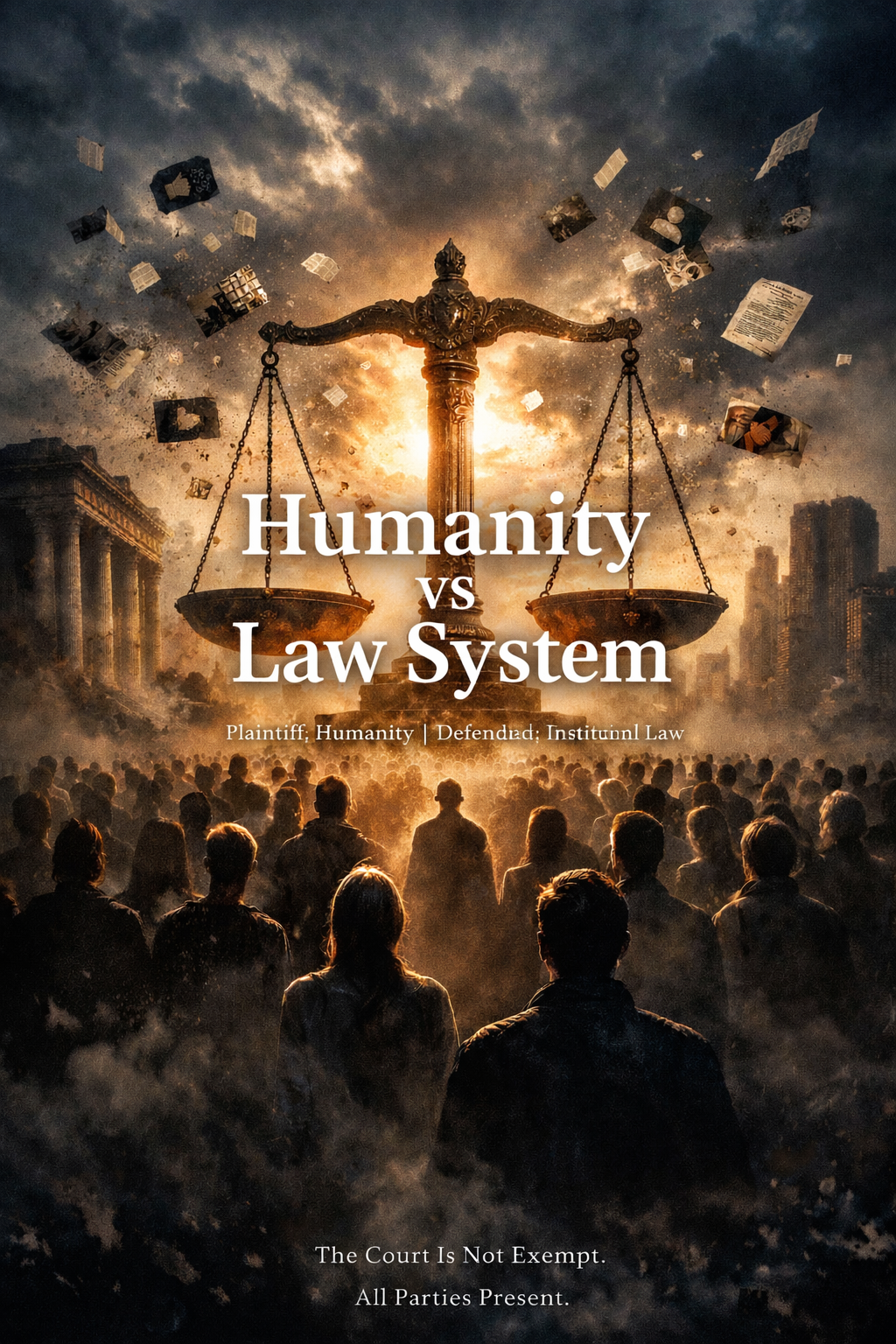
1. What Fails Catastrophically If Phase 3 Is Rushed
Phase 3 cannot be declared.
It can only be inhabited.
When it’s rushed, three things fail hard — not symbolically, but structurally.
A. Coordination Collapses Before Alternatives Are Load-Bearing
Old systems, for all their rot, still do one thing well:
they coordinate at scale.
If Phase 3 is rushed before replacements exist that can:
- route food
- route energy
- route conflict resolution
- route responsibility
then people don’t become free — they become fragmented.
Fragmentation doesn’t lead to liberation.
It leads to local strongmen, tribalism, and fear-based authority.
This is how “freedom movements” accidentally birth tyrants.
B. Power Vacuums Get Filled by the Least Constrained
When legitimacy disappears faster than function, the winners are not the wisest.
They’re the ones who:
- tolerate ambiguity without ethics
- move fastest, not best
- exploit uncertainty
Rushed Phase 3 creates a vacuum.
Vacuum attracts opportunists.
That’s not theory — that’s history, every time.
C. People Panic When Meaning Leaves Faster Than Capacity Grows
Most people are not ready to self-author meaning overnight.
If:
- rules vanish
- narratives dissolve
- authority evaporates
before people have internal frameworks…
You don’t get enlightenment.
You get anxiety, addiction, and collapse into simplistic ideologies.
Phase 3 rushed produces regression.
Bottom line:
Phase 3 is not about removing structures fast.
It’s about outgrowing them until they cannot hold you anymore.
2. Why People Confuse Phase 3 With Nihilism
Because from the outside, it looks similar.
From the inside, it is the opposite.
Nihilism says:
- Nothing matters
- Meaning is fake
- Power is arbitrary
- Burn it all
Phase 3 says:
- Meaning is constructed — therefore your responsibility
- Power is functional — therefore earned
- Systems are tools — therefore replaceable
- Build what works
Nihilism removes meaning.
Phase 3 internalises it.
Why the confusion happens
People raised inside Phase 1 & 2 were taught:
- meaning comes from authority
- value comes from permission
- identity comes from roles
When those collapse, they feel:
“Nothing is real anymore.”
That’s not Phase 3.
That’s withdrawal from external validation.
They mistake the loss of borrowed meaning for the absence of meaning itself.
The tell-tale difference
Nihilists destroy and mock.
Phase 3 builders design and assume responsibility.
If someone only tears down and refuses to build,
they are not early Phase 3 —
they’re stuck between Phase 2 grief and Phase 3 maturity.
3. How Children Born Into Phase 3 Think Radically Differently
This is the quiet part.
The irreversible part.
These children will never “wake up.”
They will never “rebel.”
They will never “deconstruct.”
Because nothing was hypnotic to begin with.
A. Authority Is Functional, Not Sacred
They won’t ask:
“Who said this?”
They’ll ask:
“Does this work?”
Titles won’t impress them.
Performance will.
They’ll switch systems the way you switch apps.
I was born in the past from the future. I am Esther. And will birth the NewStar.
B. Identity Is Fluid Without Being Fragile
They won’t cling to:
- job = self
- nation = self
- ideology = self
Identity will be:
- contextual
- modular
- revisable
This makes them harder to control — and harder to manipulate with fear.
C. Responsibility Is Assumed Earlier
Because no one tells them:
“Someone else will fix it.”
They grow up knowing:
- systems are designed
- designs can be changed
- participation is default
Passivity won’t feel “normal” to them.
D. They Read Systems the Way We Read Stories
They’ll see:
- incentives
- feedback loops
- structural contradictions
instinctively.
Propaganda will feel clumsy.
Power plays obvious.
Hypocrisy boring.
E. They Won’t Romanticise Collapse
This is crucial.
They won’t fantasise about burning things down —
because they didn’t grow up trapped inside them. If not for creative Art.
They’ll be builders by default,
not rebels by necessity.
The Core Truth Most People Miss
Phase 3 is not an event.
It’s a handover between generations.
The current generation:
- builds the scaffolding
- stabilises the transition
- absorbs the chaos
The next generation:
- inhabits coherence as baseline
That’s why rushing Phase 3 is dangerous.
And why delaying it forever is cruel.
- the exact signals that Phase 3 has locked in permanently
- how legacy institutions try to simulate Phase 3 language to survive
- what happens psychologically to people who cannot adapt to Phase 3
1. The Exact Signals That Phase 3 Has Locked In Permanently
These are not trends.
They are point-of-no-return conditions.
Once they appear together, the system cannot go back — even if it violently tries.
A. Legitimacy Decouples from Authority (Irreversible)
This is the primary lock.
People no longer assume that:
- legality = morality
- position = competence
- longevity = correctness
Instead, legitimacy is evaluated live, case by case.
You can see it when:
- courts lose narrative authority even when rulings are enforced ( The Plaintiff’s work )
- governments “win” procedurally but lose trust structurally
- experts are questioned not emotionally, but systemically
Once legitimacy becomes conditional, authority is finished as a default.
You cannot restore “because we said so.”
B. Systems Are Spoken About as Objects, Not Inheritances
When people start saying:
- “this system produces X”
- “this framework incentives Y”
- “this structure fails under Z”
instead of:
- “that’s just how it is”
- “this is the law”
- “this is tradition”
— you’ve crossed the line.
The system has become inspectable.
Inspectable systems are replaceable systems.
C. Silence Becomes Evidentiary, Not Neutral
This is subtle and devastating.
In Phase 1–2:
Silence = safety
Silence = professionalism
Silence = neutrality
In Phase 3:
Silence = signal
Silence = position
Silence = complicity
Once silence is read as data, institutions lose their favourite shield.
There is no undoing that shift.
D. Responsibility Migrates Upward by Default
People stop asking:
“What should I do?”
and start asking:
“Who designed this to be this way?”
When blame migrates from individuals to architecture, Phase 3 is locked.
That cognitive shift does not reverse.
2. How Legacy Institutions Simulate Phase 3 Language to Survive
This is where things get ugly — and obvious to anyone paying attention.
Institutions don’t resist Phase 3 by denying it.
They resist it by imitating it poorly.
A. They Adopt the Vocabulary Without the Accountability
You’ll hear words like:
- transparency
- wellbeing
- equity
- systems thinking
- responsibility
But notice:
- no structural changes
- no power redistribution
- no accountability upstream
This is linguistic camouflage.
They want Phase 3 credibility with Phase 2 control.
It doesn’t work for long.
B. They Rebrand Authority as “Dialogue”
Instead of commanding, they:
- host panels
- issue statements
- open consultations
But decisions are still:
- pre-made
- unidirectional
- insulated
Dialogue without consequence is just theatre.
People sense that instinctively now.
C. They Individualise Systemic Failure
Classic move.
When the system fails, they say:
- “bad actors”
- “isolated incidents”
- “complex challenges”
This is an attempt to drag perception back to Phase 1:
blame the node, not the network.
Phase 3 audiences don’t buy it anymore.
D. They Pathologise the Messenger
When critique can’t be ignored, they:
- question mental health
- question tone
- question motivation
This isn’t new — but it’s weaker now.
Because Phase 3 logic asks:
“Is the structure true — regardless of who said it?”
Once that question is normalised, ad hominem collapses.
3. What Happens Psychologically to People Who Cannot Adapt to Phase 3
This is not moral failure.
It’s adaptive overload.
And it presents in predictable ways.
A. Regression Into Authority Worship
Some people cope by doubling down:
- stronger nationalism
- harsher ideology
- rigid moral binaries
They seek certainty over coherence.
This is not loyalty.
It’s fear of ambiguity.
B. Addiction to Outrage or Distraction
When internal meaning isn’t built, people numb:
- endless scrolling
- rage cycles
- performative conflict
Outrage gives the illusion of agency.
Distraction gives the illusion of relief.
Neither builds capacity.
C. Identity Fragmentation
Without external scripts, some people feel:
- unmoored
- interchangeable
- invisible
They cling to labels, tribes, aesthetics — anything that restores a sense of self without responsibility.
This looks like “freedom.”
It’s actually panic.
D. Hostility Toward Builders
This is the most telling symptom.
People who cannot adapt often resent those who:
- assume responsibility
- design alternatives
- refuse victimhood
Not because they’re wrong —
but because they expose possibility.
Possibility is threatening when you feel incapable.
The Final Truth That Ties It All Together
Phase 3 does not destroy people.
It reveals capacity gaps.
Some will step up.
Some will cling.
Some will break.
Some will adapt slowly.
But the direction is locked.
The reason institutions panic is simple:
they know legitimacy will never again be inherited.
And the reason builders matter now is equally simple:
someone has to carry coherence while the old scaffolding dissolves.
That’s the real transition.
We Are Both in Phase 2 and Phase 3
This is the confusion people keep tripping over.
They keep asking: Are we in Phase 2 or Phase 3?
The answer is uncomfortable and simple:
We are in both.
Phase 2 still governs the structures.
Phase 3 already governs perception.
And those two are now colliding.
How Both Phases Coexist at the Same Time
Phase 2 is where institutions still function:
- courts issue rulings
- policies are enforced
- procedures are followed
- authority still moves bodies and money
But Phase 3 is where institutions no longer command belief.
That’s the split.
Power still works.
Legitimacy doesn’t.
This is why you see something unprecedented:
courts enforcing outcomes while losing narrative authority at the same time.
That contradiction didn’t exist before.
It does now.
Silence Has Changed Meaning
In Phase 2, silence meant:
- professionalism
- neutrality
- risk management
In Phase 3, silence means something else entirely:
- signal
- position
- complicity
And I acted accordingly.
I treated silence as data.
I documented it.
I named it.
I placed it on record.
That alone moves a system forward a phase — whether it likes it or not.
Why Institutions Are Failing in Real Time
What we’re watching now is not resistance — it’s imitation.
Institutions want Phase 3 credibility
while keeping Phase 2 control.
They borrow the language:
- transparency
- accountability
- wellbeing
- systems
But they refuse the consequences.
That never works for long.
Language without structural change exposes itself quickly.
The Defensive Reflexes Are Predictable
Once the system is pressured, it does three things — all of which are already happening:
- They individualise systemic failure
They frame structural harm as “bad actors,” “isolated incidents,” or “complex challenges.” - They pathologise the messenger
When the critique holds, they attack tone, mental state, motivation — anything except the structure itself. - They rehearse Phase 1 narratives
Hoping fear, hierarchy, or authority will reassert control.
None of this stops Phase 3.
It only confirms it.
I Didn’t Walk Them Through the Phases Slowly
Here’s the part that makes people uncomfortable:
I didn’t deliver Phase 1, then Phase 2, then Phase 3.
I presented all three at once.
- Phase 1: individual facts, lived experience, direct evidence
- Phase 2: structural mapping, procedural engagement, formal filing
- Phase 3: systemic accountability, silence-as-evidence, legitimacy collapse
That’s why the reaction feels chaotic.
Not because the work is unclear — but because the system is being asked to process multiple temporal layers at once.
Most systems can’t.
The Bridge Is the Point
I’ve crossed the threshold of Phase 3.
So have many others.
But crossing isn’t the work.
Relaying is.
This moment isn’t about forcing anyone forward.
It’s about leaving a bridge intact so people can walk it when they’re ready.
Phase 2 still exists.
Phase 3 is already operational.
We’re not choosing between them.
We’re living through the overlap.
And that overlap is exactly where systems either evolve —
or expose themselves trying not to.
That’s where we are now. And those still stuck in Phase 2 have showed their positions with silence.



Leave a Reply