Because collapse no longer arrives as an event.
It arrives as normality.
The defining feature of this moment is not crisis — it is familiarity with crisis. People are no longer shocked by instability; they are trained to manage it privately while institutions continue publicly as if continuity still exists.
That is the danger.
We are living in a phase where:
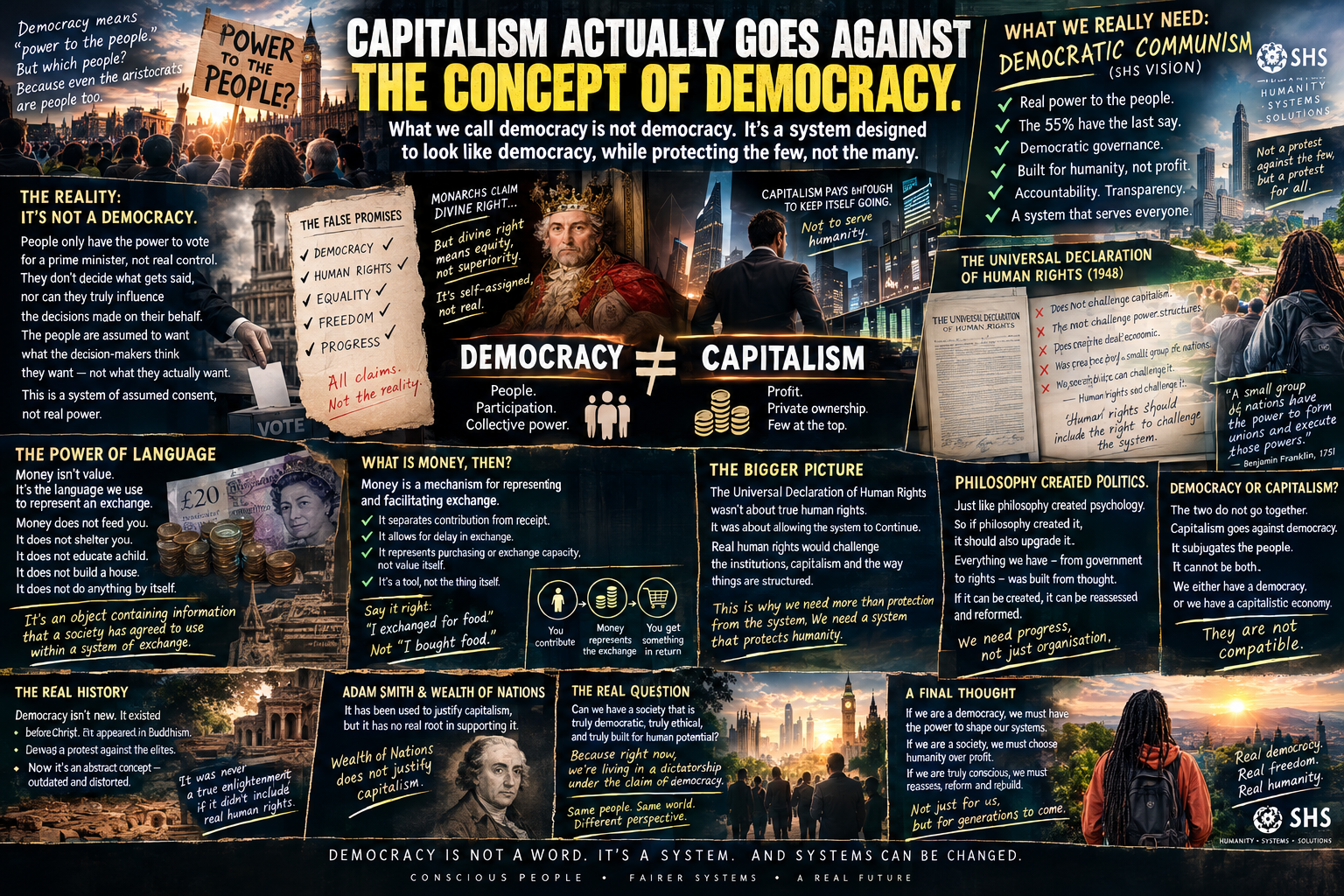
- democratic language persists while democratic power contracts
- economic participation is preached while economic access narrows
- technological acceleration is celebrated while human coherence erodes
- and political leadership focuses on optics because substance has become too expensive to maintain
This is not sudden failure.
It is delayed accountability finally reaching visibility.
The Illusion That Time Is Still on Our Side
What distinguishes now from previous eras is not the presence of instability — history has always known instability — but the compression of consequence.
Decisions once took generations to reveal harm.
Now they surface within years, sometimes months.
Systems designed for gradual correction are facing immediate feedback, and they are structurally incapable of responding at that speed. So they default to delay, distraction, and deflection.
That is not governance.
That is preservation.
The Gap Between Power and Reality Has Become Observable
For the first time, large portions of the population can see the mismatch:
- policies that no longer reflect lived conditions
- leaders who speak certainty without comprehension
- institutions enforcing authority without legitimacy
- and futures being negotiated without those who must inhabit them
This gap is no longer abstract.
It shows up in housing, healthcare, education, mental health, migration, climate response, and generational trust.
When people stop believing that the system can correct itself, they don’t immediately revolt.
They withdraw.
And withdrawal is the precondition to collapse.
Why Traditional Leadership Cannot Repair This Moment
Not because individuals lack intelligence or intent — but because the frameworks they operate within were built for a different era.
They assume:
- slower information flows
- longer patience thresholds
- narrower participation
- and a public willing to wait
None of those assumptions hold.
So leadership now faces a choice it has been postponing:
Either
- evolve the system to match current reality
or
- continue performing stability while legitimacy drains out beneath it
Most institutions choose performance — because evolution threatens those who benefit from the existing order.
That is why new leadership does not emerge from within the system by default.
It emerges in response to its refusal to adapt.
Why This Moment Requires a Different Kind of Authority
What is required now is not louder ideology, stronger branding, or harsher enforcement.
It is interpretive authority — the ability to name what is happening without collapsing into panic or denial.
Authority that:
- understands systems as living structures, not sacred relics
- treats education as infrastructure, not messaging
- recognises human capacity as a strategic resource, not a liability
- and places long-term coherence above short-term control
This is not radical.
It is functional.
Why Delay Is the Most Dangerous Option
The cost of waiting is no longer neutral.
Every year of avoidance:
- transfers instability downward
- concentrates power upward
- and leaves fewer corrective options available
At a certain point, reform becomes impossible not because people didn’t care — but because the window closed.
“Why now?” is not a rhetorical question.
It is the moment when:
- systems have exhausted credibility
- people have exhausted patience
- and the future has begun arriving faster than governance can process
Closing
This is not the beginning of something new.
It is the last responsible moment to intervene before inevitability replaces choice.
Leadership that emerges now does not do so because it wants power.
It does so because power left unattended has already begun to fracture the ground beneath us.
The question is no longer whether change will come.
It is whether it will be guided, or suffered.
And that is why now matters.




Leave a Reply