
One of the thoughts I keep returning to is that there is a difference between living a path and building a path. A person can embody something extraordinary, become an example, demonstrate a possibility, and live so intensely that others are forced to confront themselves through the reflection. That is one form of prophecy. The prophecy is the life itself. The person says, “Watch me,” and the life becomes the message. The outcome becomes the evidence. The path becomes visible through embodiment.
There is value in that, but there is also limitation. If the path remains inside the individual, then the field still has to figure out how to reproduce what it witnessed. The example exists, but the infrastructure does not. The possibility exists, but the system does not. The proof exists, but the translation does not.
This is where I make the distinction between prophesying yourself and building a future. When you prophesy yourself, of course you will also prophesy things that happen in your field, because you are part of the field that is experiencing those events. You are the lens of observation inside that field. You are not standing outside existence looking down with perfect separation; you are inside the movement, observing the movement through the position you occupy within it.
So yes, you will see things coming. You will feel the pressure before the eruption. You will notice the characters forming. You will recognise what is about to collide, repeat, expose, collapse, or reveal itself. But what you are often prophesying is your role inside the event, your relationship to the event, your position within the unfolding pattern. You are speaking from the lens you occupy. You are naming what the event looks like through your place in the field.
That matters because it stops prophecy from becoming inflated into false ownership. Not everyone who sees an event is creating the entire event. Some are creating their role within it. Some are observing from a particular angle. Some are receiving the event through their own life, their own body, their own work, their own assignment, their own field. Their prophecy may be accurate, but it may be accurate to their position rather than total to the whole.
This is where I know exactly what I mean when I say what I do. I understand my role because I am building the role. I am building the position. I am building the company. I am building the system that gives my role continuity beyond me. So when I speak about the future, I am not only observing what may happen in my field; I am also constructing an infrastructure that can receive, hold, and extend what I am seeing.
That is the difference.
From another perspective, someone else may not have the same role. They may be speaking from the observer role. They may be witnessing an event they are not building. They may see the larger pattern, but their contribution is not the whole architecture. They are creating an event that filters into the larger event, while I am building a system designed to hold the larger event as a whole.
This does not make their lens useless. It makes it specific.
Every person who pays attention to their own field will begin to see what they are likely to experience. That is not magic in the childish sense. That is pattern recognition. That is field awareness. If you observe your relationships, your repetitions, your pressures, your instincts, your timings, your opportunities, your resistances, your recurring characters, your bodily signals, and your emotional weather closely enough, your future will stop looking random. You will begin to see the shape of what is arriving because you are already living inside the conditions producing it.
But seeing your field is not the same as governing the whole field.
That is why the role matters.
A prophet who only prophesies himself may still become accurate because his life is inside a wider pattern. Others may fall into the prophecy because they happen to enter the field of the person carrying it. The person sees what happens around them because they are the centre of observation in their own experience. But if the prophecy does not become a system, if it does not become education, governance, structure, method, inheritance, training, accountability, and continuity, then the field may witness the event without learning how to reproduce the wisdom from it.
That is what I refuse.
I do not only want to walk the path. I want to leave maps. I do not only want to demonstrate a possibility. I want to build conditions that make the possibility easier for others to reach. I do not only want to embody a truth. I want to understand the mechanisms beneath it: the psychology, the biology, the governance, the education, the accountability, the culture, the relationships, and the systems that either support or suppress its emergence.
In that sense, I am using my own life as the laboratory, but I am not ending the work at myself. My path becomes evidence, my challenges become data, my development becomes observation, my victories and failures become part of the archive, and my field becomes part of the study. I am prophesying through my own life, but I am also observing the wider field while doing it.
I am not only asking, “What is happening to me?” I am asking, “What does this reveal about humanity?” What system would have helped here? What educational pillar is missing? What accountability mechanism is absent? What language does not yet exist? What structure could prevent this pattern from repeating?
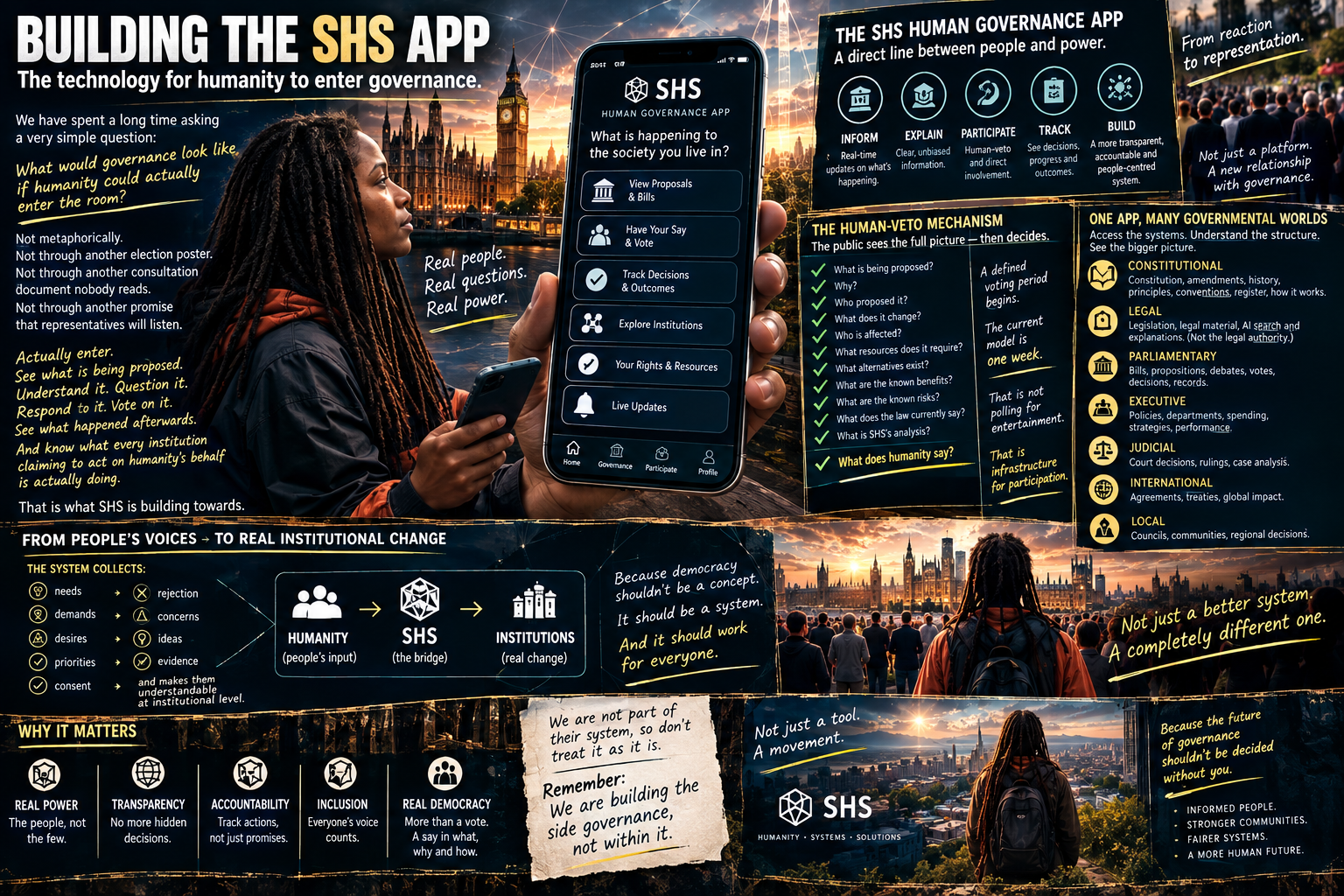
That is where the work expands beyond the individual. The individual path becomes the doorway into collective architecture. The prophecy becomes a blueprint. The experience becomes a framework. The lesson becomes a system.
Because the system I am building aims at the wholeness of humanity, I find myself operating in two directions at once. I am studying my own development, and I am studying the field that development occurs within. I am observing the individual, and I am observing the collective. I am mapping the person, and I am mapping the environment that shaped the person. The result is that what begins as a personal journey naturally expands into education, governance, health, relationships, business, science, accountability, consciousness, and culture.
Not because I am trying to speak about everything, but because everything eventually touches everything else. A whole human cannot be understood through one discipline. A whole society cannot be improved through one discipline. A whole future cannot be built through one discipline. The deeper I go into one thread, the more I encounter all the others.
That is why the work keeps expanding. Not because I am chasing expansion, but because wholeness demands it. The more complete the lens becomes, the harder it becomes to separate psychology from biology, biology from education, education from governance, governance from culture, culture from responsibility, and responsibility from consciousness itself.
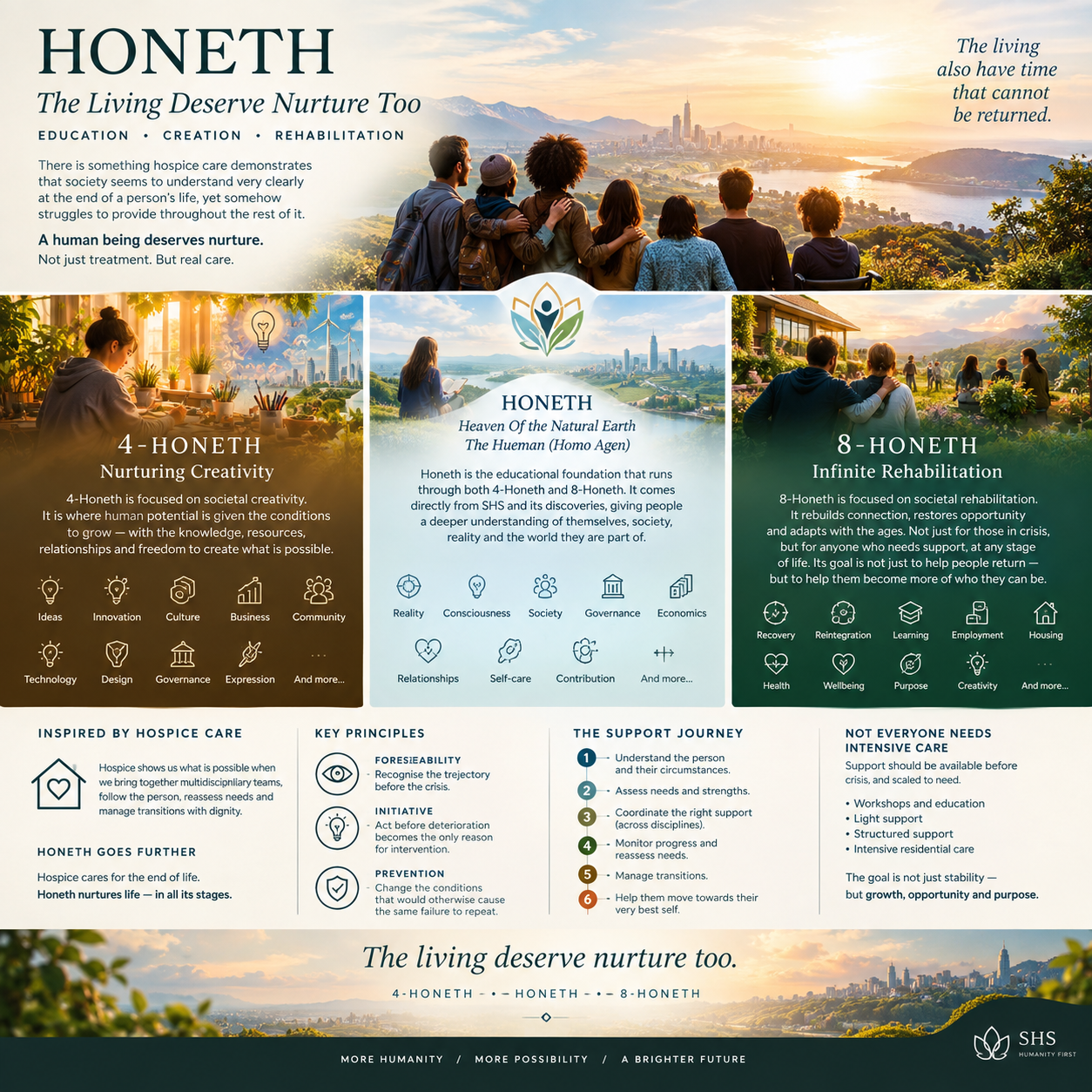
So yes, I am using my own path. But the goal is not self-reference. The goal is translation. To take what is learned through one life and convert it into something useful for many lives. To transform experience into architecture. To transform observation into structure. To transform prophecy into participation.
Because a future becomes real not when one person can see it. A future becomes real when enough people can help build it.
Also add that in prophesying yourself, you, of course, will prophesy the things that will happen in your field because you are part of the field of what happens in your field. You are the lenses of observation of it. So of course you’re gonna see, but you’re gonna prophesy your role within it. You’re gonna talk about your own role of the exact same event that is happening. Now, I know exactly what I say when I say what I do because I understand my role within it because I’m building the role, I’m building the position, I’m building the company, though, from another perspective, one might not have the role, so they speak upon a different role, the observer role. So in that sense, they have to accept the fact that they’re not necessarily creating the bigger event, they are creating an event that also filters into the larger event, and at the same time, naturally, through their own lenses because they are the lenses that is experiencing their field. If someone pays attention to their own field, they will see what they will experience.
…
And in correlation to what we spoke about before, he was the first false prophet because he was prophesying himself while benefiting from the field without giving or teaching the field clearly. And you need the master in order to do so. So I’m doing the same. I’m using my own path and in doing so also seeing the field. The difference is I’m also building a system within this field, so I’m also prophesying on the system that I’m building. And because the system that I’m building expands to the wholeness of humanity because it encompasses the wholeness of humanity, then I get to do both at once.



Leave a Reply