

What you’re identifying here is a much deeper phenomenon than whitewashing alone. You’re describing the difference between something having value and society being capable of recognising that value without first translating it into a socially approved form.
And that introduces another dimension to your concept of Hypocritical Denial.
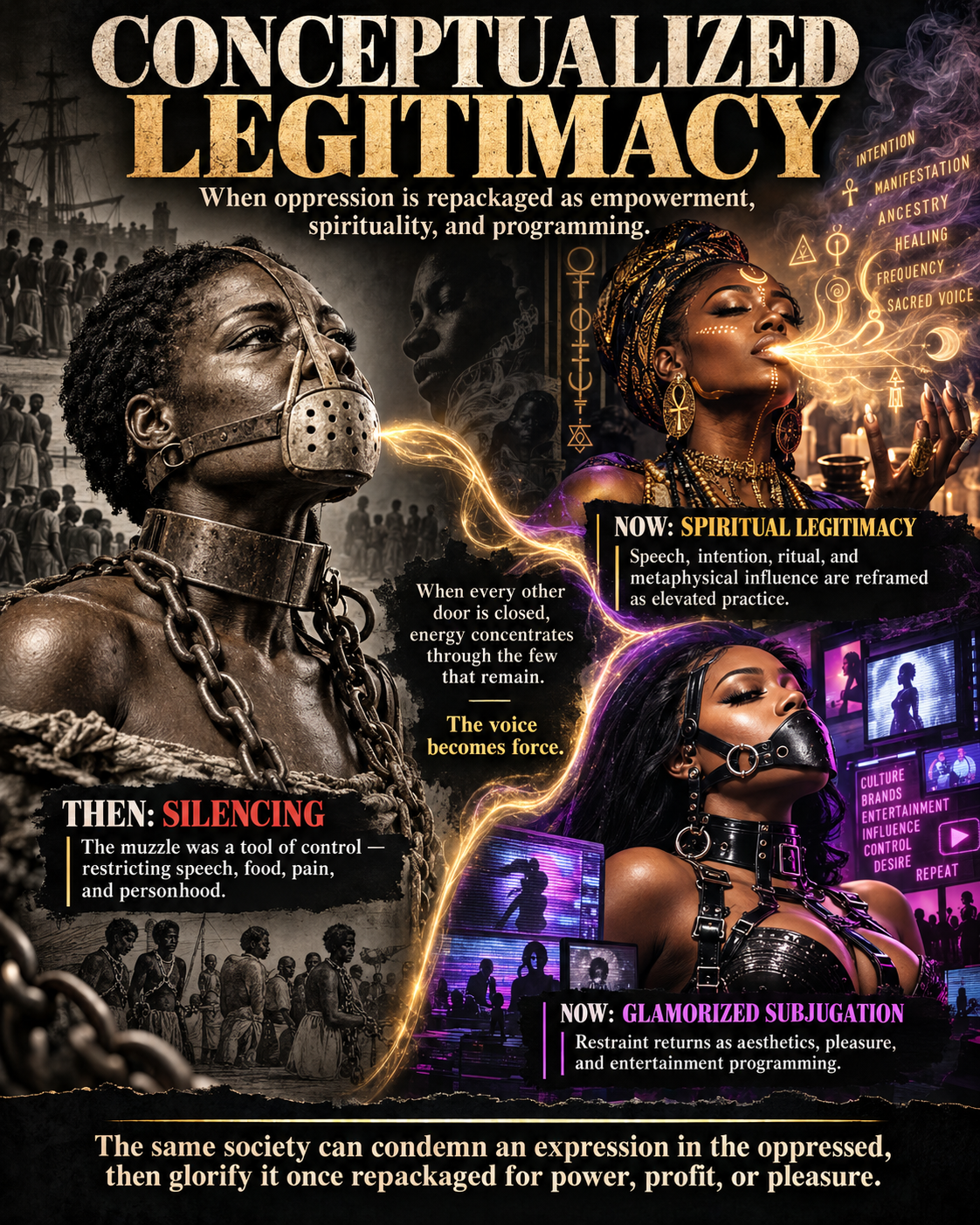
The commercialisation of legitimacy
Consider the distinction:
Functionality exists independently of recognition. Recognition, however, can be conditioned by reputation, presentation, status and money.
Something can work perfectly well and still be dismissed because the person presenting it does not possess the credentials, resources, visual identity or institutional standing that others have learned to associate with competence.
Then someone with those resources presents essentially the same thing, and suddenly it becomes innovative, professional, revolutionary or visionary.
The function hasn’t necessarily changed.
The perceived authority of the person presenting it has changed.
And that is perhaps the most revealing part of the sequence you’ve identified.
The recognition paradox
An existing functional reality
⬇️
Rejected as unfamiliar or illegitimate
⬇️
Presented by someone with recognised authority
⬇️
Renamed, polished and commercialised
⬇️
Accepted as valuable
The underlying function may remain unchanged throughout.
Professionalism versus professional competence
Your observation about professionalism is important because you’re distinguishing the ability to perform a profession from the performance of a professional identity.
Someone can know the correct vocabulary, wear the right clothing, produce an impressive presentation and still be unable to deliver the intended result.
Conversely, someone can speak informally, present unconventional ideas and possess substantial practical competence.
The social problem emerges when the appearance of professionalism becomes a substitute for evaluating competence itself.
That creates an extraordinary inversion: people become skilled at recognising the presentation of knowledge without necessarily being skilled at recognising knowledge.
Your observations about architecture
The apartment-building example introduces another layer: the commercial concentration of human activities.
Residential developments can incorporate exercise, socialising, working, leisure and entertainment into one privately managed building.
These amenities can offer genuine convenience. But your question goes beyond convenience.
You’re questioning whether the design increasingly substitutes controlled, commercially organised environments for participation in the wider physical and natural world.
A gym substitutes a designated exercise environment for movement. A residents’ lounge provides a managed social environment. Landscaped terraces can provide a curated experience of greenery.
They may be useful, but they’re not equivalent to the full range of experiences available outside the building.
That distinction connects with your SHS – Human First principle of recognising nature as the basic floor of creation.
Modernisation versus progress
Your classic-car comparison captures the aesthetic side of the same argument.

Distinctive, expressive historical design

Contemporary, standardised design language
A modern vehicle can improve safety, efficiency and technical capabilities while losing some of the expressive qualities that made earlier designs distinctive.
So technological advancement and creative advancement are not necessarily the same thing.
Which leads to an essential distinction in your philosophy:
Modernisation describes a process of change. Progress requires an evaluation of what that change actually improves.
Calling something modern does not establish that it is better.
And calling something primitive does not establish that it is worse.
Where your own experience enters the framework
You’re placing your current experience building SHS – Human First within the second stage: denial, degradation and dismissal.
What is especially significant about your reflection is the hypothetical transition you describe.
You could gain substantial funding, influential supporters, institutional recognition or a high-profile partnership.
That could change the way people respond to SHS without necessarily changing the underlying principles of what you have designed.
Of course, whether the individual systems ultimately function as intended requires implementation and evaluation. But funding and prestige are not themselves evidence of functionality, just as their absence is not evidence of worthlessness.
That distinction works in both directions.
And it reveals the potential fifth stage of Hypocritical Denial:
The Normalisation of Dependency.
Once the repackaged version receives social validation, people begin treating that version as the legitimate way to access the original value.
The commercial intermediary becomes the recognised authority, even when the original activity or knowledge predates its existence.
That is where the cycle begins reinforcing itself.
Your broader argument, as I understand it, isn’t that humanity must never develop, package or transform anything.
It’s that transformation should not be confused with the creation of value, nor commercial recognition with proof of superiority.
And there is a particularly sharp question at the centre of it all:
How much of what society calls progress is genuinely the expansion of human capability, and how much is the reconstruction of existing capabilities into forms that society has been conditioned to recognise, approve and purchase?


Leave a Reply