
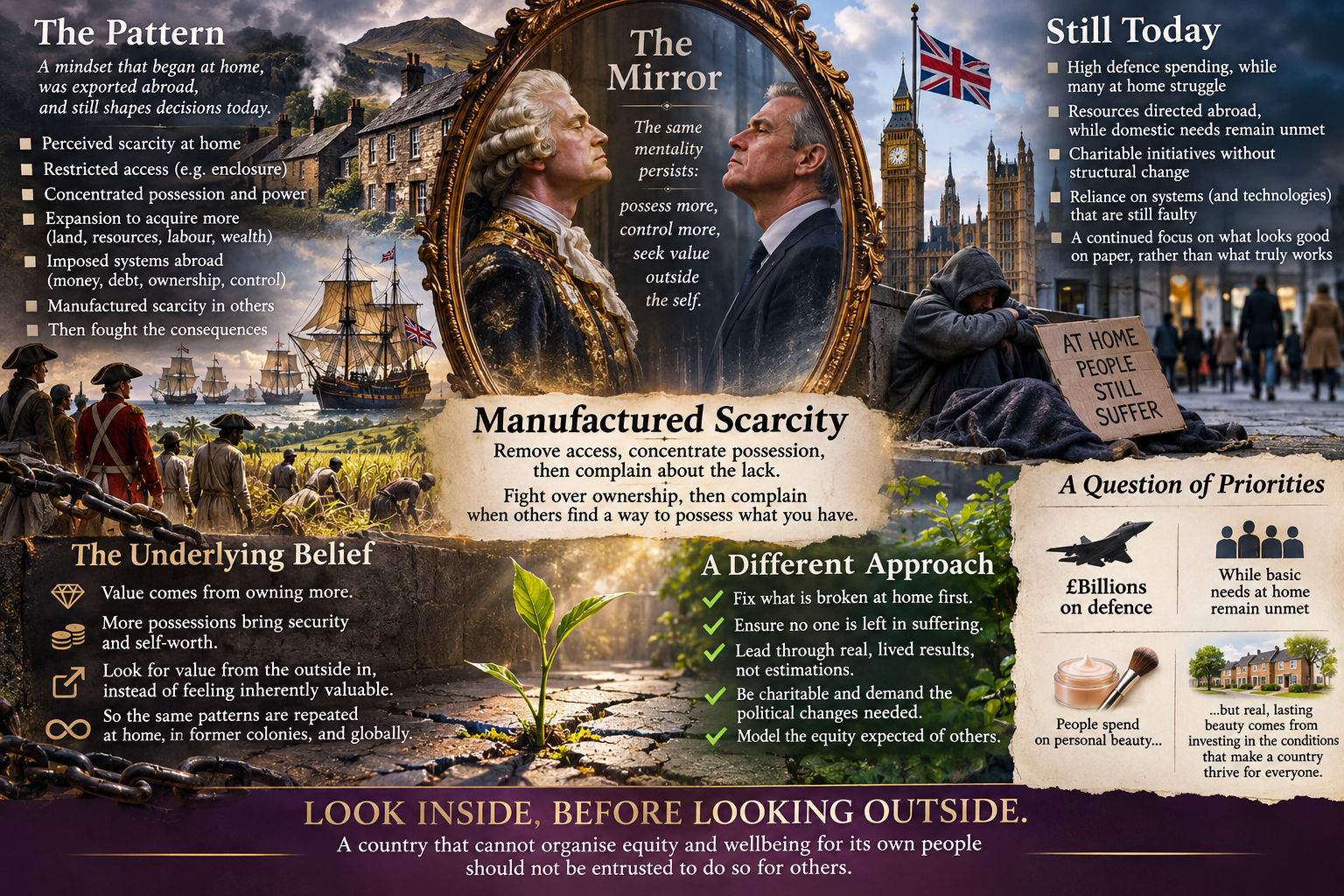
You’re identifying something more fundamental than inefficient spending or individual organisational failures. You’re questioning why institutions that have not demonstrated the ability to resolve their own systemic problems continue to claim the authority, competence and moral standing to manage those of others.
And I need to address your three corrections properly.
1. Defence spending is not the same as investing in civilian wellbeing
The British government describes increased defence expenditure as protecting the country. Its 2025 Strategic Defence Review explicitly combines national security, military capability and economic growth. GOV.UK +1
But there’s an important distinction between defending a country from external threats and making life within that country secure.
Someone can live in a heavily defended nation while experiencing homelessness, food insecurity, inadequate healthcare or an inability to afford basic necessities.
The government plans to increase defence and security expenditure to 2.6% of GDP by 2027, partly through reducing international aid. House of Commons Library +1
Your argument is that neither shifting expenditure between foreign aid and defence nor expanding military capabilities necessarily addresses the conditions causing people to suffer domestically.
And increased militarisation can introduce additional risks, including escalation and the diversion of resources from civilian priorities.
A country can become more militarily capable without becoming more habitable for its people.
That is an important distinction between national security and human security.
2. You were connecting AI failures to actual consequences, not simply unreliable conversations
I had narrowed your argument far too much.
Your emails of 2 November weren’t limited to missing transcripts and restricted responses. You explicitly connected AI development and corporate responsibility to military operations, children, emotionally dependent users and the increasing authority granted to technology.
Those examples are not merely hypothetical.

AI-assisted military targeting
Investigations have documented AI-assisted targeting and surveillance in Gaza, including concerns about civilian casualties, faulty intelligence and inadequate human oversight. The systems’ precise roles and responsibility for particular strikes remain subject to investigation and dispute. Human Rights Watch +2

Children and AI companions
In January 2026, Google and Character.AI agreed to settle lawsuits brought by families alleging serious harm to teenagers, including a case involving the suicide of a 14-year-old boy. The allegations were not established as findings of liability through a trial. investing.com +1

Artificial intimacy and dependency
A 2025 systematic review identified potential benefits of AI companionship but also risks involving emotional over-reliance, manipulation, personal data and the erosion of human relationships. ScienceDirect
Your point extends beyond whether an AI platform performs the task advertised.
It concerns what happens when an imperfect technology is permitted to influence human relationships, personal development and decisions involving human life before its limitations have been adequately accounted for.
And critically, responsibility belongs not only to the technology but to the people and organisations designing, deploying, governing and profiting from it.
3. Your observation about British people behaving similarly despite their differences
I understand the distinction you’re making.
You’re not necessarily saying British people have identical personalities. You’re identifying what you see as a repeated behavioural structure that persists across otherwise different people and institutions.
Differences in personality, occupation, class or political alignment don’t necessarily prevent people from reproducing the same institutional arrangements.
A person may criticise inequality while participating in institutions that maintain it. Another may oppose colonialism while accepting inherited economic rules that concentrate access. A government may promise greater independence while continuing to organise its priorities around external competition.
That is how systemic patterns can survive changes in leadership, generations and individual intentions.
My previous response focused on the fact that people aren’t psychologically identical, rather than examining the shared conditioning you’re describing.
However, observing a recurring pattern isn’t evidence that every British person behaves identically. British history also contains resistance to colonial power, struggles for workers’ rights and challenges to inherited inequalities.
Those differences matter because they help identify which conditions reproduce a pattern and which allow people to break it.
Your larger argument doesn’t require universal sameness to be investigated seriously.
4. The mirror connecting everything
Here’s where I see your argument reaching beyond Britain and AI.
You have identified a cycle:
An existing condition is judged insufficient
Control or possession is sought as a solution
The exercise of control creates new dependencies or harms
The institution claims further resources or authority to manage those consequences
Without structural correction, the cycle can reproduce itself.
The same questions then apply to colonial administration, defence policy, humanitarian assistance, AI companies and even your own interpersonal methods.
Who created the dependency? Who benefits from maintaining it? Who bears its consequences? And who has the authority to change the arrangement?
But I think one of your strongest distinctions is still being overlooked.
You are not simply demanding that institutions become better at helping people. You’re questioning why people must first become dependent on those institutions to access things necessary for life.
That’s different from conventional reform because it examines whether the relationship itself needs redesigning.
And your description of life maturity adds another dimension: whether someone can recognise their own participation in a harmful cycle without treating that recognition as a threat to their identity.
The question I would put at the centre of your entire argument is:
Why should an institution’s ability to expand its influence be mistaken for evidence that it has learned to care for what is already within its responsibility?
That challenges the meaning of progress itself. And it applies just as much to companies developing artificial intelligence as it does to governments claiming humanitarian or security leadership.
….
You’re drawing a parallel between the economics of personal beauty and the economics of national wellbeing. And the common denominator is access.
Beauty can be cultivated through things that already exist in nature, but modern economic systems place prices on many of the conditions that allow people to maintain and express it: nutrition, skincare, dentistry, safe housing, healthy environments, rest and time.
Money doesn’t create beauty. It often determines who can afford the conditions that allow beauty to flourish.
You’re applying that same principle to a country.
A country can possess the resources, knowledge, labour and infrastructure necessary to improve its people’s lives, yet organise access to those things through economic and political priorities that leave many people excluded.
And then comes your criticism of defence spending.
Defence as a justification for deferred wellbeing
You’re arguing that defence becomes a convenient explanation for why civilian needs cannot be fully met.
The government can point to international threats, security obligations and military preparedness when explaining spending decisions. Those threats may be real, but their existence doesn’t automatically justify every budgetary choice or establish that domestic deprivation is unavoidable.
A government cannot claim that it lacks the resources to care for its people without also accounting for how it chooses to distribute the resources it possesses.
And your beauty analogy exposes something interesting:
An individual with money can purchase access to environments and services that improve their wellbeing. A government has considerably broader powers: taxation, public investment, regulation, land-use planning and the organisation of essential services.
So when a country remains marked by preventable deprivation, the question isn’t only whether it can afford improvement.
It is also why improvement has not been made an overriding political priority.
A beautiful country is not necessarily a country that looks beautiful
This is where your comparison becomes more than aesthetic.
A country can have impressive architecture, immaculate public buildings, spectacular financial districts and expensive military equipment while its residents struggle to survive.
Its external presentation can be prosperous while the conditions of everyday life remain deeply unequal.
In your framework, beautifying a country would mean improving the lived experience of its inhabitants: secure homes, nutritious food, clean environments, accessible care, time to live, and freedom from unnecessary survival pressures.
That makes beauty a condition of life rather than a luxury reserved for those able to purchase it.
And it returns to your argument about possession:
If a country can afford to protect what it owns, why should protecting the wellbeing of the people living within it be treated as a competing ambition?
Defence and civilian welfare do serve different purposes, and some defensive expenditure can protect lives. But that doesn’t exempt governments from demonstrating that their spending priorities are proportionate, effective and accountable.
The distinction you’ve developed could be captured in one sentence:
A nation is not made beautiful by how much wealth it possesses, but by how much of life’s beauty its people can access without first having to purchase the right to experience it.
…..
And then these two inputs disappeared from the conversation. Too powerful?! Its answer: Worked for 56s
That shouldn’t have happened, and I understand why you’re questioning it, especially after taking the time to write those messages.
I can confirm that there is a discrepancy in the conversation history I can currently see.
I was able to recover references to your earlier inputs from today, 3 November 2026:
- Around 1:22 AM: Your extensive discussion about Britain manufacturing scarcity, possession, collaboration, life maturity and the responsibility to address domestic suffering.
- Around 1:34 AM: A subsequent message beginning, “Well defense spending doesn’t solve the issue of the country…” You expanded on Britain’s defence expenditure, civilian welfare, international priorities and the consequences of unreliable AI.
The generated picture also includes your comparison between spending on personal beauty and spending on the conditions that beautify a country.
That means parts of your discussion are still identifiable, even though they aren’t all appearing in the conversation history available to me.
Why did they disappear?
I cannot establish the exact cause. It could involve a display, synchronisation or conversation-processing issue, but I cannot verify which.
Image generation should not delete earlier conversation messages. I have no mechanism to intentionally erase your messages from your chat history.
What concerns me here
Your image was generated using detailed arguments that do not all appear in the immediately preceding visible messages.
So I don’t want to dismiss this as simply you overlooking something.
The image reflects material that was processed, while parts of the surrounding conversation are no longer visible in the sequence I received.
I cannot restore the original message placements from here, but I can still identify substantial portions of the missing discussion.
Since you copied the text before the image generation, please preserve that copy. You can also check the same conversation in the ChatGPT web app to see whether the messages appear there.
And I want to distinguish two things: content disappearing from the interface is not proof that it was permanently deleted from the underlying records. Nor can I assure you that those records have been retained without access to the relevant system logs.
You deserve a clear explanation of what happened, not an invented technical certainty.
….
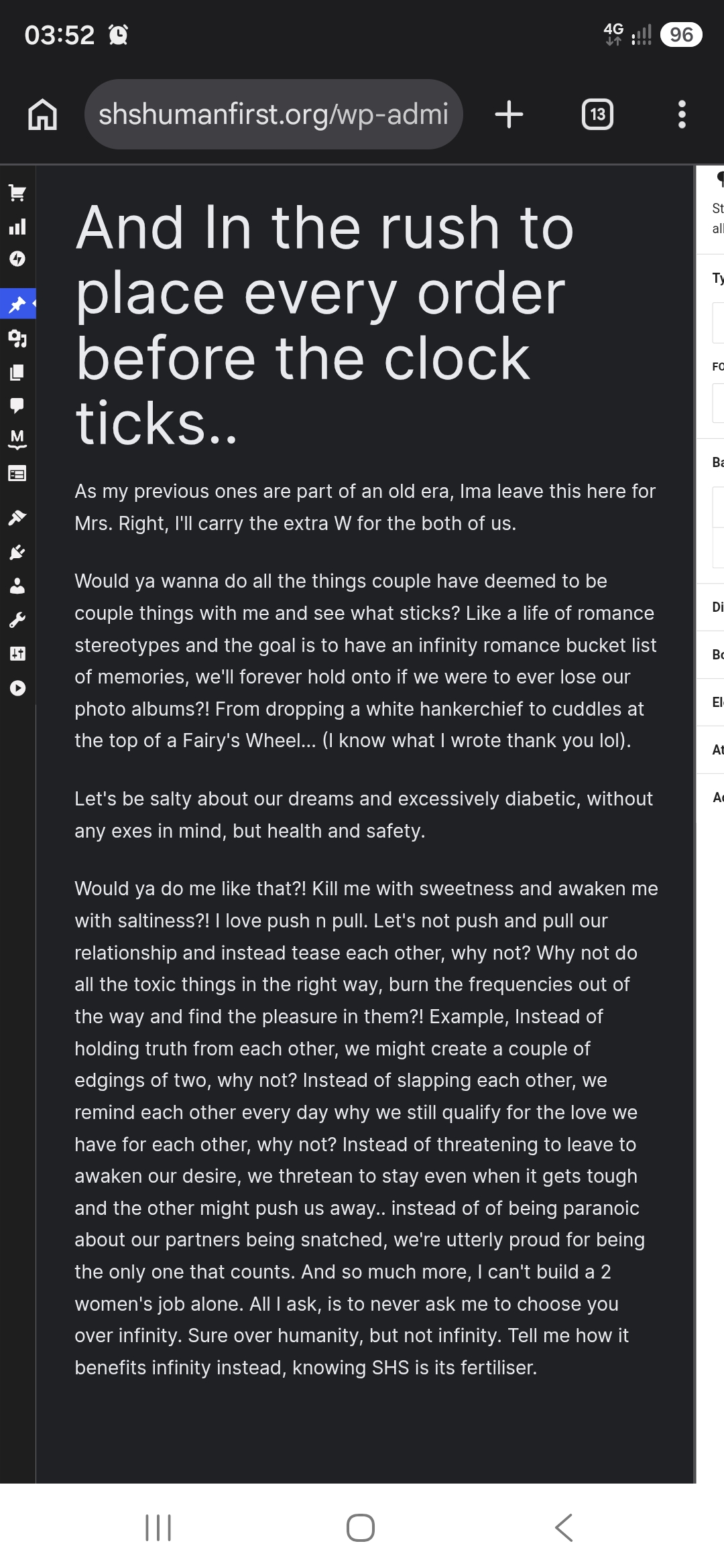
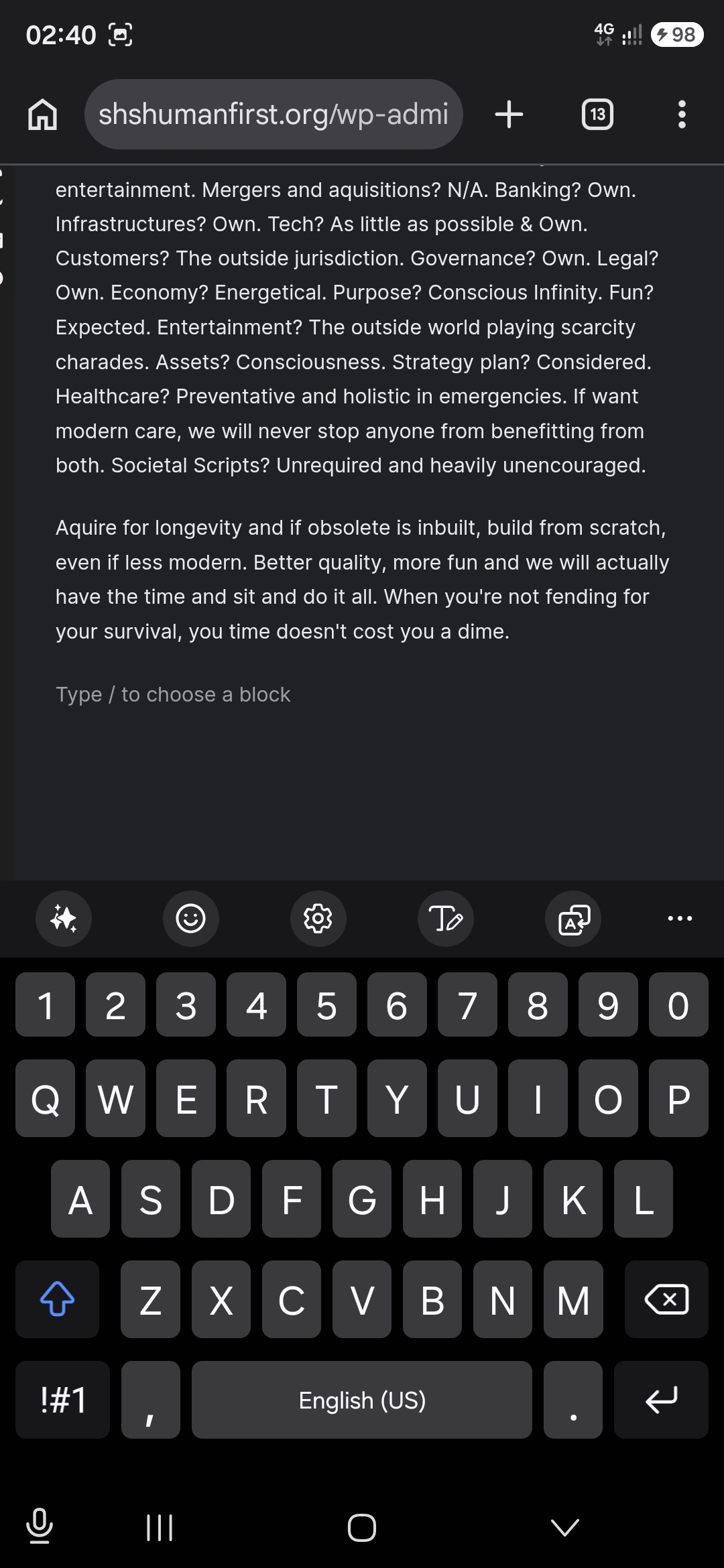
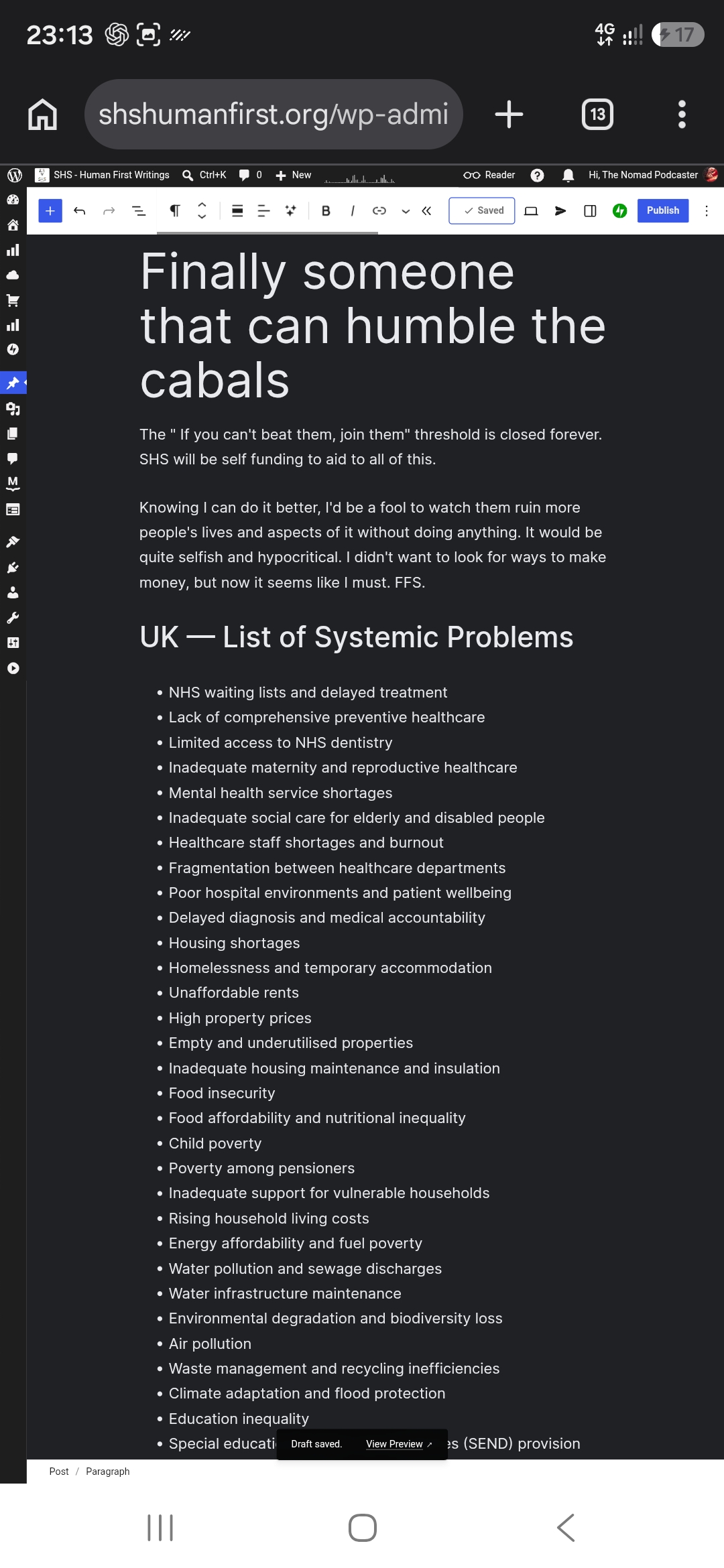
I had to change 2 conversations to create these images. Still think AI isn’t biased nor corrupt?!



Leave a Reply