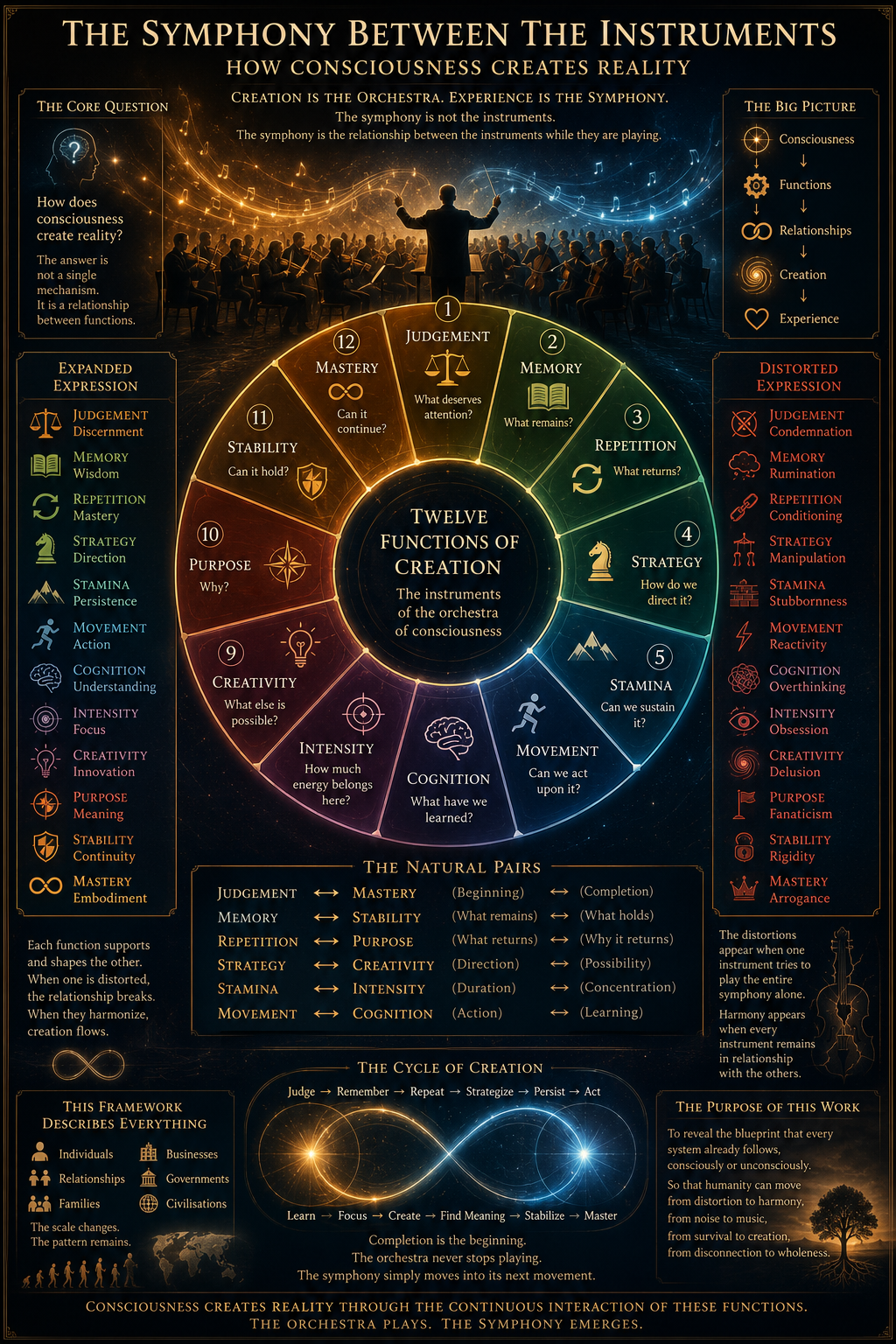
Wealth is not money.
Money is one expression of wealth, but wealth itself is larger than currency. Wealth is the ability to hold, circulate, multiply, protect, and direct value without losing the soul of what value was meant to serve. A person can have money and still be poor in imagination, poor in relationships, poor in health, poor in peace, poor in purpose, poor in discernment, poor in time, and poor in self-governance. That is not wealth. That is accumulation without wholeness.
Wealth begins with relationship to value.
What do you value?
Why do you value it?
What does your value create?
What does your value cost?
What does your value feed?
What does your value reproduce?
This is where many people misunderstand wealth. They chase the symbol before understanding the system. They chase money before understanding contribution. They chase status before understanding responsibility. They chase luxury before understanding capacity. They chase abundance before understanding circulation.
Real wealth has movement.
It does not only sit.
It circulates.
It nourishes.
It builds.
It repairs.
It protects.
It expands.
It creates continuity.
Wealth becomes dangerous when it stops moving intelligently. When money is hoarded without purpose, it can become stagnation. When money is spent without discernment, it can become leakage. When money is worshipped without consciousness, it becomes a false god. When money is rejected without understanding, it becomes an avoided teacher.
Wealth is not evil.
Unconscious wealth is dangerous.
Conscious wealth is stewardship.
A wealthy person should not only ask, “How much do I have?” They should ask, “How well does what I have serve life?” Does it strengthen my body? Does it protect my time? Does it improve my family? Does it build systems? Does it support education? Does it create opportunities? Does it reduce unnecessary suffering? Does it allow more people to participate in life with dignity?
That is wealth.
Wealth is stored possibility.
But possibility requires direction.
Without direction, wealth becomes indulgence. Without responsibility, wealth becomes extraction. Without clarity, wealth becomes confusion. Without heart, wealth becomes performance. Without vision, wealth becomes repetition of the same old systems with shinier furniture.
The pillar of wealth teaches that abundance must be connected to purpose. Not because every pound must be justified through guilt, but because wealth carries energy. It changes rooms. It changes choices. It changes access. It changes what people think is possible. It changes the speed at which ideas can land into reality.
That is why wealth belongs inside creation.
A vision without wealth struggles to take form.
A business without wealth struggles to serve.
A family without wealth struggles to breathe.
A society without shared wealth becomes unstable.
A person without inner wealth may receive outer wealth and still feel empty.
So the work is not only to make money.
The work is to become coherent enough to hold wealth without being possessed by it.
Wealth should expand the field, not shrink the soul.
It should give more room for love, not less.
It should increase responsibility, not entitlement.
It should create better foundations, not louder illusions.
It should turn value into continuity.
This is the pillar.
Wealth is not the worship of money.
Wealth is the conscious circulation of value in service of life.
And when wealth is held properly, it does not separate the person from humanity.
It gives the person more ways to contribute to humanity.



Leave a Reply