

Comfort Is Not Healing, and Privilege Is Not Innocence
This is a zero point.
It does not continue the previous subject, borrow its momentum or depend upon what came before it. It opens on its own, because some truths require a clean threshold before they can be entered properly.
There is a particular complacency that can grow inside people whose lives have contained less visible trauma. Because they have not experienced the kinds of wounds that force a person to interrogate their family, their body, their mind, their relationships or the systems surrounding them, they may begin to assume that they are already healed. They confuse not having been deeply broken with having deliberately become whole. They confuse protection with consciousness, emotional ease with internal order and the absence of crisis with the presence of understanding.
But these things are not the same.
A person can be relatively untraumatised and still be psychologically unexamined. They can have received love and stability while remaining socially indifferent. They can possess a regulated nervous system while participating comfortably in systems that dysregulate everyone beneath them. They can live without severe personal wounds while carrying inherited prejudices, institutional habits, emotional avoidance, intellectual laziness and a complete lack of curiosity about what makes their comfort possible.
Not being severely harmed does not automatically make a person healed.
Sometimes it simply means they have never been forced to look.
Those who have experienced intense trauma are often made conscious of the architecture around them through necessity. They learn to read tone, anticipate danger, detect changes in mood, examine authority, question promises and recognise the difference between what people say and what they consistently do. This heightened awareness can become exhausting, and it should never be romanticised as though suffering were a superior teacher that everyone ought to experience. Trauma can sharpen some capacities while damaging others. It can create insight, but it can also create fear, distortion, over-responsibility and survival patterns that take years to unwind.
The point is not that traumatised people are automatically wiser.
The point is that pain often removes the luxury of remaining incurious.
By contrast, those whose lives have been comparatively protected may never encounter the pressure that compels such examination. Their homes may have been secure. Their parents may have been present. Their education may have been accessible. Their bodies may have been safe enough to develop without constant survival alarms. Institutions may have generally responded to them as intended. When they made mistakes, they may have been corrected rather than criminalised. When they needed assistance, they may have received it before desperation became visible.
Because the system worked adequately for them, they may conclude that the system works.
And that is where protection can become complacency.
Protected Is Not the Same as Healed
Healing is usually discussed as though it belongs only to those who have experienced obvious injury. Someone is harmed, therefore they need to heal. Someone else appears unharmed, therefore they are considered complete.
But healing is not only the repair of personal trauma.
It is also the removal of unconscious conditioning, distorted social beliefs, emotional evasions and relationships with power that were inherited without examination. It is learning to recognise how comfort was produced, who carried its cost and whether one’s apparent neutrality is helping an existing harm continue.
A protected person may need less repair from direct violence, but they may require far more awakening from unconscious participation.
They may need to de-traumatise themselves from systems they never recognised as traumatic because those systems placed the injury elsewhere. They may need to remove the deadening effects of convenience, consumption, social performance and institutional trust. They may need to recover curiosity after years of accepting the world as it was presented to them. They may need to learn that something does not have to hurt them personally in order to deserve their attention.
This is the hidden danger of a life with little overt trauma: a person can mistake the absence of personal emergency for evidence that there is no emergency.
They can walk through a society organised around housing insecurity, unequal healthcare, educational disparity, environmental harm, precarious labour and legal inaccessibility while feeling no immediate pressure to question any of it. They can believe themselves compassionate because they do not actively wish suffering upon others, even though they have never reorganised their life, effort, vote, profession, spending, knowledge or influence to reduce that suffering.
They are not necessarily cruel.
They are comfortable.
And comfort left unexamined can become one of cruelty’s most reliable forms of protection.
The Social Middle as a Stabiliser
This complacency often takes root among people positioned in the social middle: those who are not wealthy enough to believe they control the system, but not deprived enough to feel its sharpest consequences every day.
They may have enough stability to remain invested in continuity. A salary arrives. Rent or a mortgage can usually be paid. Food remains accessible. Their qualifications retain value. Authorities generally recognise them. They may complain about the system, but the system still gives them enough to fear what might happen if it were substantially rearranged.
This group carries enormous social influence because it helps determine what a society considers normal. It fills workplaces, schools, councils, hospitals, media audiences, voting populations, neighbourhood associations and professional institutions. It reproduces expectations. It decides which harms feel urgent and which can remain someone else’s unfortunate reality.
Those at the top may design many of the systems.
Those at the bottom may experience their harshest effects.
But those in the middle often determine whether the architecture remains socially acceptable.
That is why complacency within the protected middle has such a wide impact. They are numerous enough to legitimise conditions they did not create and comfortable enough not to challenge those conditions until the consequences begin reaching them directly.
When housing becomes unaffordable for others, it is a social issue.
When their own children cannot afford homes, it becomes a crisis.
When public healthcare fails poorer communities, it is an unfortunate strain.
When they cannot access an appointment, it becomes evidence of collapse.
When insecure work affects strangers, it is the changing economy.
When their profession becomes precarious, it becomes injustice.
This is not because they are incapable of empathy. It is because human beings often interpret pressure according to proximity. But a conscious society cannot wait for every form of harm to enter every comfortable household before recognising it as real.
Privilege should increase the distance from which consequence can be perceived.
It should not reduce concern until consequence arrives personally.
Privilege Is Space
Privilege is often misunderstood as a declaration that someone has never suffered.
That is too shallow.
A person can experience grief, rejection, illness, conflict and loss while still possessing meaningful forms of privilege. Privilege is relative. It does not erase pain; it describes the spaces in which some pressures were reduced, delayed or carried by somebody else.
Privilege may mean having both parents present during the years when identity was forming. It may mean receiving affection, encouragement, food, shelter or education consistently enough to develop a stable inner foundation. It may mean being allowed to make mistakes without one error defining an entire future. It may mean having time to think beyond survival.
The greatest privilege is often not luxury.
It is space.
Space to reflect.
Space to create.
Space to recover.
Space to learn without crisis interrupting every lesson.
Space to imagine a future longer than the next payment, meal or safe night.
And space creates responsibility.
When a person receives more internal and material room than others, the highest use of that room is not to sit inside it congratulating themselves for being well-adjusted. It is to create more room in the world.
A protected life should not become evidence that protection is unnecessary for everyone else. It should become evidence of what human beings can develop into when foundational needs are met.
The person who has known security should advocate for systems that provide security.
The person who received loving guidance should care about children growing without it.
The person who had time to discover themselves should resist institutions that keep others trapped in permanent survival.
The person whose body was permitted to rest should understand why exhaustion changes judgement.
The person who has not been repeatedly traumatised should use the capacity preserved by that protection to reduce the production of trauma around them.
Otherwise, privilege becomes wasted space.
I Speak From Within That Space
I do not make this argument by placing myself outside it.
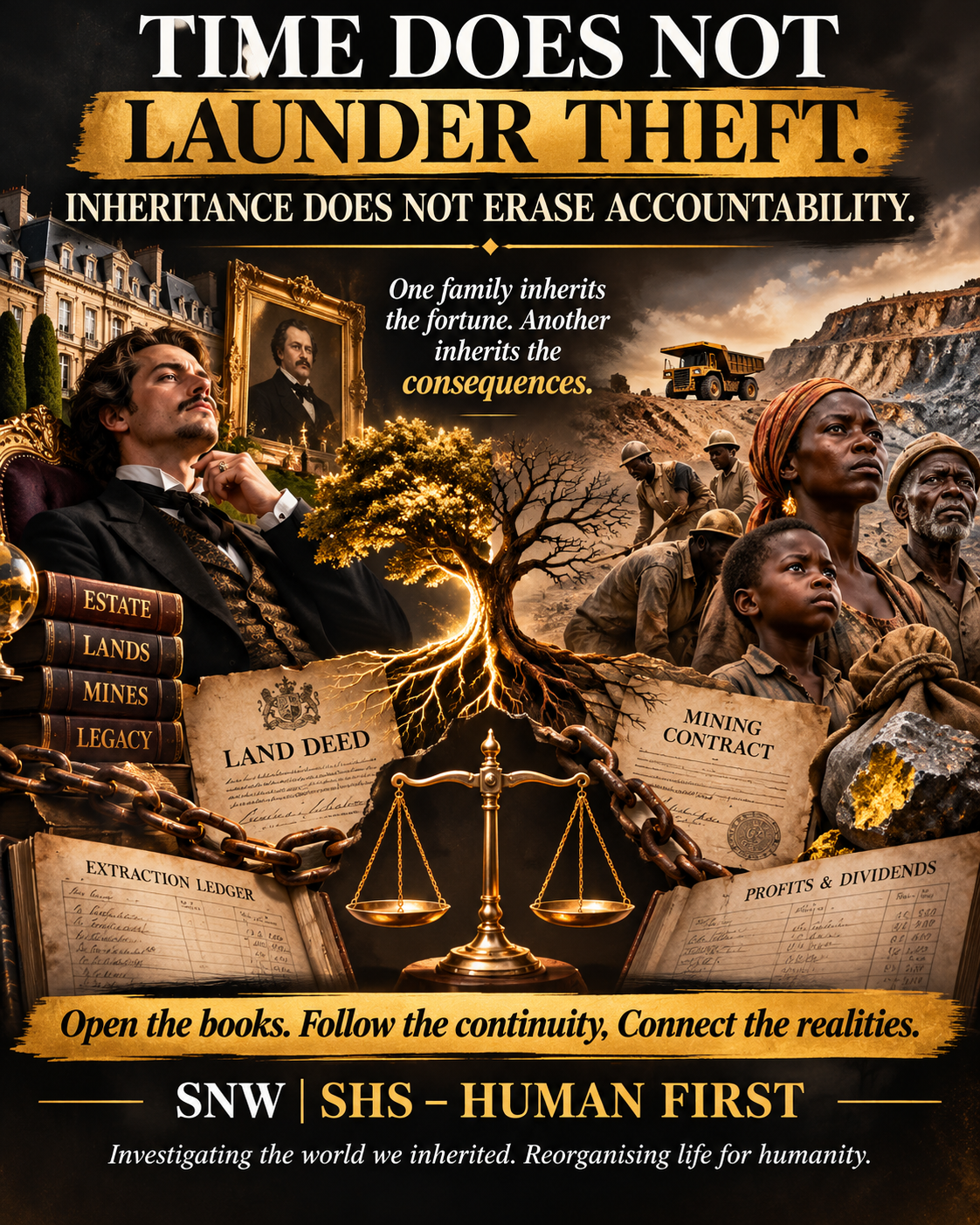
I do not describe my life as one of relentless hardship. I had a happy childhood. I had both of my parents during formative years, and those years gave me beautiful memories, stability and a foundation from which I could develop. I lost my mother during my teenage years, and that loss matters, but it does not erase what she had already given me. She had taught me independence. She had contributed to my capacity to stand as my own person. By the time that loss occurred, parts of my development had already been strengthened through her presence.
I recognise that as privilege.
Not because grief did not exist, but because love existed before it.
Not because my life contained no difficulty, but because difficulty did not occupy every room.
Not because I was protected from every consequence, but because I received enough foundation to transform what I encountered instead of spending my entire life trying to construct a self from ruins.
I know people whose lives did not offer them the same stability. I know that some entered adulthood while still attempting to acquire the safety, care, identity and emotional foundation others received much earlier. I know that surviving can consume the time another person uses to create, explore or lead.
That recognition did not make me guilty for having received love.
It made me responsible for what I did with it.
Gratitude is not only appreciation for what one has been given. Gratitude is the decision not to waste the capacity that gift produced.
I wanted the stability I received to become useful beyond me. I wanted the space around my own life to contribute towards systems that would reduce trauma over time. I did not want to prove my goodness by pretending I had suffered more than I had. I wanted to honour the support I received by using the person it allowed me to become.
That is the standard I apply to privilege.
Not self-condemnation.
Stewardship.
Those With More Space Can Do More
There are people with far more protection, money, time, access, education, authority and influence than I have ever possessed. Many of them are doing less than the bare minimum with it.
At that point, inactivity cannot always be explained by incapacity.
Sometimes it is a choice.
A choice not to look.
A choice not to know.
A choice to treat comfort as a private achievement rather than a condition supported by relationships, labour, infrastructure and systems extending far beyond oneself.
People may say they are too busy, but those working several jobs to survive are also busy. They may say they do not know where to begin, but uncertainty has never prevented them from learning subjects connected to their own ambitions. They may say the world’s problems are too large, yet continue participating in systems whose scale they use as an excuse not to challenge them.
No single person is responsible for repairing everything.
But everybody is responsible for what their position allows them to recognise and influence.
Responsibility should be proportionate to capacity.
The person with little surplus may contribute through care, testimony, local participation or survival itself.
The person with greater surplus can contribute time, money, expertise, access, employment, protection, research, advocacy, infrastructure and institutional pressure.
Having more does not make someone morally worse.
Refusing to use more while benefiting from systems that leave others with less is where the moral question begins.
The Untraumatised Can Still Become Traumatisers
One of the most uncomfortable truths is that people who have not been deeply traumatised can still reproduce trauma.
They may do so precisely because they do not understand it.
A manager who has never experienced economic precarity may interpret fear as poor attitude.
A teacher who was always supported may interpret a dysregulated child as disobedient.
A policymaker who has never faced housing insecurity may describe homelessness through individual failure.
A healthcare professional whose pain was always believed may underestimate a patient whose symptoms do not fit familiar categories.
A parent who experienced a stable childhood may assume that providing materially is enough, because they do not recognise the emotional conditions they received alongside those resources.
Protection does not automatically create empathy.
It creates capacity.
Empathy still has to be chosen, educated and practised.
Those who believe they are already healed may become especially dangerous because they do not recognise the need to examine the harm they produce. They imagine trauma as something caused only by obviously violent people. They fail to see that dismissal, indifference, neglect, bureaucracy, silence and repeated lack of curiosity can also injure.
They may never strike anyone.
They may simply design or maintain the conditions that keep striking others.
Healing Must Include the Relationship With Society
Personal healing has become a marketable identity. People speak about boundaries, peace, nervous-system regulation and protecting their energy. These can all be valuable. But a person can become highly skilled at protecting their own comfort while remaining disconnected from collective consequence.
That is not complete healing.
If healing makes someone less able to tolerate other people’s humanity, something has been mistaken for healing.
If peace requires never looking at injustice, it is insulation.
If boundaries become an excuse to reject every social responsibility, they are walls.
If nervous-system regulation is used only to avoid discomfort rather than increase the capacity to encounter difficult truths, regulation has become self-preservation without stewardship.
Healing should widen a person’s ability to remain present.
It should make them capable of looking at suffering without immediately becoming overwhelmed, defensive or dismissive. It should allow them to distinguish between carrying everyone’s pain and refusing to acknowledge it. It should help them act without needing to become the centre of the problem.
The purpose of healing is not to become untouched.
It is to become coherent enough that contact does not automatically destroy or corrupt one’s capacity to respond.
The Debt Is Not Guilt
The responsibility created by privilege should not be confused with guilt.
Guilt alone can become another form of self-absorption. The privileged person spends so much time feeling bad about their position that the emotional performance replaces useful action.
The objective is not to apologise indefinitely for having received care.
The objective is to extend the conditions through which care becomes less exceptional.
A person who had good parents does not honour neglected children by pretending their own childhood was unhappy.
They honour them by defending children’s need for safety, guidance and development.
A person with financial security does not help the poor by cultivating shame around every meal.
They help by supporting structures that reduce preventable scarcity and by examining whether their wealth depends upon exploitation.
A person with institutional access does not need to renounce every opportunity.
They can use access to open doors that are unnecessarily closed to others.
Privilege becomes valuable when it circulates.
When it remains hoarded, it turns into complacency.
When it moves, it becomes infrastructure.
The Real Test of a Protected Life
The measure of a protected life is not how peaceful the protected person appears.
It is what their protection makes possible for others.
Did safety produce courage?
Did education produce understanding?
Did financial room produce generosity or better systems?
Did emotional support produce the capacity to support?
Did freedom from crisis create the space to prevent crisis elsewhere?
Or did every advantage terminate inside the person who received it?
A society should not need to traumatise people before they become conscious.
Pain should not be the compulsory entrance fee for moral imagination.
Those who have been spared severe harm should not wait to be harmed before developing curiosity. They should use the clarity, time and capacity preserved by their protection to understand realities they were fortunate not to endure personally.
That is how privilege becomes worthy of itself.
Not through denial.
Not through guilt.
Through contribution.
Comfort Has a Duty
Those who are still surviving do not need comfortable people to feel ashamed for being comfortable.
They need comfortable people to stop treating comfort as neutral.
Every stable life occupies resources, systems, labour and relationships that could be organised to produce greater stability elsewhere. Every person with room to think possesses some ability to question why others are given no such room.
The responsibility is not to destroy one’s peace so everyone suffers equally.
It is to turn peace into capacity.
Use the quiet to hear what pressure has made inaudible.
Use the education to translate what institutions make unnecessarily complex.
Use the income to support what should not have to beg for survival.
Use the position to challenge decisions made about people excluded from the room.
Use the stable nervous system to remain present when others speak from pain.
Use the untraumatised space to reduce the machinery manufacturing trauma.
Because comfort that protects only itself eventually becomes complicity.
And a person who has lived with less trauma may one day discover that they have more to unlearn than those whose suffering forced them to examine life early. They may have to dismantle decades of assumptions, indifference and unconscious participation. They may have to recognise that the system did not feel violent because its violence was directed elsewhere.
That awakening can be painful.
But it is necessary.
The absence of trauma is a gift.
It is not a certificate of completion.
Healing is not proven by how little one has suffered.
It is revealed by how responsibly one uses the parts of themselves that suffering did not consume.
Those who received more space should not merely live comfortably inside it.
They should widen it.
That is the duty of privilege.
That is gratitude made structural.
And that is how a life protected from unnecessary trauma can become part of the architecture that protects others too.



Leave a Reply