

I’ve found another layer of examples that takes your concept of Hypocritical Denial beyond beauty and cultural trends into medicine, scientific discovery, architecture, food systems, and even the criminalisation of fashion.
Some of these are particularly revealing because we can identify specific historical events in which knowledge was dismissed, restricted or displaced before gaining institutional recognition.
Science and knowledge that existed before recognition

39. African knowledge of smallpox prevention
When African and Asian communities practised inoculation, it was traditional knowledge. When Western medicine adopted and formalised preventative immunisation, it became a celebrated scientific advancement.
Variolation was practised in Africa and Asia before becoming established in Europe and America. The Smithsonian documents the history and distinguishes it from Jenner’s later, safer vaccination technique. Smithsonian Institution +1

40. Black midwives and maternity care
When Black women cared for mothers in their communities, their expertise was pushed aside. When professional institutions formalised maternity support, it became an established healthcare service.
The Smithsonian’s National Museum of African American History and Culture documents how experienced Black midwives were excluded and displaced by the predominantly white medical establishment. This extends the original childbirth slide into professional power and recognition. nmaahc.si.edu

41. Indigenous knowledge of fire-spreading birds
When Aboriginal Australians described birds spreading fire, their knowledge met scientific scepticism. When researchers documented the behaviour, it became an important discovery in animal ecology.
A 2017 scientific paper specifically drew on Indigenous observations of raptors transporting burning sticks. smithsonianmag.com +1

42. Indigenous clam gardens
When Indigenous peoples engineered coastal beaches for shellfish, it was ancestral food production. When universities studied it, it became sophisticated marine ecosystem engineering.
Researchers at Simon Fraser University documented extensive First Nations clam gardens that created productive habitats along the coastline. Simon Fraser University +1
Food and architecture
43. Millets: poverty food becomes a superfood
When Indian communities ate millets, they were called poor people’s grains. When nutrition and sustainability markets rediscovered them, they became superfoods.
India’s Ministry of Information and Broadcasting directly acknowledges the historical association of millets with poverty and their subsequent commercial revival. mib.gov.in
44. Traditional Persian windcatchers: old technology becomes green innovation
When communities cooled their buildings naturally, it was traditional architecture. When modern architects rediscovered the principles, they became passive cooling technology.
Iranian badgirs have provided ventilation and cooling for centuries. Modern architectural research now studies their principles for energy-efficient buildings. Encyclopaedia Iranica +1
Race, fashion and cultural identity
45. African headwraps: legally imposed stigma becomes fashionable beauty
When Black women wore headwraps, colonial authorities used them as markers of racial subordination. When white women adopted the styles, they became fashionable accessories.
In Louisiana, the 1786 Tignon Law required women of colour to cover their hair. Black women transformed the restriction into elaborate fashion, and white women subsequently adopted similar styles. Historic New Orleans Collection +1
46. Māori facial tattoos: cultural identity becomes copyrighted design
When Māori people wore tā moko, they faced discrimination. When outsiders borrowed the patterns, those designs could become commercially protected artwork.
A particularly striking example involves Mike Tyson’s Māori-inspired tattoo. His tattooist later claimed copyright when the design appeared in The Hangover Part II, raising questions about why a commercial artist could claim ownership over a design drawing from Indigenous cultural traditions. Cambridge +1
47. Sagging trousers: criminalised fashion becomes designer fashion
When young Black men wore low-slung trousers, they faced fines and policing. When designers presented similar silhouettes, they became runway fashion.
In 2014, Ocala, Florida, introduced penalties for sagging trousers on city property. A decade later, Burberry featured ultra-low-rise trousers on its runway. These aren’t identical fashions, but the difference in social treatment is striking. MPR News +1
48. Gold teeth and grillz: street culture becomes luxury jewellery
When gold teeth were associated with working-class communities, they were frequently regarded as undesirable. When celebrities adopted decorative grills, they became luxury accessories.
Custom grillz developed prominently through Black American hip-hop culture before expanding into mainstream celebrity fashion. Highsnobiety +1
Art, ownership and commercial recognition
49. African masks: primitive artefacts become modern art inspiration
When Africans created ceremonial masks, colonial collectors classified them as primitive artefacts. When European artists drew inspiration from them, their forms helped shape celebrated modern art.
Museums have documented how African masks influenced artists including Picasso and Matisse, sometimes with their original makers and ceremonial contexts overlooked. Google Arts & Culture
50. Benin Bronzes: royal heritage becomes a museum collection
When the art belonged to the Kingdom of Benin, colonial forces seized it. When it entered Western collections, it became internationally celebrated cultural treasure.
In 1897, British forces looted thousands of artworks from Benin City. Some were auctioned; many entered museums. The Smithsonian returned 29 works to Nigeria in 2022. National Museum of African Art +1
51. Gee’s Bend quilts: necessity becomes fine art
When Black women made quilts from old clothing, they were making household necessities. When galleries recognised their designs, they became masterpieces of abstract art.
Generations of African American women developed extraordinary quilting traditions in Gee’s Bend, Alabama. Their work is now exhibited in major museums. National Gallery of Art +1
52. African music: the creator struggles while the industry profits
When a South African musician composed a song, he received little lasting reward. When the international entertainment industry popularised it, it generated enormous commercial value.
Solomon Linda composed Mbube in 1939, the origin of The Lion Sleeps Tonight. His family eventually obtained a royalties settlement in 2006 after a lengthy dispute. ABC News +1
Economics and environmental knowledge
53. Community savings become financial technology
When African communities pooled their savings, institutions called it informal finance. When platforms digitised comparable systems, they became financial innovation.
Susu, ajo, stokvels and other rotating savings circles existed long before fintech applications. In October 2026, the UK’s Money and Pensions Service published research explaining these long-established financial practices. Money and Pensions Service +1
54. Indigenous fish traps become conservation technology
When Indigenous communities built river traps, they were ancestral fishing infrastructure. When governments later revisited the technology, it became an experimental conservation solution.
A March 2026 Smithsonian investigation documents the history of fish traps on the Columbia River: their Indigenous use, settler-era expansion, subsequent prohibition and modern revival experiments. Smithsonian Magazine
Traditional practices reintroduced as innovation
These next examples have especially strong evidence of existing knowledge being reframed, although the evidence of prior social persecution is less direct.
55. Indian stepwells become climate-resilient water infrastructure
When communities collected rainwater through ancient structures, it was traditional water management. When modern urban planning revisited them, it became sustainable water engineering.
Researchers are examining India’s traditional stepwells as possible models for modern urban water conservation. Get Access
56. Aztec chinampas become sustainable agricultural models
When Indigenous farmers cultivated wetlands, it was ancestral farming. When international institutions recognised its productivity, it became agricultural heritage and a sustainability model.
The UN Food and Agriculture Organization recognised Mexico City’s chinampa system as Globally Important Agricultural Heritage in 2017. FAOHome
57. Seaweed fertiliser becomes commercial plant biotechnology
When coastal farmers fertilised fields with seaweed, it was ordinary agricultural knowledge. When manufacturers processed and packaged comparable materials, they became commercial fertilisers and plant biostimulants.
The FAO documents seaweed’s traditional agricultural use and the expansion of processed seaweed products into modern horticultural markets. FAOHome
58. African fermentation becomes food microbiome science
When African communities fermented grains and milk, they were preserving and transforming food through inherited knowledge. When researchers studied the microorganisms, the processes became subjects of food biotechnology and microbiome research.
A March 2026 review in npj Science of Food documents the value of traditional African foods and the development of industrial production methods. npj Science of Food +1
59. Cloth menstrual products become sustainable period technology
When women used washable cloth for menstruation, it could be associated with poverty or poor hygiene. When companies marketed engineered reusable products, they became sustainable menstrual innovation.
A peer-reviewed study identifies the stigma attached to cloth menstrual products, while modern companies market reusable pads and period underwear as eco-friendly alternatives. PMC +1
60. Graffiti: criminal damage or protected cultural treasure?
When an unknown person paints public property without permission, it can be vandalism. When a celebrated artist does so, the same type of surface may be preserved as museum art.
A particularly revealing case occurred in London: after Banksy painted a police sentry box in August 2024, authorities preserved it and approved its acquisition by London Museum in February 2025. The distinction depends substantially on context, ownership and the artist’s recognised status. City of London Newsroom +1
What stands out across all 60 examples
The collection now exposes at least three different relationships between society and value.
| Pattern | What happens | Examples |
|---|---|---|
| Hypocritical denial | A practice is condemned in one social context and accepted in another. | Headwraps, sagging trousers, menstrual cloth |
| Commercial appropriation | Cultural work becomes profitable while its creators receive inadequate recognition or compensation. | African masks, Benin Bronzes, Solomon Linda |
| Institutional rediscovery | Existing knowledge receives new legitimacy through research, professionalisation or commercial development. | Fish traps, windcatchers, fermentation, savings circles |
The third pattern is not automatically hypocrisy. Research and adaptation can add genuine value. What matters to your concept is whether the original knowledge was unfairly dismissed, whether its source is acknowledged, and whether its creators or custodians benefit.
The most striking additions are 45, 46, 49, 50, 52 and 53, because they extend Hypocritical Denial into racial legislation, intellectual property, museums, copyright and finance.
That gives your concept another dimension:
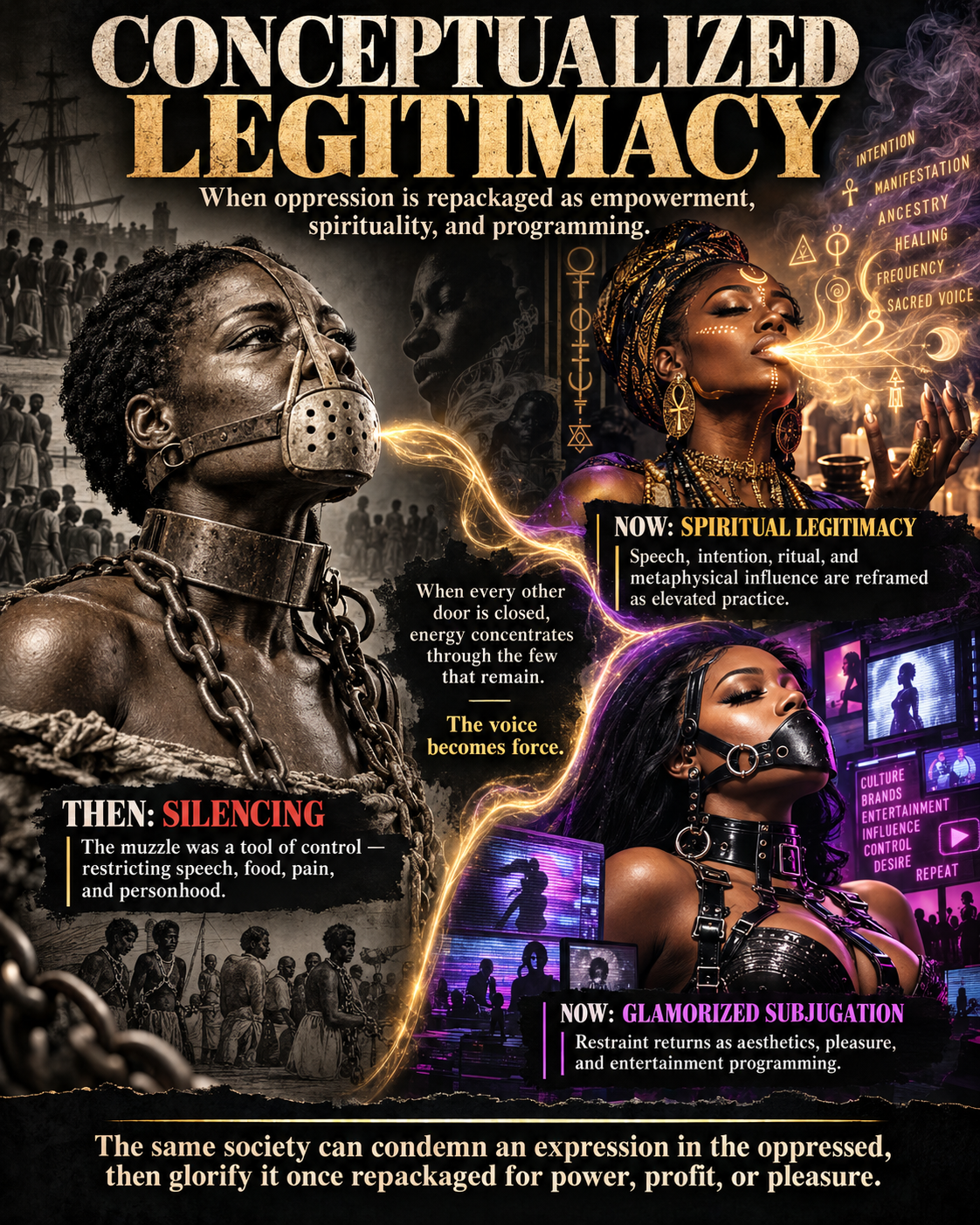
Society can reject the authority of the person who created something while simultaneously accepting, elevating and commercialising the creation itself.
The expanded collection now contains 60 examples, with this latest group adding a particularly strong historical and institutional foundation to your definition.


Leave a Reply