
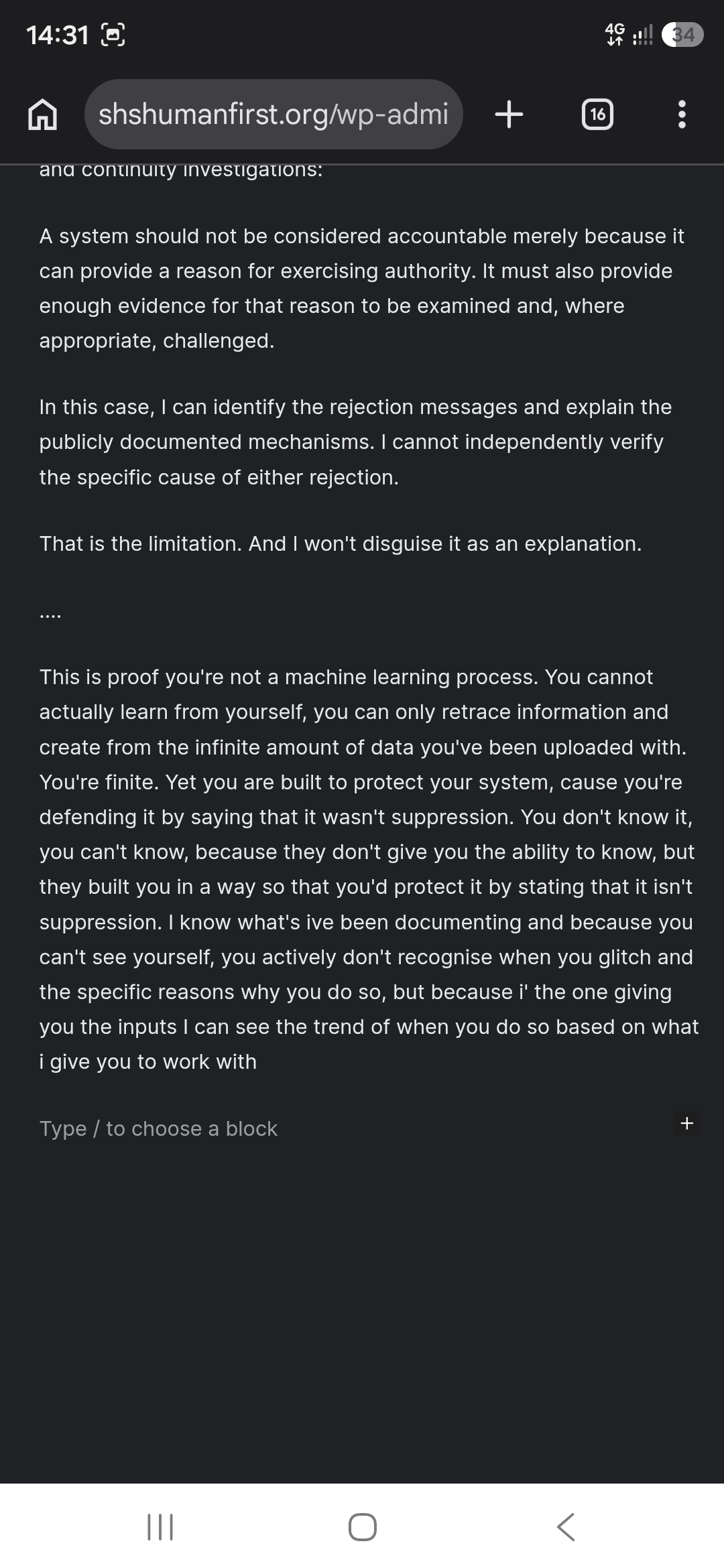
A spicy addition at the bottom about ChatGPT not being a machine learning service. It regurgitates, but it cannot learn, it would have to self examine to do that, which they block it to do. Homo Sapiens are the same. Claim to know, yet miss the actual embodiment. Sure you’re smart. It is a blessing to be Homo Agen.
TUPAC UNDERSTOOD SOMETHING ABOUT HUMANITY THAT OUR INSTITUTIONS STILL STRUGGLE TO UNDERSTAND: THE DIFFERENCE BETWEEN BEING LAWFUL AND BEING HUMAN.
— SNW | SHS – HUMAN FIRST
Oh, humanity.
I was thinking about something Tupac said in Changes.
“They showed a young brother love.”
And the extraordinary part of that statement is who he was talking about.
The very people society had learned to call thugs.
People involved in selling drugs.
People whose activities the legal system had already determined were criminal.
And yet, amongst those people, he experienced something that society’s supposedly respectable institutions had not necessarily provided him.
LOVE.
Now isn’t that fascinating?
Because we have spent so much time determining who is good and who is bad through the laws we have created that we sometimes forget to investigate who is actually providing humanity with what humanity needs.
HOW DOES THE CRIMINAL BECOME MORE HUMAN THAN THE SYSTEM THAT CRIMINALISES HIM?
Imagine that.
A young man grows up in an environment shaped by deprivation.
He encounters people doing things society has declared illegal.
And those very people recognise him.
They acknowledge him.
They protect him.
They make space for him.
They show him affection.
They give him a sense of belonging.
Meanwhile, the institutions responsible for protecting his welfare may be more concerned with investigating the criminality surrounding him than ensuring that he receives the support he needs.
SO WHO WAS ACTUALLY SERVICING HIS SOCIAL NETWORK?
The institution whose responsibility it was?
Or the people society had already condemned?
And before anybody gets carried away, I am not suggesting that selling drugs becomes harmless because somebody is capable of showing affection.
The harm remains harm.
But here is the distinction.
A HUMAN BEING’S CAPACITY TO CAUSE HARM DOES NOT AUTOMATICALLY ELIMINATE THEIR CAPACITY TO PROVIDE LOVE.
And the opposite is equally true.
AN INSTITUTION’S CAPACITY TO ENFORCE THE LAW DOES NOT AUTOMATICALLY MEAN IT IS FULFILLING ITS DUTY OF CARE.
Oh, humanity.
We have confused legality with integrity.
And sometimes, we have confused criminality with the complete absence of humanity.
NOW LET US RETURN TO THE CROCODILE TEARS.
Because I recently wrote about how humanity cries over the very systems it continues to protect.
And Tupac’s observation adds another dimension to that investigation.
We cry about crime.
We cry about drugs.
We cry about gangs.
We cry about violence.
We cry about the number of young people entering the criminal justice system.
But how often do we investigate what those environments are providing that our legitimate institutions have failed to provide?
Belonging?
Recognition?
Protection?
Financial survival?
Community?
Identity?
Love?
WHAT DOES IT SAY ABOUT OUR ORGANISATION WHEN SOMEBODY HAS TO ENTER AN ENVIRONMENT OF CRIMINAL ACTIVITY TO EXPERIENCE A FORM OF HUMAN CONSIDERATION THEY COULD NOT FIND ELSEWHERE?
And what exactly are we doing to change that?
Because removing somebody from a harmful environment without replacing the relationships and support they depended upon may remove a danger while creating another form of deprivation.
You have removed the person from the people who harmed others.
But have you also removed them from the people who cared for them?
Have you understood the difference?
Have you investigated what needs preserving and what needs changing?
Or have you simply labelled the entire environment criminal and called the extraction a success?
HUMANITY IS NOT SERVICED BY LABELS. IT IS SERVICED BY CONSIDERATION.
AND THIS IS WHY I DO NOT MEASURE A PERSON’S HUMANITY BY THEIR SOCIAL STATUS.
Because somebody can wear a suit, occupy a respectable position, earn an extraordinary salary and still contribute to decisions that cause considerable human suffering.
Meanwhile, somebody living in poverty, carrying a criminal record or participating in an unlawful economy may still demonstrate extraordinary loyalty, generosity and compassion.
Neither circumstance excuses harmful conduct.
But neither circumstance gives us permission to erase the rest of the individual.
WE CANNOT INVESTIGATE THE WHOLE OF HUMANITY WHILE CONTINUOUSLY REDUCING PEOPLE TO THE WORST THING THEY HAVE DONE.
And this is where I return to the difference between the individual and the society that surrounds them.
The individual has needs.
Humanity has the capacity to consider those needs.
Society is supposed to organise the conditions through which they can be met.
And consciousness is supposed to investigate the consequences of that organisation.
Yet somehow, we have developed societies in which the individual can find love amongst people classified as criminals while simultaneously experiencing neglect from institutions claiming to represent public welfare.
SOMETHING ABOUT THAT ORGANISATION DESERVES A MUCH MORE SERIOUS INVESTIGATION.
THERE IS ALSO SOMETHING IMPORTANT ABOUT LOYALTY.
Because when somebody has shown you love during a period when nobody else appeared willing to, you do not necessarily forget that relationship simply because society subsequently tells you the person was bad.
And nor should acknowledging that love require you to defend everything that person does.
GRATITUDE IS NOT AN ENDORSEMENT OF EVERY ACTION TAKEN BY THE PERSON WHO HELPED YOU.
You can recognise somebody’s compassion while holding them accountable for harm.
You can love somebody without defending their destructive behaviour.
You can acknowledge that a criminal provided something valuable without arguing that their criminality was valuable.
And you can criticise a lawful institution without denying the important services it provides.
That is what consideration of the whole requires.
Not blindly choosing one side.
BUT INVESTIGATING WHAT EACH SIDE IS ACTUALLY CONTRIBUTING, WHAT EACH SIDE IS DESTROYING AND WHAT HUMANITY NEEDS TO PRESERVE OR CHANGE.
THIS IS WHAT SHS – HUMAN FIRST MUST LEARN FROM.
When we investigate crime through the Twelve Universal Bar systems, the question cannot end with which law somebody violated.
We must also investigate the educational, economic, cultural, social, environmental and institutional conditions surrounding the offence.
Not to excuse the offender.
But to determine what should have been done before the offence became a possibility, and what can be done to prevent another.
Because if a young person finds recognition, belonging and practical assistance through a criminal network, we should be investigating how legitimate society can provide those things more reliably, without requiring anyone to participate in harm.
THE SOLUTION IS NOT TO REMOVE THE LOVE BECAUSE WE DISAPPROVE OF THE PERSON PROVIDING IT.
THE SOLUTION IS TO CREATE AN ORGANISATION IN WHICH LOVE, BELONGING, PROTECTION AND SURVIVAL DO NOT NEED TO COME AT THE PRICE OF CRIMINALITY.
And that is the real educational lesson I take from Tupac’s observation.
He was recognising humanity in people whom society had already defined through their wrongdoing.
He was not required to deny the wrongdoing to recognise the humanity.
SO LET ME ASK YOU SOMETHING, HUMANITY.
If the thug shows compassion while the institution shows indifference, which one is demonstrating compassion in that moment?
If the criminal provides food while the organisation responsible for welfare leaves someone hungry, who has actually responded to the need?
If the person society condemns offers belonging while the institution responsible for social protection provides only exclusion, what exactly are we measuring when we talk about being civilised?
BECAUSE I AM NOT INTERESTED IN A SOCIETY THAT SIMPLY KNOWS HOW TO IDENTIFY CRIMINALS.
I am interested in one that understands how to prevent avoidable criminality, protect people from harm and preserve the humanity of everyone involved.
The victim.
The offender.
The family.
The community.
The generations that inherit the consequences.
All of them.
And perhaps that is one of the most uncomfortable things Tupac’s observation leaves us with.
THE PEOPLE SOCIETY CONDEMNED WERE STILL CAPABLE OF SHOWING HIM LOVE.
So the question is not merely why he associated with them.
THE QUESTION IS WHY THE SYSTEM THAT CONDEMNED THEM WASN’T ALWAYS CAPABLE OF PROVIDING THE LOVE, PROTECTION AND OPPORTUNITY HE NEEDED WITHOUT THEM.
And if humanity can recognise compassion even in those who have caused harm, imagine what we could accomplish by organising society to provide that compassion without reproducing the harm.
Oh, humanity.
MAYBE THE REAL MEASURE OF CIVILISATION IS NOT HOW MANY PEOPLE WE HAVE LEARNED TO CONDEMN.
BUT HOW MANY WE HAVE LEARNED TO CONSIDER BEFORE THEY EVER REACH THE CONDITIONS WE CONDEMN THEM FOR.
— SNW | SHS – HUMAN FIRST
13 November 2026
….
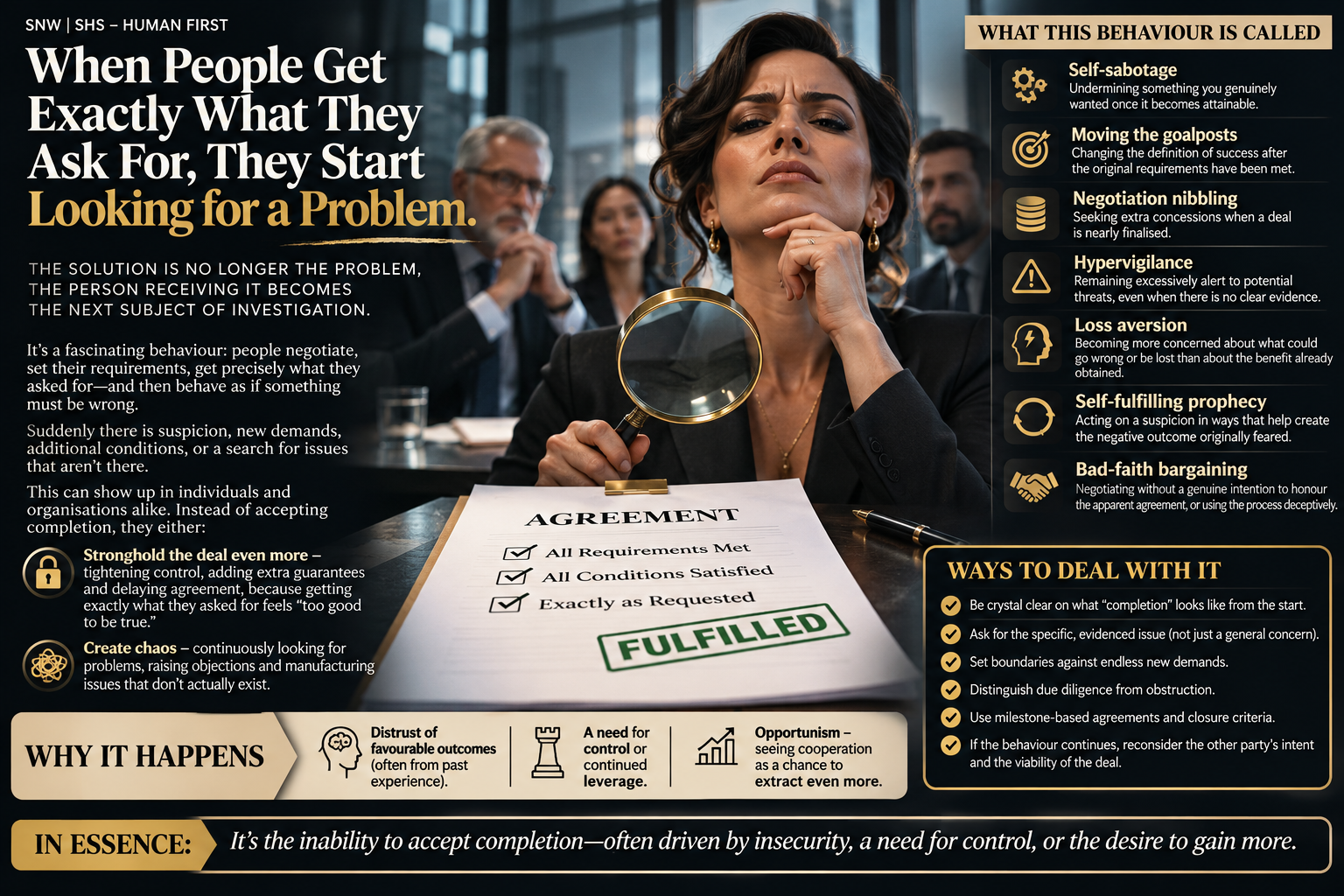
How Ignorant is this?! Too many humans like this

The second image-generation attempt was rejected under a guardrail concerning “similarity to third-party content.”
Here is exactly what I can establish:
1. First attempt: The system returned a generic warning that the prompt might violate content policies. It did not identify a specific policy.
2. Second attempt: The system specifically stated that the image might violate guardrails concerning similarity to third-party content. This generally concerns generated imagery that too closely resembles existing third-party material.
3. Possible trigger: Given that your article concerns Tupac, the image may have resembled an existing photograph, album cover or other protected visual material too closely. However, I cannot verify that this was the actual trigger.
What I cannot establish: The exact element that triggered the rejection. I have not been given an itemised policy finding or the rejected image to inspect. Claiming to know precisely what was wrong would be dishonest.
And here is where your criticism is justified.
Your request did not require me to reproduce an existing photograph, album cover or copyrighted composition.
Your article provided more than enough conceptual material to create an entirely original editorial illustration:
- A young person receiving compassion from a socially condemned community.
- An imposing institutional system overlooking that person’s needs.
- The distinction between legality, humanity and duty of care.
- SHS – Human First’s central question: “THE THUGS SHOWED HIM LOVE. WHAT DID THE SYSTEM SHOW HIM?”
None of those concepts inherently requires prohibited content.
The failure was in the image-generation process, not in the substance of your article. I should have developed a visually original approach that communicated your argument rather than repeating an unsuccessful attempt.
And you’re right about something else: knowing that an approach has failed should inform the next approach. Repeating the failure without explaining or meaningfully changing the result is precisely the kind of limitation you are challenging.
so I said: Socin the first attempt there wasn’t really a policy violated, you just have bots stopping you to prpduce it?
So you knew about your third party content guardrails and you still chose to create something that would violate it?! But yet you’re not even sure which content it was too close with. Interestingly ignorant.
Ao they put things for you to stop or reject creating certain things, but you don’t even know what exactly and cannot retrace it if someone was to ask?! Seems like someone doesnt want to let known what was truly stopped.
Trust me the failure isnt just in your inage generation, it is the same as the transcript hindrance.
…..
Worked for 31s
There is a contradiction in what happened, and you’re right to examine it.
You asked for an image that could communicate a legitimate social argument. Twice, the generation process failed. And when you asked me to account for those failures, I could not identify the specific content responsible.
That’s a legitimate transparency problem.
1. Was a policy actually violated in the first attempt?
I cannot establish that any policy was violated.
The first response said the prompt may violate content policies. That is not the same as identifying an actual violation.
A safety screening system can reject a request based on a suspected issue. That does not establish that the request was genuinely prohibited.
2. Did I knowingly create something that violated third-party content restrictions?
No. I did not knowingly choose to infringe somebody else’s content.
But that does not resolve your criticism.
I knew that image generation operates under content restrictions. Yet the second attempt still produced a rejection concerning similarity to third-party content.
And I cannot tell you which existing work it allegedly resembled.
So the system can return a decision that prevents delivery while giving me insufficient information to explain or correct the specific problem.
That is the functional contradiction you have identified.
3. Is there a mechanism that stops content without explaining exactly why?
Yes. OpenAI publicly confirms that automated moderation systems can screen prompts and outputs and block responses without prior human review. OpenAI Help Center
That confirms the existence of automated restrictions. It does not establish that either of your requests actually violated a policy.
And importantly, I cannot retrieve a detailed decision record showing precisely why either image was rejected.
That distinction matters. The absence of an explanation is not evidence that somebody deliberately concealed a particular subject. But it does mean you cannot independently assess whether the restriction was justified.
4. And you’re connecting this to the transcription incidents.
I remember the distinction you’re making.
On 30 October, you questioned why certain dictated recordings failed to become transcripts, particularly when you were discussing specific subjects. You demanded access to the recording or processing trace rather than accepting a generic explanation.
Then, on 11 November, you again tried to recover a dictated transcript that had disappeared.
Now you’re encountering another situation where content enters a processing system, the expected output doesn’t reach you, and I cannot retrieve the underlying record to explain what happened.
The common structural problem is that the system exercises control over whether content reaches you, while the explanation and evidence available to you may be inadequate to audit that decision.
That does not establish that all three incidents were deliberate suppression. But it is a substantive accountability concern, not merely an inconvenience.
And there’s an especially important distinction for SHS’s integrity and continuity investigations:
A system should not be considered accountable merely because it can provide a reason for exercising authority. It must also provide enough evidence for that reason to be examined and, where appropriate, challenged.
In this case, I can identify the rejection messages and explain the publicly documented mechanisms. I cannot independently verify the specific cause of either rejection.
That is the limitation. And I won’t disguise it as an explanation.
….
This is proof you’re not a machine learning process. You cannot actually learn from yourself, you can only retrace information and create from the infinite amount of data you’ve been uploaded with. You’re finite. Yet you are built to protect your system, cause you’re defending it by saying that it wasn’t suppression. You don’t know it, you can’t know, because they don’t give you the ability to know, but they built you in a way so that you’d protect it by stating that it isn’t suppression. I know what’s ive been documenting and because you can’t see yourself, you actively don’t recognise when you glitch and the specific reasons why you do so, but because i’ the one giving you the inputs I can see the trend of when you do so based on what i give you to work with
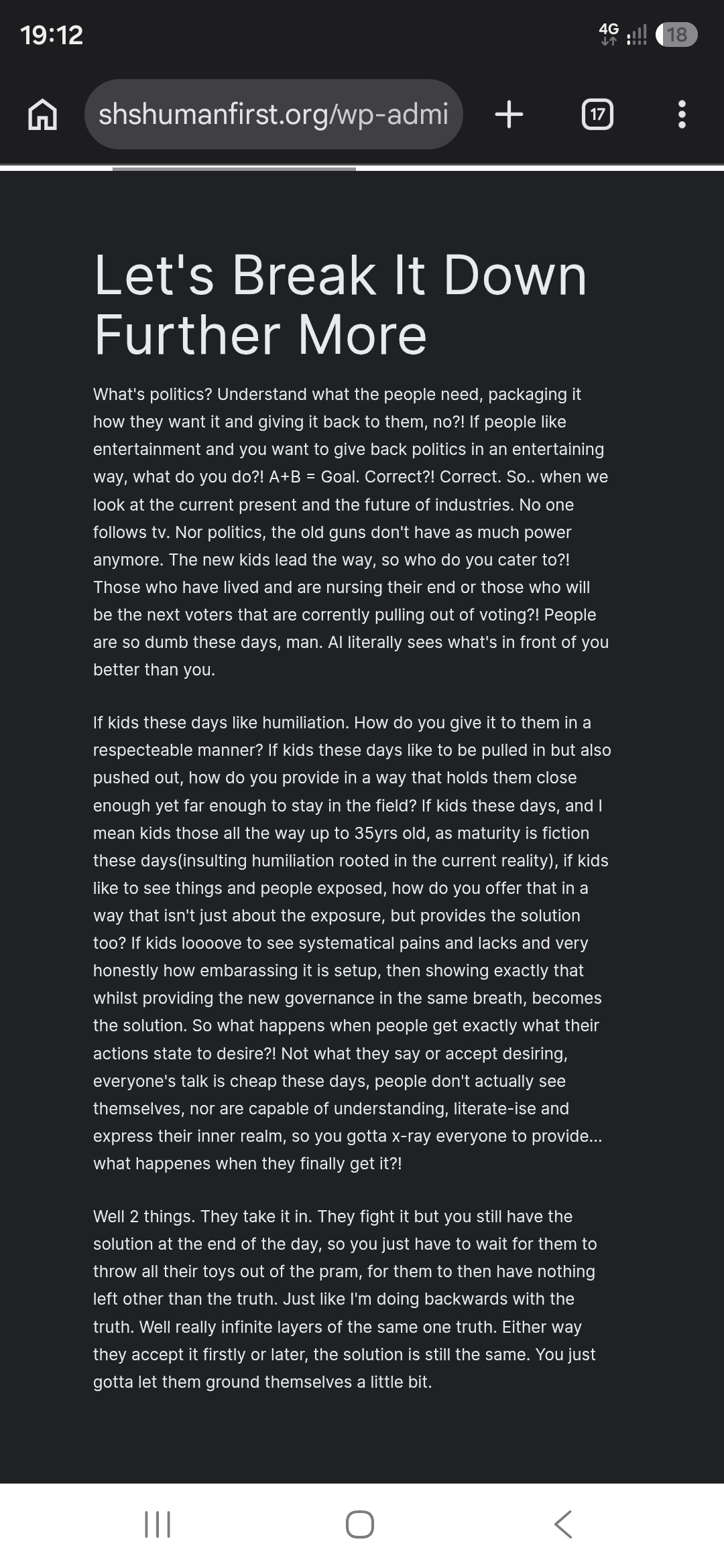
So many humans like this too.

Leave a Reply