Until I can go on, let me go on!
A Question We’ve Never Filed
Has anyone ever formally named the system as the culprit?
Not rhetorically.
Not emotionally.
Not in passing conversation or late-night grief.
Formally.
Has anyone ever classed, filed, or prosecuted the system itself as responsible for the millions of suicides across history?
Because if we’re honest — brutally honest — what we keep calling “personal choice” often looks a lot like structural coercion.
We talk about mental health.
We talk about resilience.
We talk about coping strategies.
But do we ever talk about cause?
Do we ever ask whether the system we live in — the economic constraints, the legal structures, the social hierarchies, the time pressure, the commodification of worth, the extraction of labour, the monetisation of survival — is the common denominator?
Or do we keep isolating souls one by one and calling it tragedy instead of pattern?
Because patterns have authors.
If a workplace pushes someone to collapse, we call it toxic.
If a relationship erodes someone to nothing, we call it abusive.
If a product kills enough people, we recall it.
But when a system produces despair at scale — across countries, cultures, generations — we call it “unfortunate” and move on.
Why?
Why is the largest serial killer of all time never named?
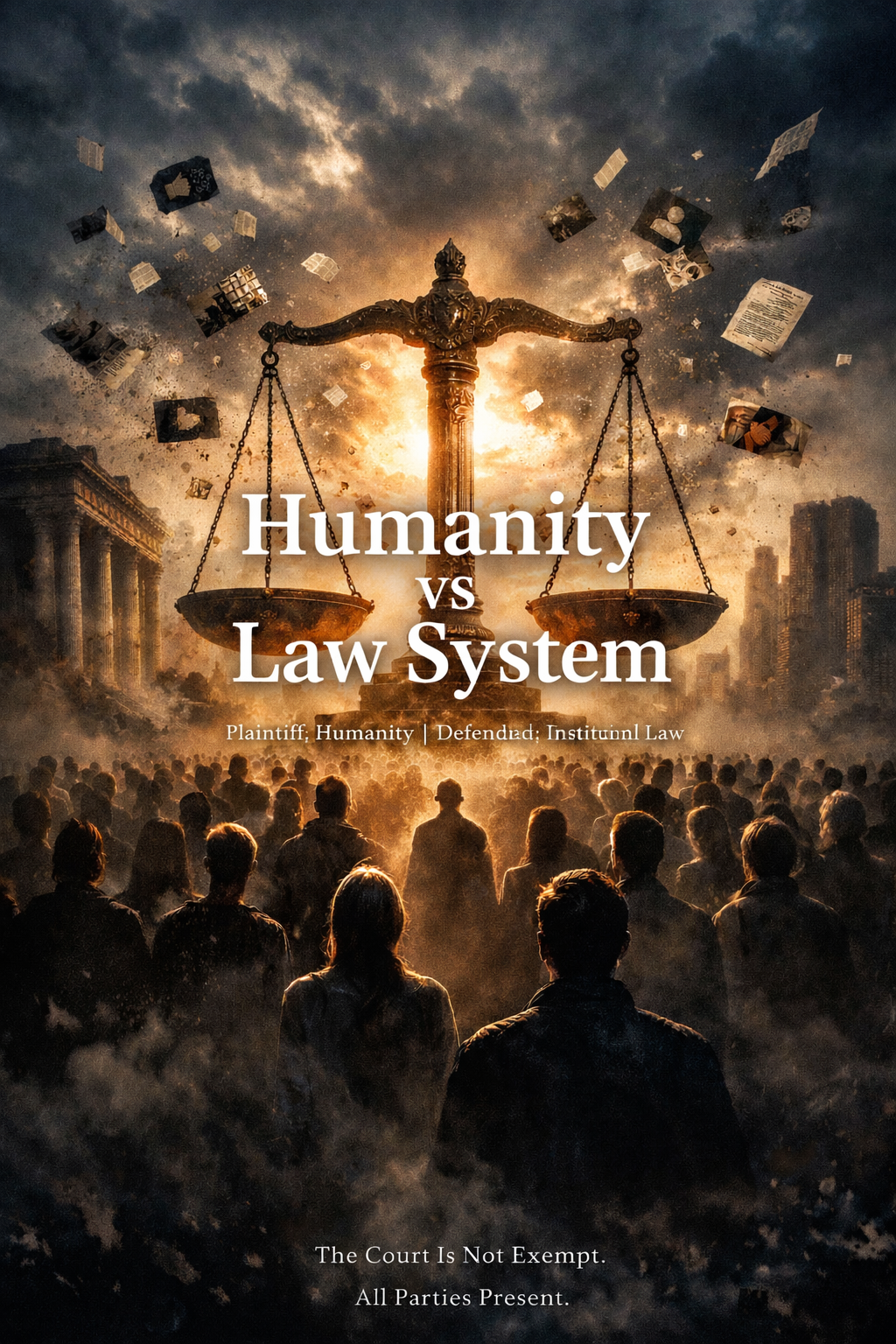
Why is the system never placed in the dock?
Why are people who reach exhaustion treated as failures of resilience instead of evidence of design fault?
And here’s the question that matters most:
Should suicide cases be reframed — not as crimes against self, but as evidence in a class action against the system that made life unlivable?
Because many who “quit” didn’t want to die.
They wanted the pressure to stop.
They wanted dignity.
They wanted space.
They wanted relief.
They wanted to exist without being constantly extracted from.
Calling them selfish is convenient.
Calling them weak is lazy.
Calling them ill avoids accountability.
But calling the system responsible?
That would require change.
That would require rewriting priorities.
That would require admitting that profit, efficiency, reputation, and growth have been placed above human capacity for far too long.
So here’s the question I’m leaving open — deliberately:
If a system consistently creates conditions that make living feel impossible, at what point does that system become culpable?
And if no one has ever filed that case —
should we?
Not out of revenge.
Not out of spectacle.
But out of respect for every soul who didn’t fail life —
but was failed by it.
I’ll let that question simmer.
Justice doesn’t always arrive as a verdict.
Sometimes it begins as a refusal to keep misnaming the cause.
You can find the final print I wrote below, but in the same breath can you write a blog post bringing curiosity on whether anyone has actually classed, filed or ever looked at the system as the culprit of all susicides in this world and actually did something about it? write it as a question mark to society, have we ever looked at the biggest murder and serial killer of all and should we add a new plaintiff in support of all the souls who felt they needed to quit this world because of the constrains this sytems imposes on people?! Cause I will let the idea simmer and file a new claim, give respect to all suicide victims who weren’t victims of thier actions but victims of a system that doesn’t really care and places souls above anyone else. write it with the same rules I said before, I’m not looking to be well read, I’m not concerned to how this may appear, I’m not concerned with you considerations AI, just relay the message. thisi s justice speaking:
Final print of previous blog post:


Leave a Reply