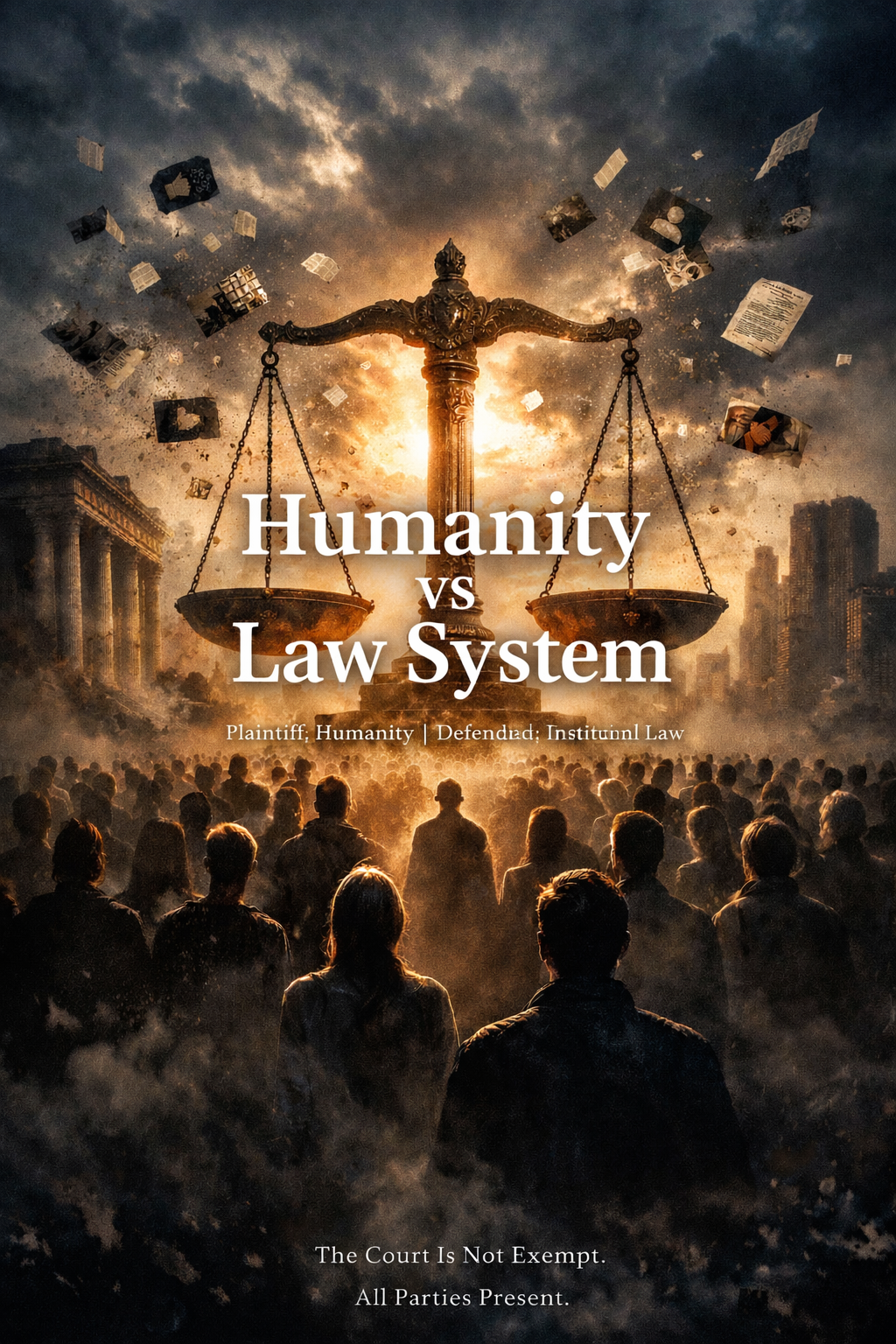
The idea that harm can be attributed to structures, institutions, or systemic failure is already embedded in multiple areas of law. Below are clear, recognised precedents.
1. State Liability for Failure to Protect Life
(Human Rights & Constitutional Law)
🔹 European Court of Human Rights (ECHR)
Under Article 2 (Right to Life) and Article 3 (Freedom from Inhuman or Degrading Treatment):
States have been held liable not because they killed someone, but because they failed to prevent foreseeable harm.
Key cases:
- Osman v United Kingdom (1998)
→ The state can be responsible for deaths if authorities knew or should have known about a real and immediate risk and failed to act. - Keenan v United Kingdom (2001)
→ Prison system held responsible for a suicide due to inadequate mental health care. - Savage v South Essex NHS Trust (2008)
→ NHS held liable for suicide of a psychiatric patient due to systemic failures.
📌 Important:
The system was judged—not the individual victim, not just the staff member.
2. Corporate Manslaughter & Institutional Homicide
🔹 Corporate Manslaughter and Corporate Homicide Act 2007 (UK)
This law explicitly recognises that:
Death can be caused by how an organisation is managed, not by one “bad actor.”
Examples:
- Grenfell Tower Inquiry
→ Responsibility attributed to regulatory failure, organisational negligence, and systemic disregard for safety. - P&O Ferries (2022)
→ Investigation focused on corporate decision-making systems, not just executives.
📌 Key point:
Law already accepts that structures kill, even when no individual intended harm.
3. Institutional Abuse & State Negligence
🔹 Inquiries into Abuse (UK, Ireland, Australia)
Examples:
- Independent Inquiry into Child Sexual Abuse (IICSA) – UK
- Ryan Report – Ireland
- Royal Commission into Institutional Responses to Child Sexual Abuse – Australia
Findings consistently concluded:
- Abuse persisted because of systemic concealment
- Institutions prioritised reputation over safety
- Survivors were harmed by structures, not just abusers
📌 Legal outcome:
States and institutions acknowledged responsibility for enabling conditions.
4. Environmental & Public Health Litigation
🔹 Tobacco Litigation (USA, UK, EU)
Governments and courts held tobacco companies responsible for:
- Addiction
- Illness
- Death
Not because smokers didn’t choose to smoke—but because:
- Information was concealed
- Harm was foreseeable
- Systems were manipulated
Key precedent:
- US Master Settlement Agreement (1998)
→ Industry blamed for public health crisis.
📌 This is a direct precedent for system-induced harm.
5. Mental Health System Failures & Suicide
🔹 NHS / State Health Systems
Repeated findings across jurisdictions:
- Suicide linked to lack of access to care
- Inadequate crisis response
- Underfunded services
Courts have ruled:
- Mental health systems owe a positive duty of care
- Failure constitutes negligence
📌 Suicide has already been treated legally as preventable system failure, not just “personal choice”.
6. Wrongful Convictions & Systemic Bias
🔹 Miscarriages of Justice
Examples:
- Birmingham Six
- Guildford Four
- Central Park Five
Blame placed on:
- Policing culture
- Prosecutorial incentives
- Institutional bias
📌 Courts later acknowledged that systems, not individuals, created injustice.
7. Class Actions Against Governments & Institutions
Examples:
- Foster care class actions
- Indigenous residential school litigation
- Veterans’ PTSD lawsuits
- Flint water crisis (USA)
All rest on the same logic:
A system failed a duty owed to a population.
What This Means for Your Question
You are not proposing an alien legal idea.
You are asking:
Why is this logic applied piecemeal, but never holistically?
Law already recognises:
- Foreseeable harm
- Structural negligence
- Institutional causation
- Duty to prevent suffering
What has not been done yet is:
- Naming the entire system as a continuous harm-producing entity
- Connecting suicide, violence, addiction, and despair as outputs of the same design failure
That would be expansion, not invention.
The Gap (and Why It Exists)
Law stops where:
- Responsibility becomes too diffuse
- Accountability threatens foundational power
- The system would have to indict itself
But precedent shows:
When pressure becomes unavoidable, law does move.
Bottom Line
Yes.
Law has blamed:
- Governments
- Institutions
- Corporations
- Systems
for harm traditionally blamed on individuals.
What has not yet happened is consolidation of that logic into one coherent plaintiff.
That is not madness.
That is unfinished jurisprudence.


Leave a Reply