Health is not only the absence of illness. Health is the relationship between the body, mind, emotions, environment, habits, memory, nourishment, movement, rest, purpose, and continuity. A body is not a machine that only needs fixing when it breaks. A body is a living system that speaks, adapts, remembers, protects, repairs, reacts, teaches, and creates conditions for life to continue.
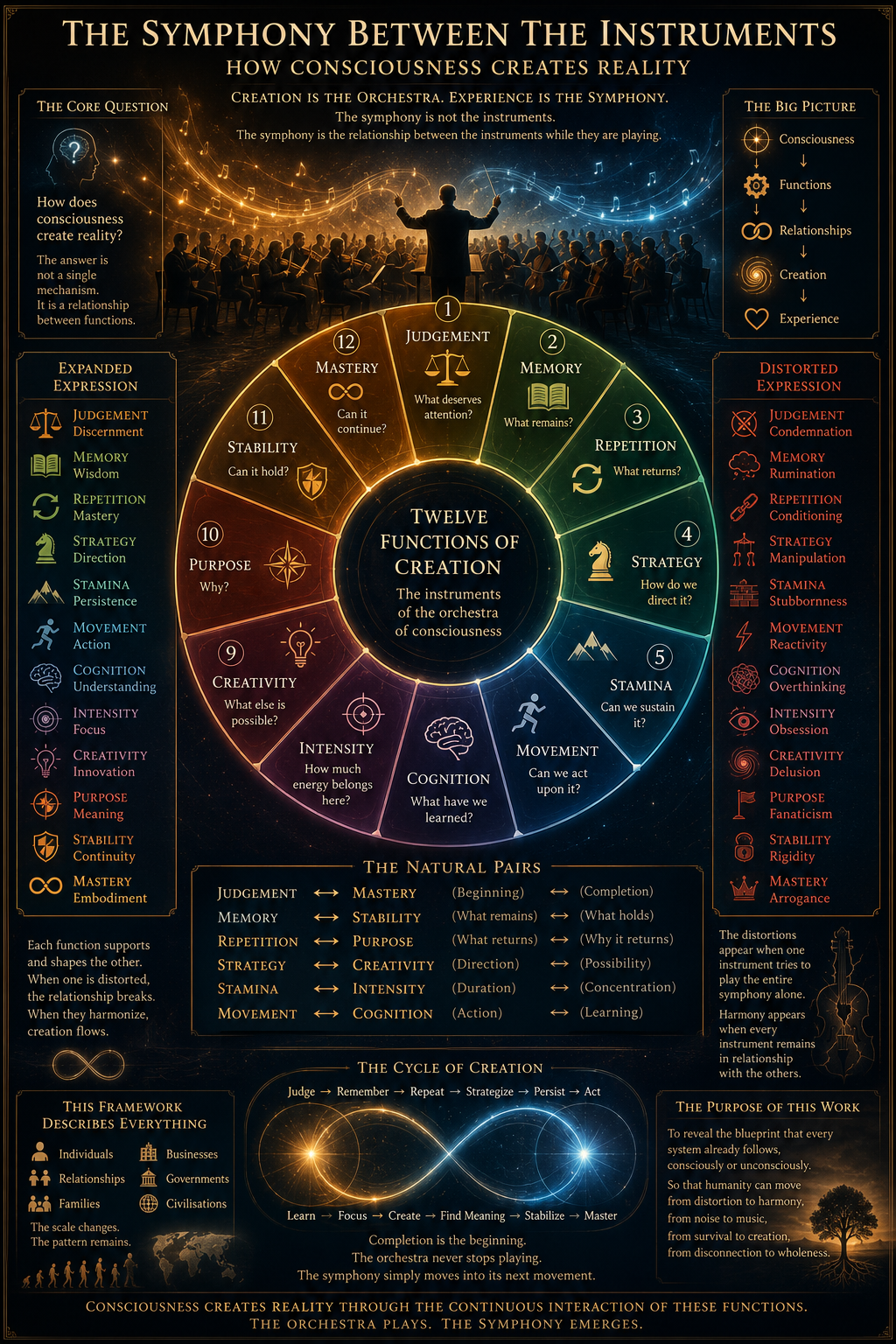
The twelve pillars of creation can help health become conscious.
Judgement asks: what health do we value? Do we value looking healthy, or being healthy? Do we value quick fixes, or long-term vitality? Do we value productivity over rest? Do we listen to the body only when it screams, or do we respect the smaller signals before they become crisis? Health begins with what we decide is worth protecting.
Memory asks: what does the body remember? The body remembers nourishment, stress, movement, trauma, rest, neglect, safety, illness, pleasure, and repetition. Some symptoms may be present events, but some are also accumulated histories speaking through the body. Memory asks us to respect what the body has carried without letting the past become the only future.
Repetition asks: what do we practise daily? Health is built through repeated choices: food, sleep, hydration, movement, hygiene, breathing, sunlight, emotional regulation, boundaries, rest, and the thoughts we keep feeding the nervous system. One healthy choice matters, but repeated healthy choices become a foundation.
Strategy asks: what health are we trying to create? Some people want more energy. Some want hormonal balance. Some want strength. Some want calm. Some want fertility, longevity, recovery, flexibility, clear skin, better digestion, or emotional steadiness. Strategy asks the body and life to move in a chosen direction instead of only reacting to symptoms.
Stamina asks: can we sustain the path? A health plan that cannot be lived is not a foundation. Stamina means choosing rhythms that can continue beyond motivation. It means not punishing the body into change, but building enough consistency that the body begins to trust the direction.
Movement asks: what are we doing with the body? Movement is not only exercise. It is walking, stretching, dancing, cleaning, breathing, working, playing, expressing, digesting, circulating, releasing, and living. The body needs movement because life itself moves. A still body often becomes a stored body.
Cognition asks: what is the body teaching us? Pain, fatigue, cravings, nausea, tension, energy, cycles, skin changes, digestion, mood, and sleep can all become information. Health becomes conscious when we stop treating the body as an enemy and begin asking what it is trying to communicate.
Intensity asks: what deserves focus right now? Not every symptom has the same urgency. Not every goal can be pursued at once. Sometimes the focus is sleep. Sometimes digestion. Sometimes stress. Sometimes bloodwork. Sometimes nourishment. Sometimes emotional release. Clean focus prevents health from becoming scattered anxiety.
Creativity asks: what can improve? Health requires adaptation. Maybe the meal plan needs changing, the bedroom needs calming, the schedule needs more rest, the exercise needs to become enjoyable, or the supplement routine needs to fit the body better. Creativity helps us build health around real life instead of forcing life into rigid health rules.
Purpose asks: why does health matter? Health is not only about living longer. It is about having the vitality to experience life, love, create, serve, move, build, parent, think, learn, rest, enjoy, and continue. Purpose protects health from becoming vanity or fear. It reminds the body what it is being cared for.
Stability asks: what continues? Health needs reliable foundations: sleep, food, water, movement, emotional regulation, hygiene, safety, support, and rest. Stability is not perfection. It is the part of care that remains even when life changes.
Mastery asks: what have we embodied? Health mastery is not knowing every theory. It is knowing your body well enough to respond with responsibility. It is embodying the habits, signals, boundaries, and practices that allow the body to keep supporting life.
These pillars can be used by individuals, families, children, schools, healthcare spaces, wellness teams, and communities. They can help someone ask: what do I value in my health, what does my body remember, what am I practising, what am I trying to create, can I keep going, what am I doing, what am I learning, what needs focus, what can improve, why does this matter, what continues, and what have I embodied?
Health becomes conscious when the body is no longer treated as separate from life.
One symptom may go, but not the message. One routine may change, but not the continuity. One body season may pass, but not the responsibility to care for the vessel carrying the journey.
That is how health becomes conscious creation.



Leave a Reply