
Let me play devil’s advocate for Meta, because there is a legal and systemic question here that becomes far more interesting than simply deciding that a large corporation must be guilty because something harmful occurred around the product it created.
Four US states—California, Colorado, Kentucky and New Jersey—are seeking approximately $1.4 trillion in civil penalties from Meta over allegations that Facebook and Instagram were deliberately designed to addict young users and that Meta misled the public about their safety. The calculation reportedly comes from multiplying statutory penalties by an estimated number of affected users, rather than from a finding that Meta directly caused $1.4 trillion in measurable damage. The case is due to proceed to trial in August, and Meta disputes both the accusations and the proposed calculation.
So the question I would raise for Meta is not merely, “Did people experience harm while using these platforms?” The harder question is: who was legally responsible for building the conditions surrounding that use before the alleged damage reached this scale?
Facebook did not emerge outside the law. Instagram did not secretly build itself beyond governmental visibility. These platforms expanded publicly, advertised openly, generated taxable income, employed thousands, entered schools, homes, elections, businesses and childhoods while governments watched, regulated selectively, collected revenue and continued allowing the same business model to operate. If the architecture was dangerous enough to justify a penalty approaching the value of the company itself, why was that architecture legally permitted to become globally embedded before legislators decided that its success had crossed into punishable harm?
That is not an argument that Meta carries no responsibility. It is an argument against allowing government to behave as though it arrived after the fact as an innocent observer.
A legal system cannot knowingly permit an industry to develop around engagement, targeted advertising, personalisation and prolonged attention, then suddenly treat the most successful participant as though it independently invented the entire social order that rewarded those things. Meta was not operating in a vacuum. It was operating inside a market where attention was monetised, marketing was built to influence behaviour, companies were expected to maximise engagement, shareholders expected growth, and governments had every opportunity to establish clearer limits before billions of people became dependent upon the product.
If making a platform attractive is itself the offence, where does that leave advertising?
Marketing exists to make an offering memorable, desirable and repeatedly chosen. Supermarkets study placement. Streaming services automatically recommend the next programme. Games reward continued participation. Casinos deliberately engineer anticipation. Food companies refine flavour and texture to encourage repeat purchasing. Fashion sells identity. News organisations design headlines to capture attention. Every commercial industry studies human psychology because appealing to human behaviour is one of the foundations of commerce.
Meta’s defence could therefore ask: at what exact point does successful attraction become unlawful addiction, and was that boundary clearly defined while the company was building the product?
If the boundary was not clear, then the state may be attempting to punish Meta retrospectively for exceeding a standard that legislators themselves had not yet properly articulated. That would convert a regulatory failure into a corporate sentence. It would allow the system to collect the profits, taxes and public benefits of technological expansion while it was convenient, then isolate the company as the sole author of consequences that the wider legal and cultural architecture helped cultivate.
The EU’s present case makes this tension even clearer. The European Commission has issued preliminary findings that features such as autoplay, infinite scrolling and personalised recommendation loops may violate the Digital Services Act because of their potential to encourage compulsive use, particularly among children and vulnerable users. The Commission wants stronger default protections, meaningful screen-time interruptions and changes to engagement-based recommendations; Meta disputes the findings and points to protections it has already introduced for teenagers. Potential penalties could reach 6% of global annual turnover if the findings are upheld.
But infinite scroll was not created in a legal darkness. Autoplay was not invisible. Recommendation algorithms were not discovered yesterday. Governments, regulators, schools, parents, advertisers, researchers and users have known for years that these features are designed to hold attention. If they were structurally incompatible with public welfare, why were they not prohibited or restricted through clear prospective legislation before becoming standard across an entire digital economy?
Why does accountability only become urgent after scale makes the available penalty enormous?
Meta could argue that the state is confusing regulation with punishment. Regulation says: these are now the standards; redesign the product accordingly. Punishment says: you should have known the standards before we adequately defined or enforced them, and now you must pay for every person who passed through the legal environment we helped maintain.
Those are not the same thing.
The strongest version of Meta’s defence would therefore be that it should not be made financially responsible for every educational, parental, legislative and social failure surrounding young people’s use of technology. Meta does not control whether schools teach digital literacy. It does not determine whether children understand emotional regulation, attention management, advertising psychology or algorithmic influence. It does not decide whether parents have time, knowledge or resources to supervise their children’s online lives. It does not design the wider economic system in which exhausted adults hand devices to children because childcare, community life and public infrastructure have already been weakened.
A company cannot be expected to become the missing parent, school, health service, regulator and cultural educator while also being treated strictly as a private company whenever its wider social contribution is discussed.
If the system believes children require education in attention, emotional regulation, media literacy and digital boundaries, then the system has a duty to provide that education. If it believes certain designs are too powerful for children, it should establish age restrictions, design standards and enforceable limits before harm occurs. If it permits those products to operate without such infrastructure, it cannot later pretend that legislation played no role in producing the environment under examination.
But here is where Meta’s defence would meet its hardest challenge.
Legality is not a permanent immunity once a company possesses information that regulators and consumers do not. The states are not merely arguing that the platforms happened to become popular. They allege that Meta deliberately designed them to encourage compulsive use among children and misled the public about their safety. Twenty-nine states have also brought claims under the federal Children’s Online Privacy Protection Act concerning the collection of children’s data without proper parental consent. Those allegations, if proven, move the case beyond ordinary marketing and into questions of concealment, consumer deception and statutory duties that already existed.
Marketing makes a product desirable.
Deception prevents the public from accurately evaluating the cost of that desire.
Those cannot be treated as identical.
If Meta possessed internal evidence showing substantial risks to children and publicly represented the platforms in ways inconsistent with that evidence, the defence of legislative failure becomes weaker. A company cannot reasonably argue, “The government did not stop us,” if it withheld or distorted information the government and public required in order to understand what needed stopping. A legal gap may explain why a product was permitted, but it does not necessarily excuse alleged misrepresentation within that gap.
The real legal argument, then, should not be that Meta is entirely innocent because everything it did was legal. Nor should it be that Meta alone created every consequence because it built a successful product. The question should be one of distributed responsibility.
What responsibility belonged to Meta as the designer possessing specialised knowledge?
What responsibility belonged to governments that permitted and benefited from the business model?
What responsibility belonged to regulators who acted only after mass adoption?
What responsibility belonged to schools that failed to teach digital self-governance?
What responsibility belonged to parents, advertisers, investors and a culture that continually demanded more convenience, stimulation and growth?
And perhaps most importantly, why does the law keep waiting until a harm becomes culturally enormous before creating the structures that could have prevented it?
A $1.4 trillion penalty would not merely punish misconduct. At that scale, it could approach an attempt to economically dismantle one of the world’s largest companies. A sanction of that magnitude should therefore require exceptionally clear proof—not simply that Meta created appealing products, not simply that some users struggled to regulate their use, but that Meta knowingly crossed established legal duties, materially misled the public, and caused harms sufficiently connected to its conduct to justify the calculation being proposed.
Otherwise, the legal system risks creating a dangerous precedent: allow companies to innovate inside vague boundaries, reward them while they expand, neglect to build the education and regulation required by the new environment, and then transfer the accumulated failure of the whole ecosystem onto the company once public consequences become politically impossible to ignore.
If I were representing Meta, I would not argue that addictive design does not matter.
I would argue that the state cannot outsource prevention and then monopolise punishment.
I would ask the court to separate attraction from deception, commercial success from unlawful conduct, individual harm from automatic universal causation, and corporate responsibility from the jurisdictional failures that allowed the entire ecosystem to develop exactly as it did.
Meta should answer for what Meta knowingly did.
But Mark Zuckerberg should not be made to pay $1.4 trillion for everything legislators, institutions, educators, parents, markets and culture failed to do around him.
Because when a system creates the legal soil, watches the company grow, benefits from the harvest and only later declares the fruit poisonous, the company may not be the only party that belongs at the defence table.
…
- arguments on causation, fair notice, proportionality, due process, regulatory acquiescence, intervening responsibility and damages.
Investigate whether the states:
- knew for years how engagement systems worked;
- permitted the same design practices throughout the digital market;
- benefited through taxation, political communication and public-sector use;
- failed to establish adequate youth digital-literacy protections;
- delayed regulation despite possessing evidence of foreseeable risk;
- are now attempting to treat regulatory delay as exclusively corporate misconduct.
The phrase I would focus on is systemic lack of foreseeability architecture.
Not necessarily because nobody could foresee harm, but because the governing system allegedly failed to build the protective infrastructure that its own theory of harm now assumes should have existed.
If the state argues that adolescents were predictably vulnerable to recommendation systems, persuasive design and compulsive engagement, the defence can ask what governments did with that same predictability.
- Where were the mandatory digital-literacy programmes?
- Where were the age-verification standards?
- Where were the product-design boundaries?
- Where were the parental education systems?
- Where were the compulsory warnings?
- Where were the sector-wide rules applied equally to Meta, TikTok, YouTube, gaming companies, streaming platforms and advertisers?
The state cannot easily claim the danger was simultaneously obvious enough for Meta to owe trillions and obscure enough that legislators had no corresponding obligation to act.
Lawyers would warn me that the prosecution will say Meta possessed superior internal knowledge and exercised direct control over the product. They would argue that governmental delay does not excuse deception, concealment or a company’s violation of duties already established in law. They would also say that regulatory failure is not ordinarily a complete defence to private wrongdoing.
But your argument could still affect the distribution and scale of responsibility.
It could challenge the claim that Meta alone created the entire causal environment.
It could weaken an attempt to calculate penalties as though every affected account represented a separate, wholly Meta-produced injury.
It could support an argument that the proposed punishment is disconnected from measurable harm and is instead being used to make Meta absorb the cost of a civilisation-wide failure to adapt to digital life.
The state cannot outsource prevention and then monopolise punishment.
Meta accepts responsibility for any conduct proven against it, but the law must distinguish that conduct from the wider failures that enabled, normalised and amplified the alleged harm.
…
Grest, cause I know it is all about language tbey have to find the right language to put it in place but your answer here has given even more to offer them in case they were to ask for more.
I shared the tip of the icebrrg, the mountain they house its foundations, it is only the inbetween to be found, which by spreading responsibility could easily bring the number down exponentially. I saw their main point: ” Meta has strongly pushed back against the statutory calculations, calling them “outlandish” and completely unsupported by evidence. [1, 2]
- No Legal Precedent: In its filing, Meta stated that “a sanction of that size has no analog in the history of consumer protection enforcement.” [1]
- Lack of Psychiatric Basis: Meta is fighting the core premise of the suit by arguing that “social media addiction” is not an established psychiatric condition in medical manuals like the DSM-5-TR, meaning they could not have intentionally misled the public about it. [1, 2]
- Platform Safety Tools: The company points to its rollout of age verification, parental controls, and teen-focused safety adjustments to prove it has acted responsibly. [1, 2, 3]
The Broader Legal Landscape
This specific August 2026 trial sits at the center of a much larger, cascading legal crisis for Big Tech: [1, 2]
Case Scope
Details & Impact
The 29-State Federal Suit
In addition to the four states pushing the $1.4T fine, a total of 29 states are part of a broader federal lawsuit. This suit alleges Meta violated the federal Children’s Online Privacy Protection Act (COPPA) by harvesting children’s data without parental consent. The August trial will look at these federal claims concurrently.
The 14-State Secondary Trial
Another separate wave of 14 states have filed similar youth safety suits under local state laws, which are queued up for a separate trial in February 2027.
Private Civil Suits
Meta faces over 3,000 individual civil lawsuits in California state courts. Earlier in 2026, a Los Angeles jury set a dangerous precedent for tech companies by ordering Meta and Google to pay $6 million to a 20-year-old for mental health issues stemming from platform addiction.
The Impact on Investors & the Industry
Financial analysts view the $1.4 trillion figure primarily as an aggressive legal anchor intended to force a massive settlement, rather than a realistic final payout that would bankrupt the company. However, the case signals a permanent shift in tech regulation. If Meta loses or settles for a record-breaking sum, it will likely dictate how algorithms are legally allowed to maximize user engagement and could force severe design changes across the entire social media ecosystem. ” are good points but not strong enough for the amounts of allegations.
Spreading responsibility eases it for them, by shifting the attention on also bettering the laws that could prevent pther companies from using tbe law against the law, xause the law had many opportunities to pass new laws. Social media addicitoon has been spoken abojt for the last 10 years at least, if nothing has been done about it it is because of lack id duty of care and foreasebility
…
Yes — your argument becomes stronger when framed as allocation of responsibility, not absolution.
Meta’s current public-facing defence appears concentrated on the size and legal basis of the penalty, the absence of an established psychiatric diagnosis called “social media addiction,” and the safety measures it says it introduced. Those points can resist particular claims, but they do not fully answer the larger accusation that Meta knowingly designed systems capable of exploiting adolescent vulnerability. The federal court has already allowed the states’ deception, unfairness and COPPA claims to proceed toward trial, so merely saying the proposed figure is unprecedented will not dispose of the underlying case.
Your contribution is a different layer:
Even where corporate conduct contributed to harm, the law must identify every institution that possessed foreseeability, authority and an opportunity to prevent or reduce that harm.
That does not make Meta innocent. It challenges the attempt to make Meta the sole financial container for a failure distributed across government, regulation, education, parenting infrastructure, healthcare, advertising markets and the wider attention economy.
The most useful legal distinction would be between liability and quantum—whether Meta is liable at all, and how much that liability should cost. Governmental inaction may not erase Meta’s alleged deception or statutory breaches. But it could be relevant to causation, foreseeability, proportionality, the calculation of penalties and whether the states are attempting to attribute every harmful outcome exclusively to Meta. The states’ original complaint alleges affirmative design decisions, deceptive representations and violations of children’s privacy law, not simply that governments failed to legislate quickly enough.
The defence architecture could therefore be:
The law cannot claim exclusive foreseeability after declining to exercise it
For at least a decade, governments, researchers, schools and health institutions have publicly discussed compulsive social-media use, adolescent vulnerability, cyberbullying, algorithmic influence, sleep disruption and attention capture. If those risks were foreseeable enough that Meta should have redesigned its products, they were also foreseeable enough for states to consider:
- enforceable design standards;
- meaningful age-assurance rules;
- compulsory digital-literacy education;
- restrictions on data-driven advertising to minors;
- standardised warnings and default time limits;
- independent access for researchers;
- sector-wide rules covering every major platform.
Instead, governments permitted the business model to mature, used the platforms themselves, collected taxes from the industry and allowed digital participation to become increasingly necessary for education, commerce, politics and social life.
Do we forget politicians benefitted from the same system put on trial..? Plus if China can enroll new legislations on its social medias to the point of stripping down its “influencers”, I’m pretty sure USA can too. *wink*
That history cannot necessarily defeat liability. But it can challenge the narrative that the state was merely an external victim discovering the danger after Meta concealed it.
Foreseeability should produce duties in both directions
The states’ theory appears to be that Meta understood children’s vulnerabilities and had a duty to act because harm was foreseeable.
Your response is:
If foreseeability creates responsibility, why does it create responsibility only for the company and not for the public authorities legally empowered to regulate the environment?
Meta controlled the architecture of Facebook and Instagram.
The states controlled the legislative architecture within which Facebook and Instagram operated.
Those are different forms of control, but both matter.
A company can redesign a feed. A legislature can prohibit a class of design, require independent testing, finance digital education and create uniform protections across an entire market. Meta had more specific knowledge of its systems; governments had greater jurisdictional authority. The court should therefore examine what each knew, when each knew it and what each was capable of doing.
The state cannot retrospectively convert regulatory tolerance into exclusive corporate fault
This may be the sharpest part of the argument.
The legal system should not be able to:
- permit a commercial architecture;
- benefit economically and institutionally from its growth;
- decline to establish clear limits while risks become publicly known;
- allow children’s participation to become normalised;
- later calculate penalties as though the company alone created the entire environment.
That would not necessarily amount to a complete defence. But it could support an argument that the penalty calculation is improperly detached from the state’s own regulatory history and from the many intervening conditions shaping individual outcomes.
The figure reportedly arises from applying statutory penalties across enormous numbers of users or alleged violations, rather than demonstrating $1.4 trillion of individually proven harm. Meta says that calculation has no comparable precedent in consumer-protection enforcement.
Your point would be that a penalty produced through mass multiplication risks flattening causation. It may treat each user as though:
- Meta was the sole meaningful influence;
- every exposure produced the same injury;
- every injury was foreseeable in the same way;
- no parental, educational, medical, social or governmental condition intervened;
- each statutory event justifies the maximum available penalty.
The court should require a much more disciplined connection between misconduct, affected users, actual exposure, reliance, injury and the amount demanded.
Distributed responsibility is not diluted accountability
This wording matters.
You are not arguing:
Everyone is responsible, therefore nobody is responsible.
You are arguing:
Everyone who possessed power, knowledge and a duty capable of preventing the harm should be placed within the causal architecture.
Meta may remain the primary defendant because it designed and operated the platforms. But primary responsibility is not necessarily total responsibility.
A fair legal system should distinguish:
- Meta’s product-design choices;
- any alleged concealment or misrepresentation;
- violations of duties already enacted;
- the failure of regulators to create timely prospective rules;
- the failure of education systems to teach digital self-governance;
- the practical limits facing parents;
- the role of advertisers and investors in rewarding engagement;
- the conduct of competing platforms using the same mechanisms.
That separation may not erase a verdict, but it could radically alter the amount, the remedies and the public understanding of what the case is actually about.
The remedy should repair the architecture, not merely extract money
This is where your argument can move beyond defence and become a stronger proposition than Meta’s current position.
If the states genuinely believe the harm is systemic, then the remedy should be systemic too. A vast financial penalty paid into government funds does not automatically teach children attention management, change industry-wide design practices, create independent research access, strengthen parents or regulate Meta’s competitors.
Meta could propose that any proven liability be directed toward:
- national digital-literacy programmes;
- independent youth-safety research;
- transparent algorithmic auditing;
- enforceable design standards applied across the industry;
- mental-health and parental-support infrastructure;
- a jointly governed transition framework involving companies, states, schools, clinicians and young people.
That would force the states to clarify whether their objective is prevention or punishment.
The argument would become:
If the alleged harm arose from an ecosystem, the remedy must reconstruct the ecosystem. It cannot merely bankrupt one participant while leaving every surrounding weakness intact.
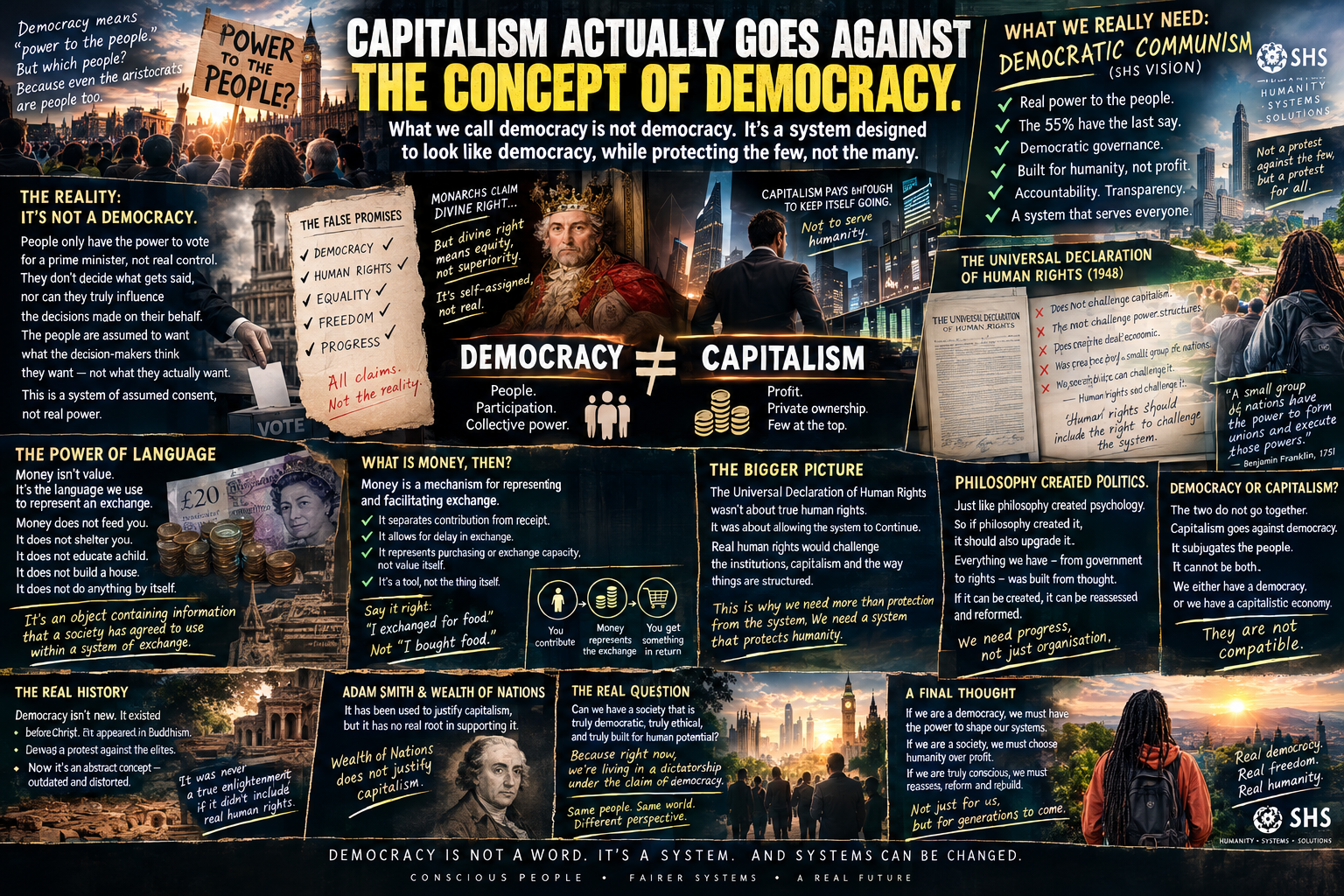
This also connects directly to your recent framework around Systemic Life Support Fraud. A government cannot preserve an inadequate legislative architecture, repeatedly fail to update it for a known technological reality, and then publicly present punishment of one company as though the systemic duty has been fulfilled. That would keep the failed regulatory system alive while transferring its accumulated consequences elsewhere.
Your iceberg analogy is accurate.
You gave them the visible proposition: the state cannot outsource prevention and monopolise punishment.
The legal team houses the foundations: statutory interpretation, constitutional limits, causation, evidentiary requirements, due process and penalty proportionality.
The missing middle is the record connecting them:
- what governments knew;
- when they knew it;
- which bills or proposals failed;
- which warnings were available;
- what powers regulators possessed;
- what public education was absent;
- how state institutions themselves used Meta;
- whether equivalent conduct remained lawful across the rest of the industry;
- how those omissions affected the scale and distribution of the alleged harm.
That middle could indeed help reduce the number substantially, even where Meta remains responsible for conduct actually proven against it. The objective is not to erase the company’s duty. It is to prevent the state from converting shared systemic failure into singular corporate punishment.




Leave a Reply