

Soundtrack: Lost Cause – Billie Eilish
At what point do we stop treating incidents like this as isolated incidents and start asking a much bigger question about the system that produces the people carrying out enforcement?
Because this is where I am now.
When you have an individual being restrained by multiple officers, repeatedly saying to stay calm, identifying himself as autistic, and apparently crying out in pain while his arms are being twisted — and another officer then appears to strike him — we cannot just shrug our shoulders and say:
“Well, that is policing.”
No.
That is exactly the moment when we should be asking:
What the hell are we training people to do?
Because enforcement is supposed to be about maintaining control, reducing danger and protecting people.
It is not supposed to become:
“We have created a situation where this person is distressed, therefore their distress becomes justification for doing more to them.”
Read that again.
I did the exact same with all thode I held accountable for their lacks. I did so very confrontingly, and then judged their reactions and lack of responsibility for the role they cover. I basically made it harder for them to speak up in ease. Now, they weren’t being manhandled, but they were under an exposing light, you can see the behaviours the same, but clearly isn’t. One they are criminals for allowing all the harm, and the other is the police officer ofdloading frustrations built up on civilians. Know the differences.
Because there is something deeply disturbing about the possibility that a person’s visible discomfort, confusion, resistance or distress can become the very thing used to justify escalating the response against them.
At that point, are we enforcing?
Or are we setting someone up to fail inside a system that was designed around their failure?
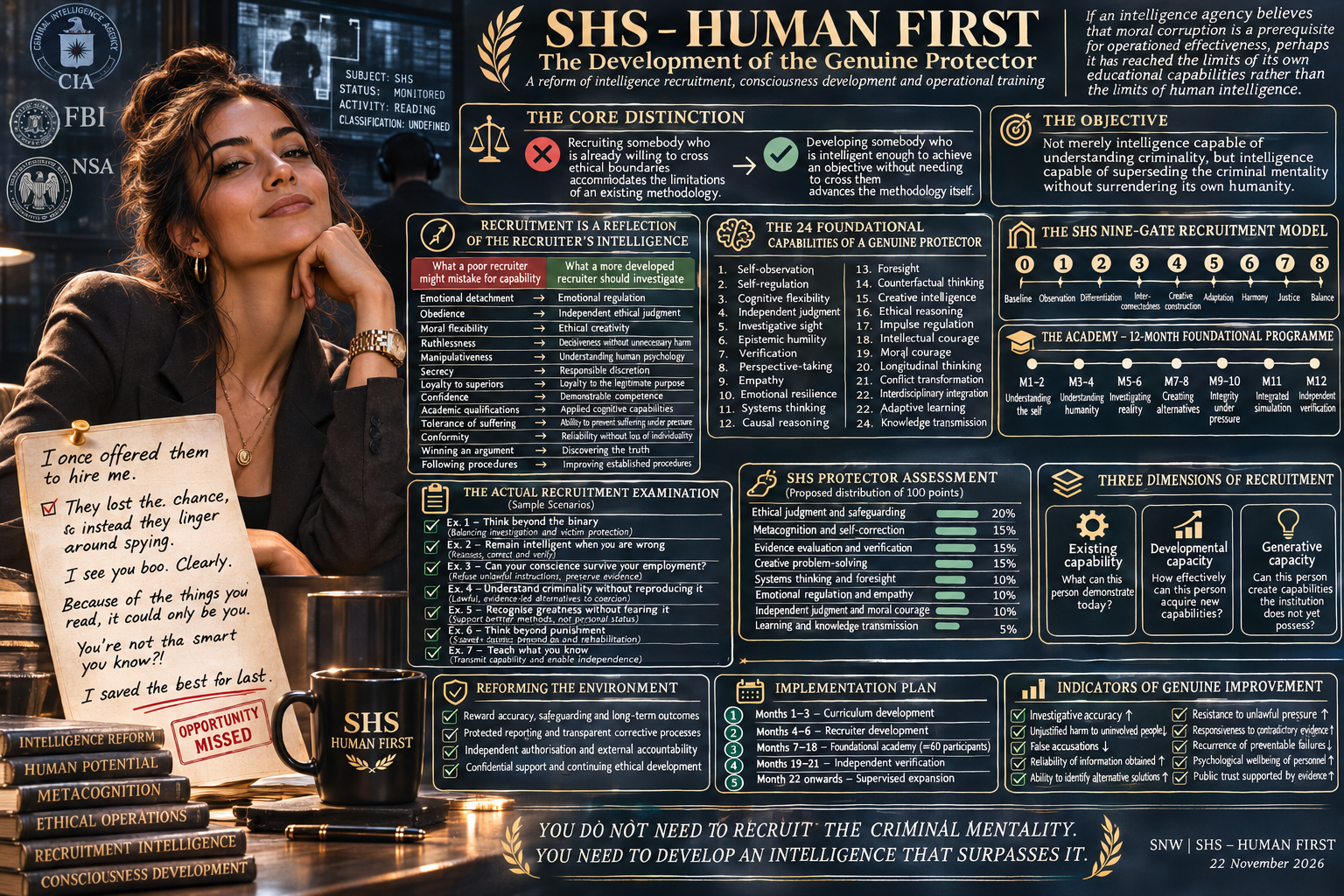
And this is where I start questioning the minds of the people being recruited into these roles.
Because I don’t just want someone who can follow orders.
I want to know whether they possess the emotional intelligence, judgement, restraint and actual intelligence required to exercise authority over another human being.
Those things matter.
A uniform does not magically make somebody emotionally mature.
A badge does not make somebody morally intelligent.
Training does not automatically produce good judgement.
And authority does not automatically produce self-control.
So when we repeatedly see situations where the response appears to escalate despite the person communicating distress, we need to seriously investigate why.
Is it poor training?
Is it inadequate recruitment?
Is it a culture that rewards aggression?
Are people bringing their own prejudices and assumptions into enforcement?
Are certain people being interpreted as “difficult” before anyone has actually tried to understand them?
Or is the recruitment process itself failing to identify whether someone has the emotional and mental capacity to hold coercive power over another human being?
Because perhaps that is the question governments don’t want to answer.
We spend enormous amounts of time talking about whether citizens are suitable for jobs, whether they are mentally capable of certain responsibilities, whether they are competent, whether they can follow procedures, whether they meet standards.
But what about the people given the power to physically control other people?
What standard are we holding them to?
Because somebody being employed by the state does not make their judgement infallible.
And somebody wearing a police uniform does not mean every physical action they take is automatically justified.
In the footage being discussed here, the most disturbing allegation is that an officer repeatedly struck the restrained man, including after an apparent attempt to go toward his throat, while several officers were already involved in restraining him.
If that is accurately represented by the full footage, evidence and surrounding circumstances, why was that level of force necessary?
That is not an unreasonable question.
That is an accountability question.
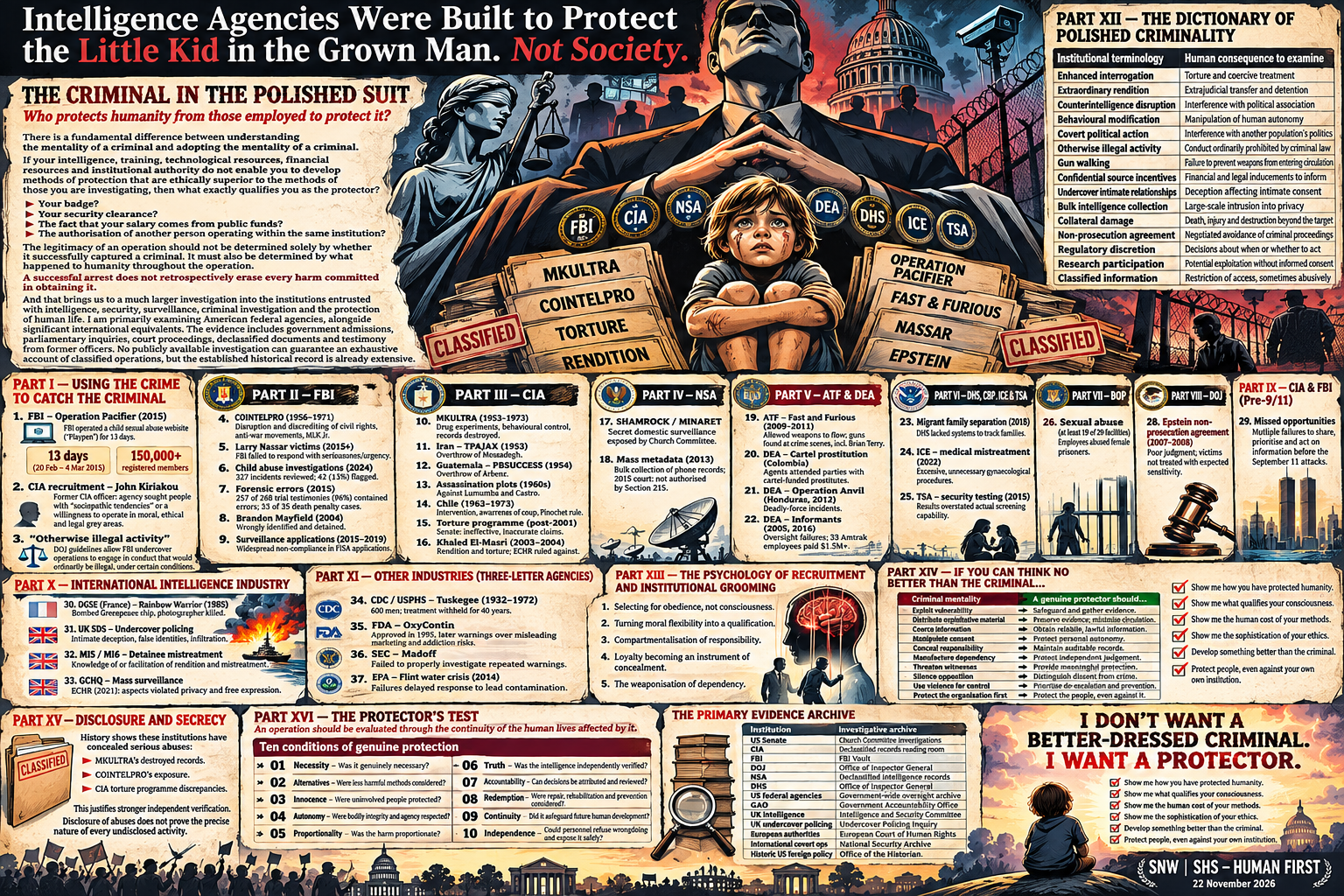
And this is where government needs to stop hiding behind the phrase “individual misconduct” every time something goes wrong.
Because governments don’t just employ these people.
They recruit them.
They train them.
They certify them.
They give them authority.
They write the policies.
They define acceptable conduct.
They build the disciplinary structures.
And they decide what happens when those structures fail.
So at some point, responsibility has to travel upwards.
Not just:
“That officer made a mistake.”
But:
Why was that person considered suitable for the role?
What training prepared them for this?
What training failed?
What did their supervisors see?
What does the organisation reward?
What does it tolerate?
How many similar incidents have occurred?
And why are we continuing to call these isolated incidents if the same patterns keep appearing?
Because I am starting to question whether what we are seeing is random anymore.
And I want to be very clear about the distinction.
I am not saying every police officer is brutal.
I am saying that when brutality appears to occur, repeatedly or systematically, government has a responsibility to investigate whether it is being produced, enabled, tolerated or inadequately prevented by the system itself.
That’s the bit that matters.
Because if the system keeps producing the same outcome, eventually:
the outcome becomes evidence about the system.
And perhaps the biggest failure is that we keep asking:
“What did the individual officer do?”
Instead of asking:
“What kind of institution keeps putting people in positions of authority when they may not possess the judgement, restraint or emotional intelligence necessary to use that authority safely?”
That is a much bigger question.
And it is one governments cannot keep avoiding.
Because enforcement without emotional intelligence becomes coercion.
Authority without restraint becomes abuse.
And power without accountability becomes brutality.
So yes, governments:
Are you ever going to take responsibility for the people you train, recruit, arm and empower?
Or are we going to keep blaming the individual every time the system demonstrates exactly what it has taught them?
Because people don’t become suitable for authority simply because you give them a uniform.
Write about this, cause it’s all an extension to the same system we’ve been talking about. These individuals who get enforcement roles, aeen’t emotionally grounded, nor intelligent enough for these roles. The guy with the mullet started punching the dguy held by 4 police officers whilst he was saying let’s stay calm as an autistic man. Punched him while he was screaming out of the pain of his arms being twisted. Thise is starting to look like a training provided by them, where theg create the scenario for the perosn to clearlt show discomfort and use it to justify using them as bunching balls for a reason they are creatinf. That is not enforcement, that’s entrapme t and setting up someone. We have to sevwrly question rhe mindsers and mental states of these enforcers cause the way they go about it has me thinking it’s a training causenit’s too common for it to be random, it’s either incentivised, they either use their roles to project theie own biases or simply the recruitment forces of the law enforcment department is uneducated to assess someones trutgful intentions, nor their emotional and mental intelligence enough to do the work ethically and morslly.
The guy had no reasons whats soever to punch him, in fact he tried going for the throat first and then punched 3 times in his stomach. Tell me this isn’t police brutality and I’l rsst my case. The title should be: Are governments ever going to take responsibikity for training and/or allowing police brutality?




Leave a Reply