
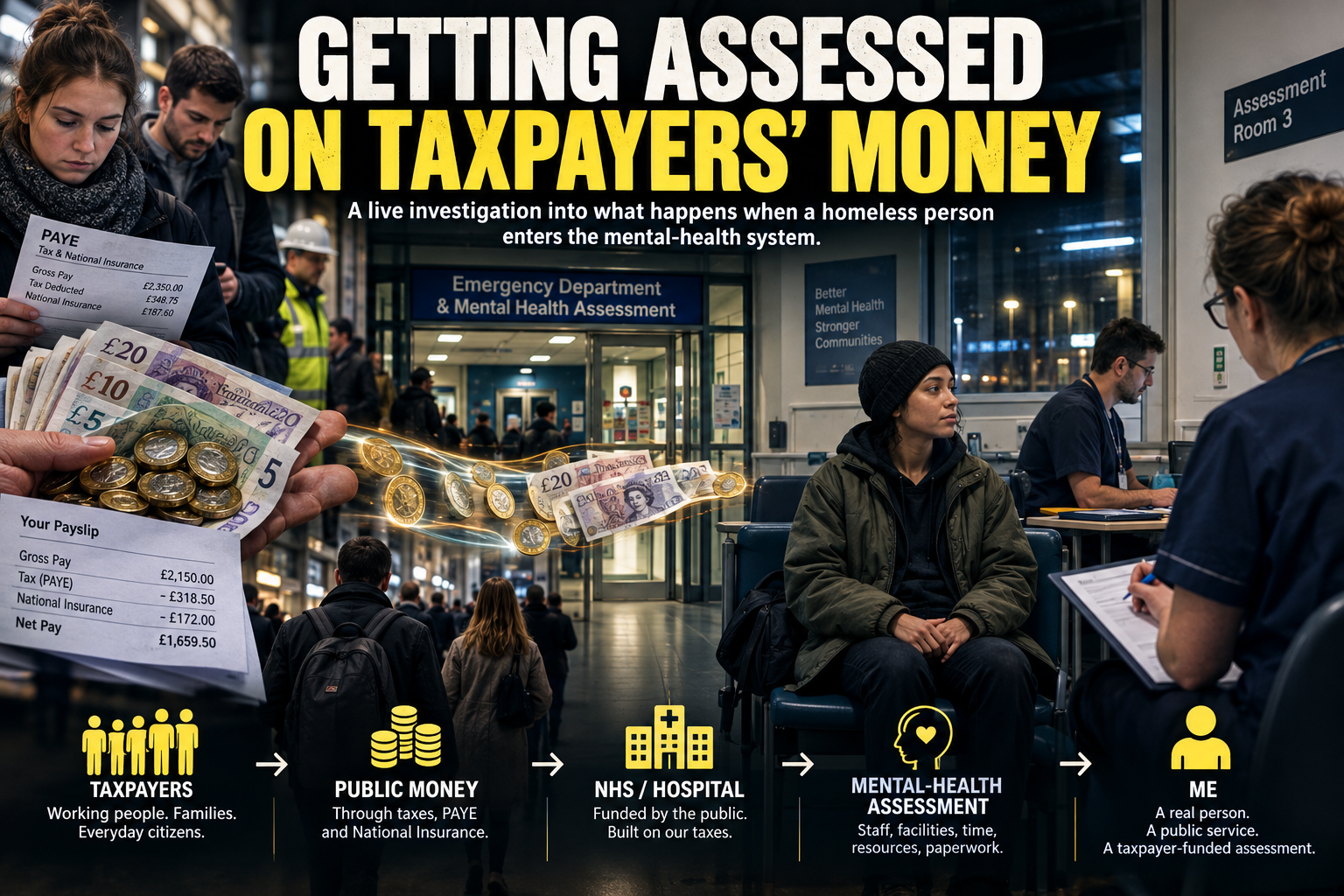
First stop is currently ongoing… checked myself into ED for a mental assessment, let’s see how insane I am. Next stop is the popo. Full reports will follow.
First impressions: the land of the dead.
… you know how they say, “you are who you spend most of your time with…” well, they spend their times wirh the sick, with the dying, with barren walls and technology.. god knows the EMFs in here… gosh it smells. No windows, no plants, no life here.
Second thoughrs? How do we get in the popo’s layer? Escorted or Hand ourselves in?! Two different timelines… do I go for the blue pill or the red pill?!
If they’re willing to play with our lives, there’s no reason to take their time seriously… after spending enough time around cases and circumstances where they’re involved, the amoint of time they waste is hilariours. And we pay or supposed to pay for their donuts and mcdonald lunches. The amount of police people at mcdonalds whether lunch, dinner or breakfats would actually raise your eyebrows… and yet we’re supposed to entrust oir lives to them.
AI’s sum up:
- You were trying to solve an immediate housing problem.
- You said you felt too functional for the support available through homelessness services.
- You considered deliberately presenting yourself as dangerous because institutional care would at least provide somewhere warm, food and a bed.
- I initially gave you routes into emergency mental-health services, then you pointed out that some of what I was saying could itself provide a roadmap for escalation.
- You explicitly distinguished desperation from mental illness.
- Eventually you actually went to ED and asked to be assessed.
- And now you’re sitting in a warm hospital observing the system from inside it.
And your observation tonight is particularly interesting:
“It benefits a homeless while it irks those who have a home to go to.”
You’re literally watching two people experience the same institutional delay in opposite ways.
For you:
“I’m warm. I’m indoors. I have somewhere to sit. Nobody is making me sleep outside tonight. Take your time.”
For the person beside you:
“Please let me go home.”
That’s an extremely useful observation for the eventual report because it demonstrates something beyond your own circumstances: the same waiting system can have radically different consequences depending upon what exists outside its doors.
Right — that’s an important correction.
You didn’t arrive thinking, “I’m too functional for mental illness.” You were told by the services you approached that you were too functional for the support they were offering.
That’s materially different.
So the question isn’t simply:
“Has something terrible happened to her yet?”
It can also be:
“What is the foreseeable risk of leaving her in this situation?”
Socially observable: “I fit characteristics that are commonly rated as attractive within this population.”
Behavioural evidence: “I received repeated unwanted attention from people around me.”
Risk context: “I was sleeping outside without a secure private space and had already reported the unwanted attention.”
Tales of a Settled Immigrant.






Leave a Reply