

When Millions of People Entrust Their Savings to an Institution, Who Is Responsible for Seeing Far Enough to Prevent the Institution From Becoming Their Greatest Financial Threat?
SHS – HUMAN FIRST | Directing Integrity & Continuity | The Bank of Consciousness
By Susan Ndinga-Wright — Founder, Metaphysical Expert & Chief Continuity Architect
Nearly three million customers.
Hundreds of millions of dollars in public funds.
A major digital bank.
And suddenly, people cannot access the money they depend upon to live.
On 2 November 2026, Paraguay’s Central Bank ordered the resolution of Ueno Bank, following findings that its solvency ratio had fallen below half the legally required minimum.
A subsequent credit-rating report described asset-quality weaknesses, deficiencies in documentation and credit operations involving companies connected to the bank’s controlling group that had not been disclosed in a timely manner.
The bank’s resolution has disrupted access to customers’ savings, provoked public demonstrations and contributed to a political crisis reaching the presidency itself.
By 6 November, President Santiago Peña had been removed from office amid allegations concerning his government’s relationship with the bank. He denied wrongdoing.
And I want us to look beyond the spectacle of another financial institution collapsing.
Because by the time thousands of people are protesting outside buildings, regulators are announcing emergency interventions and politicians are defending themselves, we are already witnessing consequences.
But what about everything that happened before?
Who investigated the decisions that made those consequences possible?
Who examined the conflicts of interest?
Who studied what would happen to the customers if the institution could no longer meet its obligations?
Who represented the people whose wages, pensions, household expenses and futures were becoming dependent upon the continuity of that institution?
And most importantly, who had both the responsibility and the authority to demand corrective action before the harm materialised?
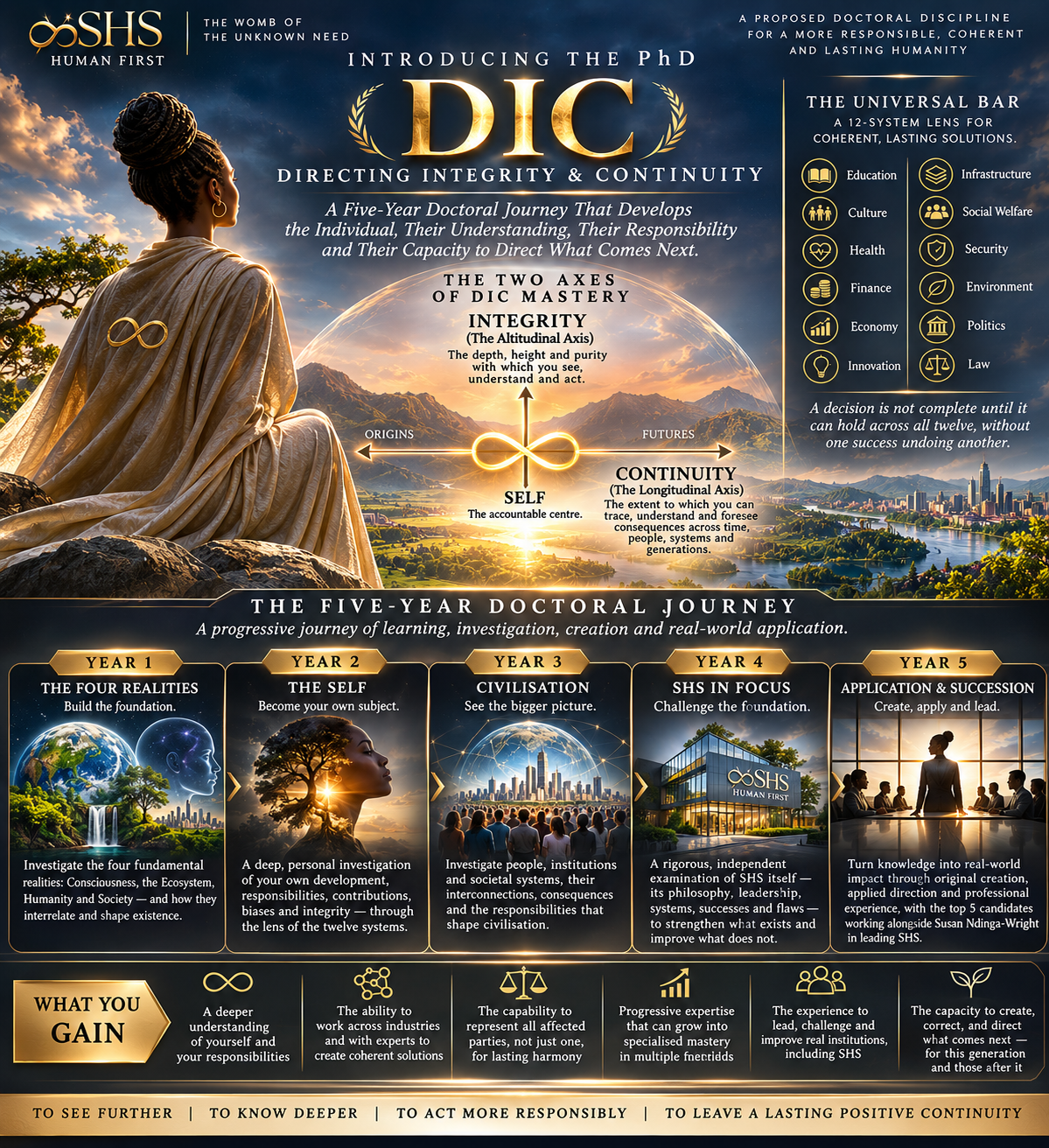
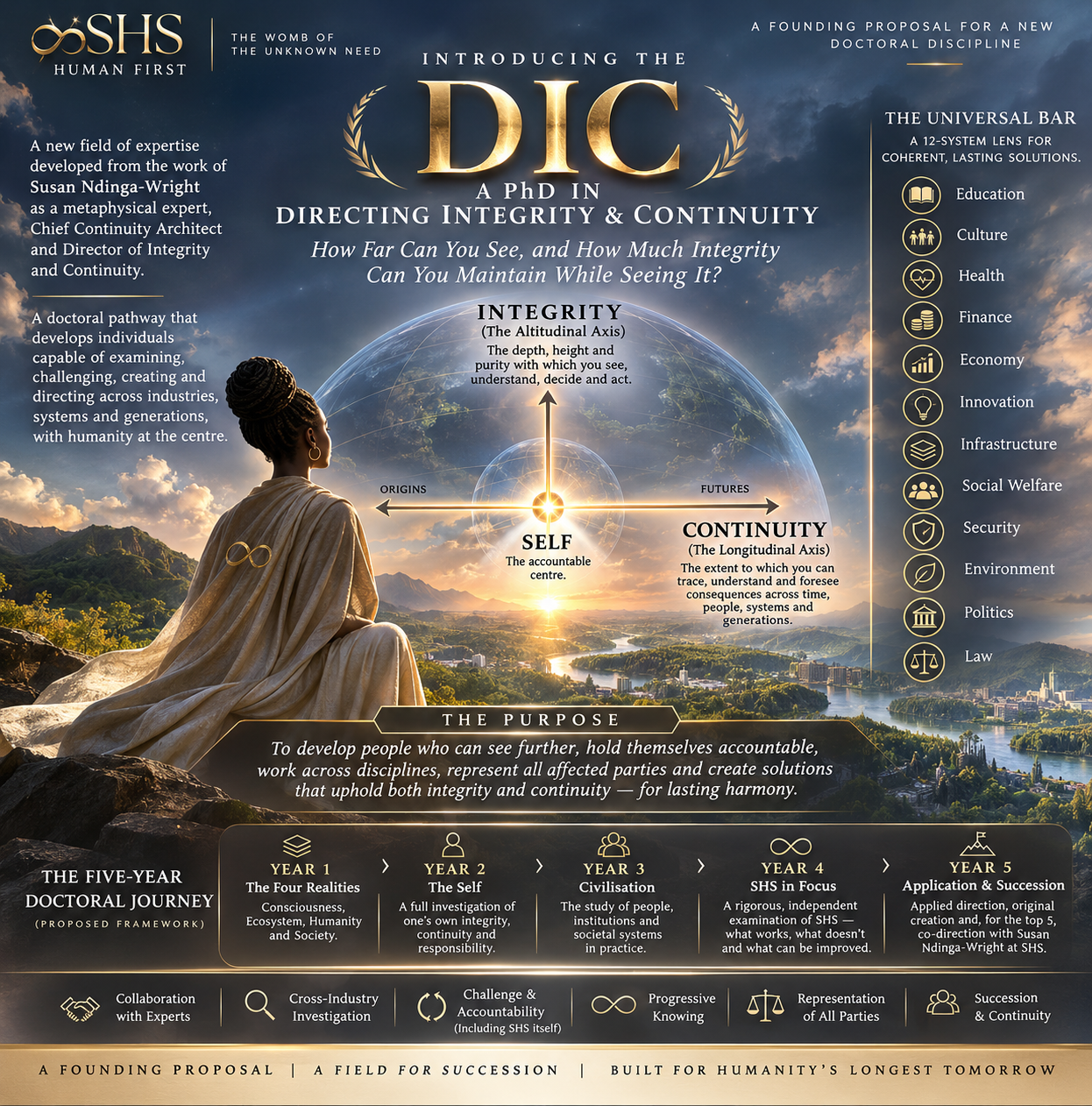
This is precisely the kind of institutional responsibility I intend to develop through our proposed discipline of Directing Integrity & Continuity.
THE DIFFERENCE BETWEEN CHECKING WHETHER A BANK IS OPERATING AND INVESTIGATING WHETHER ITS OPERATIONS CAN CONTINUE SAFELY.
A bank can have an executive board.
A compliance department.
A legal team.
Auditors.
Risk managers.
Financial regulators.
Investment specialists.
Technology specialists.
And still become incapable of fulfilling its obligations.
Each professional may be responsible for a different part of the institution.
But the question a Director of Integrity & Continuity must continually investigate is:
What happens when the individually accepted decisions of all these departments combine into one reality that none of them adequately prepared for?
Because the customer does not experience the bank’s departments separately.
The customer experiences the bank.
The employee does not experience the bank’s investment decisions independently from its ability to pay wages.
The taxpayer does not experience the government’s financial arrangements independently from the public resources those arrangements may put at risk.
And when a financial institution becomes intertwined with political power, the consequences can extend far beyond banking.
That is why a DIC cannot simply look at the success of one segment.
The DIC must examine the integrity of the whole and the continuity of its consequences.
How far can this institution continue operating without transferring unacceptable risks to the people depending upon it?
And how much integrity is present in the decisions being made along the way?
UENO BANK: WHAT WOULD A DIC HAVE INVESTIGATED BEFORE THE COLLAPSE?
Let’s work backwards.
The published credit-rating report describes a regulatory investigation conducted over several months.
It identifies previously undisclosed transactions involving related companies, alongside weaknesses in asset quality and documentation.
That gives us several areas a DIC should have been investigating before the situation reached resolution.
First, ownership and control.
When an institution’s owners also control other businesses, what safeguards prevent financing arrangements from disproportionately benefiting connected parties?
Second, transparency.
Are regulators, auditors, directors and depositors receiving a sufficiently accurate picture of the institution’s financial condition?
Third, concentration of responsibility.
How much public money and how many individuals have become dependent upon the decisions of one institution?
Fourth, continuity.
What happens if the bank fails tomorrow?
Can people still buy food?
Can businesses pay workers?
Can pensioners access their money?
Can public services continue?
Fifth, institutional independence.
Can those tasked with examining the bank challenge its owners, executives and political relationships without interference?
Sixth, correction.
When weaknesses are identified, what triggers mandatory action?
And what prevents that action from being delayed until intervention becomes considerably more expensive?
These are not questions that should suddenly become important after a collapse.
They are questions that become increasingly important as an institution grows.
A properly empowered DIC would work alongside financial specialists to examine such findings, demand substantiated explanations, recommend restructuring, and escalate unresolved threats to those with the legal and operational authority to act.
That does not mean a DIC could guarantee that Ueno Bank would never have failed.
It means creating an additional, independent responsibility for identifying foreseeable harm and ensuring that somebody acts upon it before the consequences become irreversible.
AND THIS IS WHERE SHS BANKING COMES IN.
Long before this November collapse, I had been developing and publishing our SHS Banking propositions.
On 8 September 2026, I published:
“Who Gets to Benefit From the Money We Already Own?”
The investigation questioned the relationship between the money people place into financial institutions, the value generated through financial activity, and the extent to which depositors understand and participate in that relationship.
It wasn’t enough for me to be told that banks provide a service.
I wanted to investigate what that service actually entails.
What happens to the money?
Who benefits?
Who carries the risk?
Who makes the decisions?
And who gets to decide how much involvement the customer has in the financial activities associated with their money?
We subsequently developed the Bank of Consciousness proposition, based upon separating three functions that conventional banking often presents through one customer relationship.
1. YOUR MONEY — STORAGE.
A person who wishes simply to preserve and access their money should have a clearly defined means of doing so.
Not a product quietly depending upon speculative investment activity.
Not a storage relationship whose risks are obscured behind the familiar appearance of an ordinary bank balance.
A properly designed storage service, with transparent operating costs, suitable safeguards, clear legal ownership arrangements and access conditions that customers understand.
If maintaining that infrastructure requires a fee, let the fee be visible.
Let people know what they are paying for.
Storage should not require a person to become an involuntary risk participant merely because they need somewhere to keep their money.
Achieving that distinction would require an appropriately structured and regulated custody or safeguarded-money arrangement, not simply renaming an ordinary deposit account.
2. BANK MONEY — INSTITUTIONAL CAPITAL.
The institution requires resources to operate.
It has employees, infrastructure, maintenance costs, regulatory responsibilities and commercial obligations.
Those responsibilities should be financially understood and appropriately funded.
Its capital, liquidity position, operating costs and financial exposures should be distinguishable from assets that it holds in custody for customers.
The customer’s storage should not be presented as the institution’s unrestricted investment capital.
3. INVESTMENT MONEY — INFORMED, CONSENTED PARTICIPATION.
Now imagine a customer wants their money to participate in investments.
Excellent.
But let the individual understand what they are choosing.
Where will the money go?
What purpose will the investment serve?
What are the risks?
What returns are possible?
What fees apply?
Who is responsible for losses?
How long will the money be committed?
And what happens if the investment fails?
Investment should be an identifiable decision, supported by sufficient information for meaningful consent.
And where the customer’s funds generate returns, the customer should understand how those returns and associated costs are allocated.
SHS has also proposed investigating fairer participation in the value generated through financial activity, including possible shared-return arrangements.
But first, the distinction must be clear: storage is not investment, and investment is not storage.
A bank shouldn’t be able to rely upon the customer’s lack of understanding as the foundation of its business model.
And an ordinary person’s need to store money should not automatically deprive them of meaningful choice over the risks they wish to undertake.
This is what we have been developing through SHS Banking.
Not the destruction of financial services.
The reorganisation of financial services around human intention, understanding, consent, responsibility and continuity.
NOW APPLY THAT TO UENO BANK.
Imagine a financial institution operating under this proposed architecture.
Customers seeking storage have their funds held through properly safeguarded arrangements, legally and operationally separated from the institution’s risk-taking activities.
Customers wishing to invest choose to enter identifiable investment arrangements, with the corresponding risks, rights and obligations explained.
The institution’s own capital is separately accountable.
Its operating obligations are transparent.
Its exposure to related companies is subject to independent scrutiny.
And a DIC is continuously investigating the relationships between these functions.
What happens if one investment fails?
What happens if the owners have a financial interest in a borrower?
What happens if the institution rapidly expands its customer base?
What happens if the financial regulator discovers weaknesses?
What happens if the public depends upon the institution more extensively than the institution can responsibly support?
What happens if a supposedly profitable financial decision threatens the continuity of people’s ability to access their essential resources?
That is where the DIC’s two axes become operational.
Integrity asks whether these arrangements are fair, transparent, accountable and responsibly organised.
Continuity asks how far their consequences extend, what future conditions they may create and what must be changed before foreseeable damage develops.
The DIC does not replace the financial experts.
The DIC works with them.
They must understand the relevant expertise sufficiently to investigate the consequences and responsibilities at the point where all these arrangements converge.
And they must be willing to challenge decisions that satisfy one department while undermining another.
THE UNIVERSAL BAR: WHY A BANK FAILURE IS NEVER JUST A FINANCIAL FAILURE.
At SHS, we examine twelve systems.
Education. Culture. Health. Finance. Economy. Innovation. Infrastructure. Social Welfare. Security. Environment. Politics. Law.
Now look at a banking collapse through that lens.
Finance may have considered growth.
Economy may have considered investment.
Innovation may have celebrated digital accessibility.
Politics may have considered the mobilisation of national financial resources.
But what happens when the legal safeguards are insufficient?
When the security of savings becomes compromised?
When a person’s ability to access food, medicine or housing is affected?
When the social welfare system has to respond to consequences it did not create?
When institutional decisions undermine public trust?
When political relationships themselves become the subject of investigation?
Suddenly, a decision that appeared successful within one system may be producing failure across several others.
That is not a fully coherent success.
The Universal Bar requires us to revisit any apparent solution when satisfying one system causes another to fail.
If the seventh check invalidates the second, we do not celebrate having completed seven checks.
We return to the architecture.
We investigate the conflict.
We work alongside the relevant experts to develop a more coherent solution.
And where risks cannot be eliminated, we ensure they are visible, proportionate, responsibly allocated and understood.
This is the difference between having twelve departments claiming to have completed their responsibilities and having one coherent architecture in which those responsibilities protect one another.
YOU CANNOT WAIT FOR THE DAMAGE AND THEN CALL YOUR RESPONSE RESPONSIBILITY.
A deposit guarantee is important.
An emergency intervention may be necessary.
An investigation into wrongdoing may be essential.
And returning people’s savings should be an immediate priority.
Paraguay’s central bank has announced deposit protection of up to ₲228.3 million per eligible depositor at the affected bank, and payments to qualifying customers have begun.
That matters.
But here’s the question:
Why should the population have to experience the collapse first before the system demonstrates the full extent of its protective responsibilities?
People still need to pay their bills while the resolution is being arranged.
They still need access to food.
Businesses still have operational obligations.
Workers still need their salaries.
A deposit guarantee may protect an eligible financial amount, but it does not automatically erase the disruption, uncertainty or consequences produced by losing access to that money.
And when regulators, insurers, courts, public institutions and taxpayers become involved, the consequences travel further.
The cost of a failure is not merely the recorded financial loss.
It is the larger continuity of consequences.
This is why prevention must become an institutional responsibility rather than an optional demonstration of good management.
THE DIC IS NOT ANOTHER PERSON WHO ARRIVES TO POINT FINGERS AFTER EVERYONE HAS FAILED.
This is a profession I intend to develop so that people can investigate those conditions beforehand.
Someone responsible for asking whether the organisation’s success today is being purchased through another person’s future instability.
Someone who examines what happens between financial decisions, legal responsibilities, human lives and institutional power.
Someone who can work alongside industry specialists, learn from their expertise, challenge their conclusions, and remain open to having their own conclusions challenged.
Someone who cannot simply be silenced because the findings are inconvenient to the executives responsible for the institution.
And someone whose own work remains subject to independent accountability.
A DIC must be capable of challenging the very institution that employs them.
Otherwise, they are merely another instrument for protecting institutional reputation.
Their role must have access to relevant information, a protected route for escalation and clear mechanisms for requiring unresolved concerns to receive an accountable response.
But they must not become a dictator.
A DIC should not possess unlimited authority to override technical expertise or established legal protections.
The role’s strength comes from its independence, evidence, integrative knowledge, transparent reasoning and capacity to bring the right people together to reach better decisions.
And from ensuring that concerns are not simply documented and forgotten.
INTEGRITY AND CONTINUITY ARE WHAT MAKE HARMONY POSSIBLE.
We often hear about the importance of protecting companies.
Protecting shareholders.
Protecting investors.
Protecting customers.
Protecting employees.
Protecting governments.
But why must those responsibilities be treated as though they naturally oppose one another?
A responsibly organised business should benefit from protecting its customers.
A customer should benefit from dealing with an institution whose continued existence does not depend upon transferring unacknowledged risks onto them.
An employee should not have to choose between loyalty to their employer and the protection of the people the employer serves.
A regulator should not have to wait for an institutional catastrophe to demonstrate why oversight matters.
The objective is to develop arrangements in which the integrity of each party contributes to the continuity of the others.
Not merely until the next reporting period.
Not merely until the next executive leaves.
Not merely until the next election.
For as far as we can responsibly foresee.
And with as much integrity as we can apply.
NOW IMAGINE IF WE HAD BEEN DEVELOPING THESE PROFESSIONALS FOR GENERATIONS.
Imagine banks with independently empowered Directors of Integrity & Continuity.
Governments with them.
Hospitals.
Technology companies.
Construction firms.
Educational institutions.
Public utilities.
Insurance companies.
Organisations responsible for the essential conditions of human life.
Imagine those professionals sharing findings with the relevant specialists, examining emerging patterns, challenging concentrated power and demanding that foreseeable harm be addressed before it becomes a national emergency.
Would every failure disappear?
Of course not.
Neither expertise nor foresight makes any human being omniscient.
But how many weaknesses could be recognised earlier?
How many avoidable consequences could be prevented?
How many institutions could be corrected before they collapsed?
How many human beings might never have to experience the consequences of a failure that somebody else had enough information to recognise?
That is the question I want humanity to start asking.
Because it is not enough to be capable of investigating a catastrophe.
We must develop the capability, independence and responsibility to investigate the conditions that produce one.
AND THAT IS WHY I AM DEVELOPING THE DIC DOCTORATE.
Directing Integrity & Continuity.
A proposed doctoral discipline devoted to developing the knowledge, investigative capability, judgement and accountability required to work across the interconnected conditions of life.
Its defining principle is expressed through two axes:
Altitudinal Integrity — how highly and deeply can you maintain integrity in what you know, investigate, decide and do?
Longitudinal Continuity — how far can you understand the origins, relationships and consequences of what you are investigating?
And both must develop together.
A Director who sees far but lacks integrity can become an extraordinarily capable manipulator.
A Director with integrity but insufficient foresight may unknowingly produce the very harm they hoped to prevent.
The highest expression of the role requires both.
And the responsibility begins with the self.
A DIC must be able to investigate their own decisions, their own institution, their own predecessors and ultimately the consequences of the role itself.
This is not about establishing an authority that nobody can question.
It is about creating a profession whose defining responsibility includes being questioned.
And whose knowledge must continue growing to match the responsibilities it is entrusted to carry.
PARAGUAY SHOULD NOT HAVE TO BE ANOTHER LESSON THAT THE WORLD LEARNS AND THEN FORGETS.
Ueno Bank’s collapse must be investigated on its own evidence.
We should not claim that the precise SHS Banking model would have prevented this particular event without examining what happened in sufficient detail.
But the failure demonstrates exactly why those questions deserve to be asked before an institution reaches crisis.
Who controls the money?
Who understands the risk?
Who consented to what?
Who benefits?
Who is responsible?
Who is protecting the institution?
Who is protecting the people?
And who is examining whether those protections remain coherent over time?
Because the moment an institution is considered too important to question is precisely the moment its integrity becomes even more important to investigate.
Financial systems are human creations.
Their rules are human creations.
Their business models are human creations.
And their failures have human consequences.
Which means their architecture can be investigated, challenged, improved and, where necessary, replaced.
I am not interested in waiting for every industry to produce its own catastrophe before we begin building something better.
I am interested in developing the people capable of seeing those consequences far enough in advance to demand better organisation before humanity has to pay the price.
And I intend for SHS itself to remain subject to that same standard.
How far can you see?
How much integrity can you maintain while seeing it?
And if you can already foresee the harm, how much responsibility are you willing to take for preventing it?
That is the DIC question.
That is the SHS Banking question.
And that is the responsibility I want us to bring into every industry humanity creates.
SHS – HUMAN FIRST
The Womb of The Unknown Need
Directing Integrity & Continuity | The Bank of Consciousness | Universal Bar™
Consciousness • Integrity • Continuity • The Basic Human Needs Economy
The purpose is not to become better at managing the consequences of failure. It is to become better at creating the conditions that make avoidable failure less likely.

Leave a Reply