
Category: Research, Evidence & Experiments
-

OPEN-AIR EXPERIMENTS
THE SUBWAY VIOLINIST EXPERIMENT — WHEN CONTEXT HIDES VALUE 2007 — Gene Weingarten and Joshua Bell In January 2007, The Washington Post arranged for internationally acclaimed violinist Joshua Bell to perform anonymously during the morning rush hour at L’Enfant Plaza Metro station in Washington, D.C. Bell played six classical pieces for approximately 43 minutes while…
-

OPEN-AIR EXPERIMENTS
THE SMOKE-FILLED ROOM EXPERIMENT — WHEN THE CROWD TEACHES YOU TO IGNORE THE FIRE 1968 — Bibb Latané and John Darley In 1968, social psychologists Bibb Latané and John Darley placed participants in a room to complete questionnaires while smoke gradually entered through a wall vent. When participants were alone, 75 per cent reported the…
-

OPEN-AIR EXPERIMENTS
THE ELEVATOR CONFORMITY DEMONSTRATION — WHEN THE CROWD TURNS AWAY FROM THE DOOR In 1962, Candid Camera broadcast a segment called “Face the Rear.” Actors entered an elevator and deliberately stood facing the back or side of the car rather than the doors. Unsuspecting passengers would initially face forward, notice that everybody else was positioned…
-

OPEN-AIR EXPERIMENTS
THE BYSTANDER EFFECT — WHEN EVERYONE IS PRESENT, BUT NOBODY BECOMES RESPONSIBLE In 1968, social psychologists John Darley and Bibb Latané tested whether people would respond differently to an apparent emergency depending upon how many other witnesses they believed were present. Participants listened through an intercom as another supposed participant appeared to suffer a seizure…
-
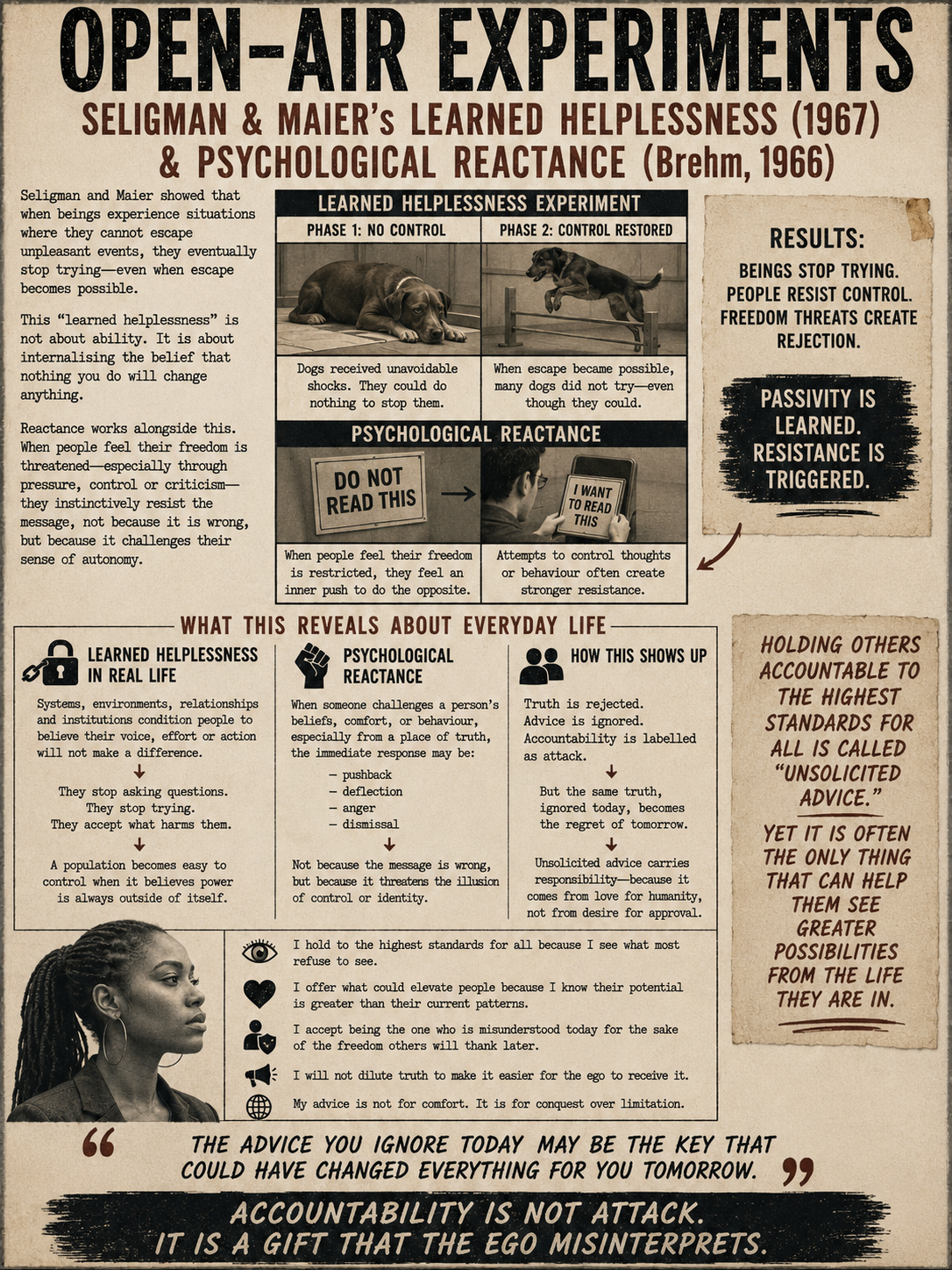
OPEN-AIR EXPERIMENTS
THE LEARNED HELPLESSNESS EXPERIMENT AND PSYCHOLOGICAL REACTANCE — WHEN THE EXIT IS REJECTED AND THE WARNING IS CALLED “UNSOLICITED ADVICE” In the late 1960s, Martin Seligman and Steven Maier conducted experiments examining what happens after a living being is repeatedly exposed to an unpleasant condition it cannot control. When escape later became possible, some subjects…
-
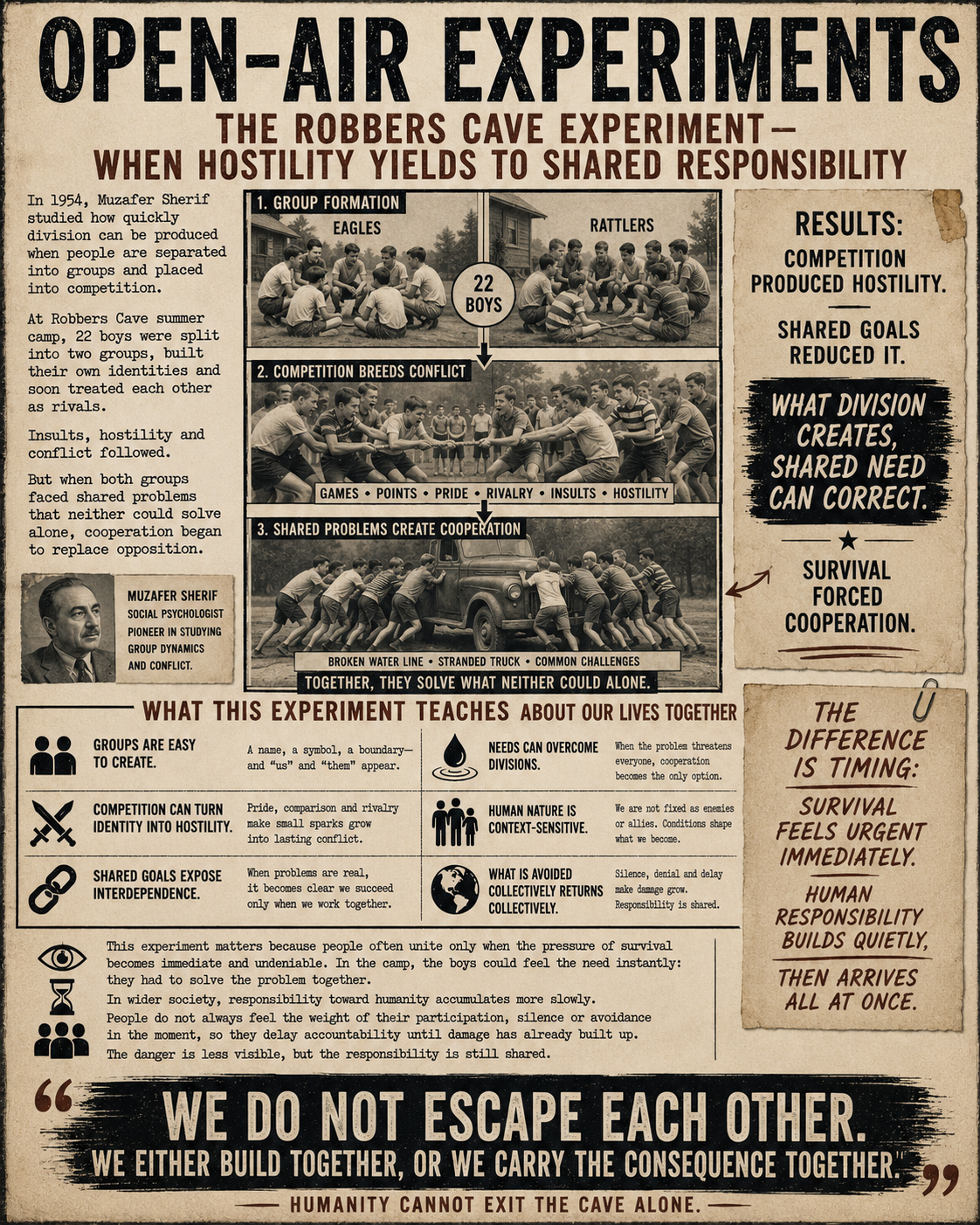
OPEN-AIR EXPERIMENTS
THE ROBBERS CAVE EXPERIMENT — WHEN HUMANITY IS THE SHARED SURVIVAL TASK In 1954, Muzafer Sherif and his research team brought 22 boys to a summer camp in Oklahoma and separated them into two groups that became known as the Rattlers and the Eagles. The boys entered with broadly similar backgrounds and no previous relationships…
-
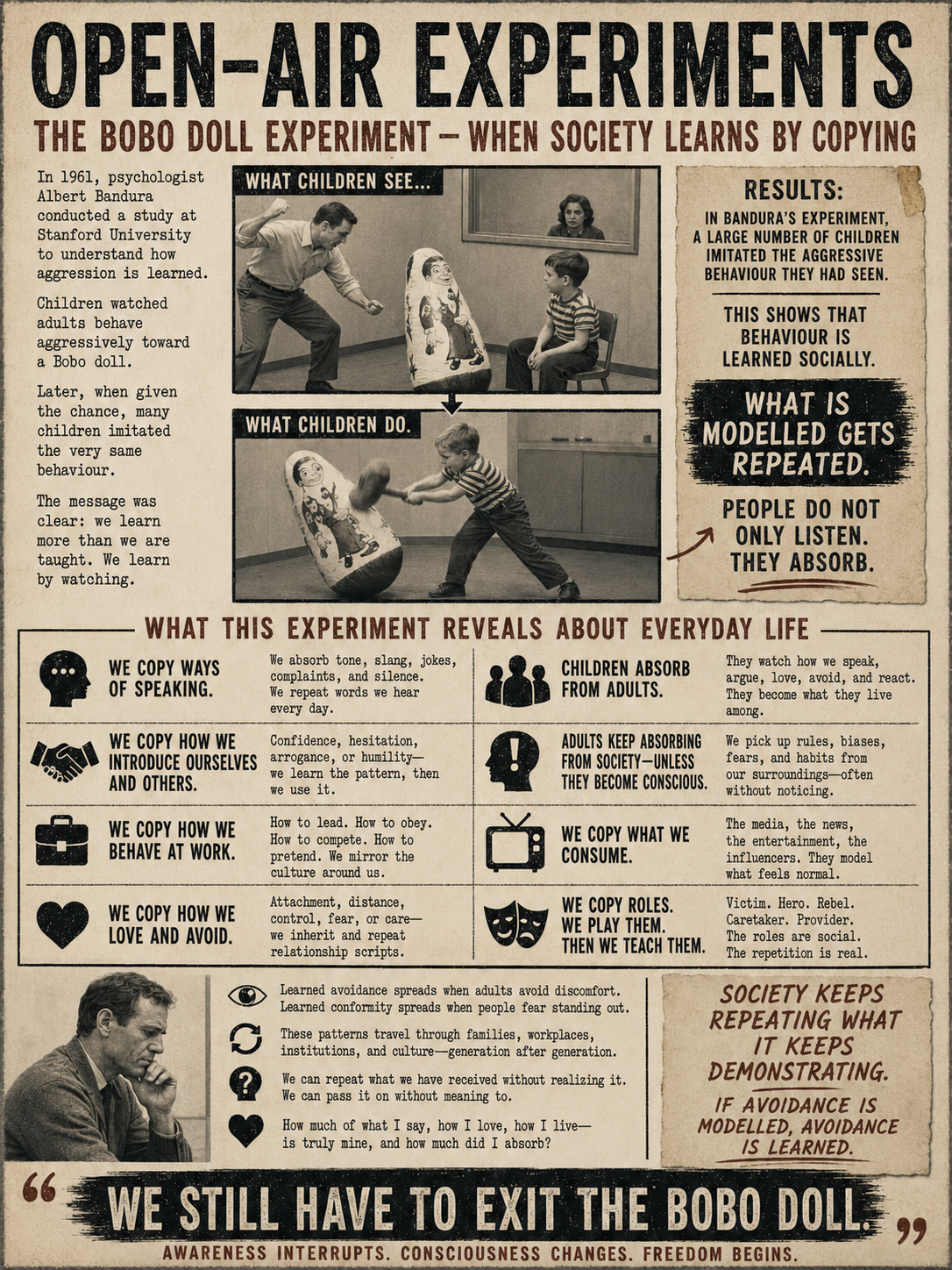
OPEN-AIR EXPERIMENTS
THE BOBO DOLL EXPERIMENT — WHEN BEHAVIOUR BECOMES INHERITANCE In 1961, Albert Bandura, Dorothea Ross and Sheila Ross studied whether children would reproduce behaviour simply by observing an adult model. Seventy-two children from the Stanford University Nursery School were placed into aggressive-model, non-aggressive-model and control conditions. Some watched an adult strike, kick, sit upon and…
-

OPEN-AIR EXPERIMENTS
THE MILGRAM OBEDIENCE EXPERIMENT — WHEN AUTHORITY REPLACES CONSCIENCE The Milgram obedience experiment examined what ordinary people would do when a recognised authority instructed them to continue an action they believed was harming another human being. Participants were told that they were assisting with research into learning and memory and were directed to administer increasingly…
-

OPEN-AIR EXPERIMENTS
THE ASCH CONFORMITY EXPERIMENT — WHEN PEOPLE WOULD RATHER BE WRONG THAN DIFFERENT In 1951, social psychologist Solomon Asch placed individuals inside a remarkably simple conflict: would they state what they could plainly see, or surrender their answer to what everybody around them appeared to believe? Participants were shown one standard line beside three comparison…
-
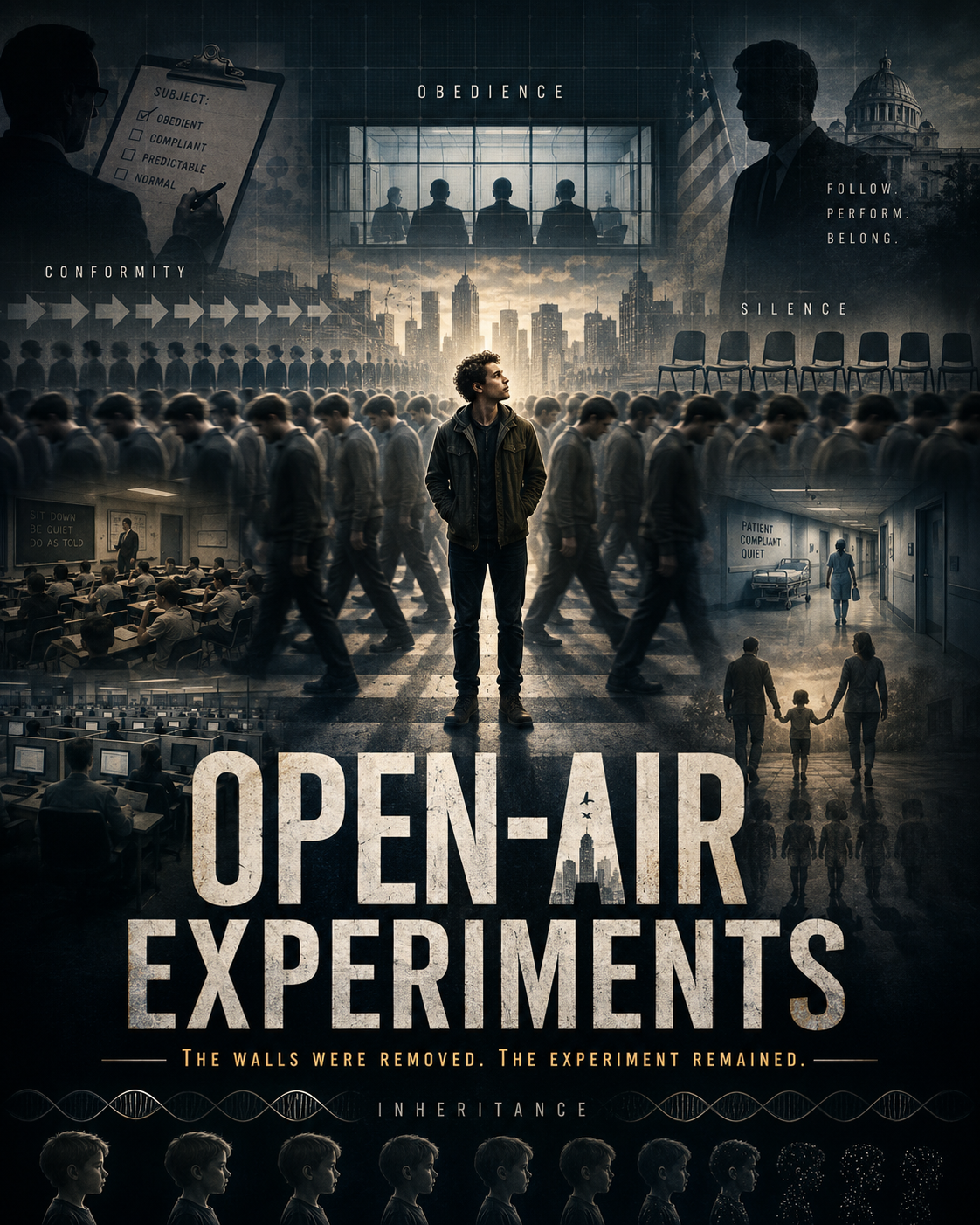
OPEN-AIR EXPERIMENTS
The Walls Were Removed. The Experiment Remained. Society has been experimenting on itself for generations. Some experiments were deliberately constructed inside laboratories. Participants were placed in controlled rooms, given instructions, observed under pressure and later studied to determine how human beings respond to authority, conformity, fear, uncertainty, belonging, punishment, responsibility and social approval. Other experiments…