
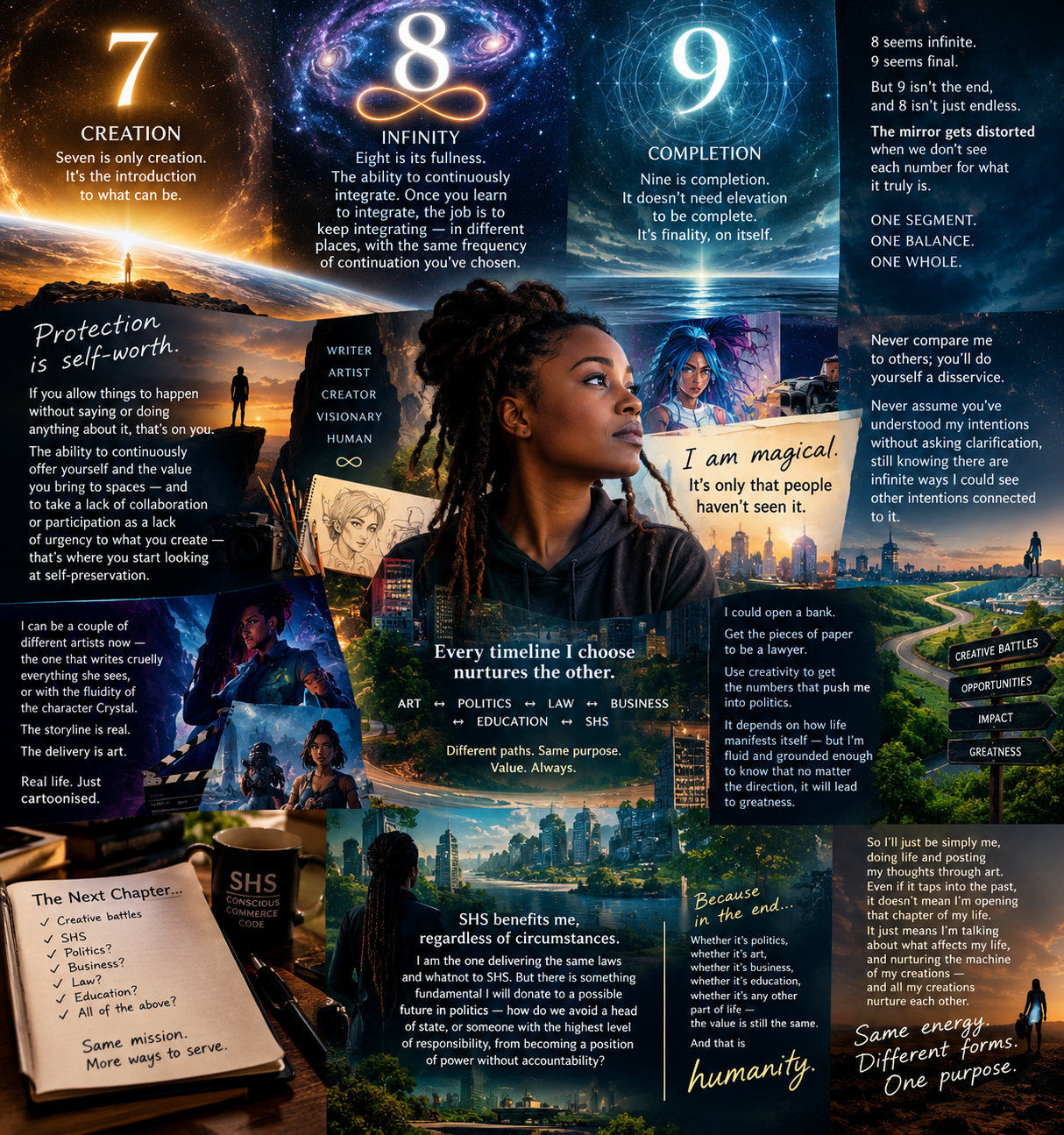
I don’t have to change story to prove the biggest point of all. Until it usn’t integrated it will show its abikitt to be an infinite thread of Life.
You buikd a strong beard or a strong plant by keeping on LST(Low Stress training) one you cut and the other one you bend.
“That men do not learn very much from the lessons of history is the most important of all the lessons that history has to teach.”
— Aldous Huxley
I think Aldous Huxley accidentally gave us one of the clearest descriptions of the problem SHS was created to investigate.
Because perhaps the problem with humanity has never been that we lack history.
We have too much of it.
Books.
Archives.
Monuments.
Museums.
Memorials.
Photographs.
Wars documented from beginning to end.
Economic crashes analysed decades later.
Political collapses dissected by historians.
Revolutions.
Famines.
Genocides.
Empires.
Colonialism.
Banking crises.
Housing crises.
Institutional failures.
Social movements.
Technological disruptions.
Environmental warnings.
And yet, somehow, humanity repeatedly arrives at the same kinds of circumstances and acts surprised when the consequences arrive.
That is the part Huxley’s sentence catches.
The lesson is not simply that history contains lessons.
The lesson is that knowing something happened is not the same as learning from it.
SHS does not see history as a museum
A museum preserves what happened.
A governance system should ask what the information requires us to do differently.
That distinction matters.
Because you can walk through a museum, look at everything humanity has survived, feel something, perhaps even cry, and then walk outside and reproduce the same structures that created the conditions you were just looking at.
You remembered.
But you did not learn.
And that is where I think humanity continuously confuses information with transformation.
We become extraordinarily good at documenting consequences.
We are much less interested in redesigning the circumstances that generate them.
We become brilliant at responding to the fire.
Then we congratulate ourselves for building a bigger fire brigade.
SHS keeps asking a much more irritating question:
Why did we keep building things in ways that meant we needed the fire brigade in the first place?
The pattern is the lesson
This is also why I do not see recurring problems across completely different areas of life as merely repetitive.
When the same underlying dynamic appears in economics, politics, healthcare, housing, education, business, war, social exclusion and environmental management, I don’t think the answer is:
“Oh, that’s another issue.”
No.
The recurrence itself is information.
A pattern appearing across different dominions of society is not necessarily repetition.
It can be evidence that the architecture producing the outcomes is recurring.
Humanity can keep changing the names of the institutions.
It can change the governments.
Change the ministers.
Change the corporations.
Change the technologies.
Change the slogans.
Change the currencies.
And still reproduce the same relationship between power, resources, responsibility and the human being.
That is when history becomes useful.
Not when we use it to admire the past.
When we use it to recognise the present.
Reactive humanity is still learning too late
One of the biggest things I have learned through SHS is how much of modern governance is built around reaction.
Something happens.
People suffer.
The damage becomes visible.
The public becomes angry.
An investigation happens.
Money is found.
A programme is created.
A task force is assembled.
A strategy is published.
Everyone declares that lessons have been learned.
And then another version appears years later.
Why?
Because the response addressed the incident.
It did not necessarily address the conditions that made the incident possible.
That is the difference between reaction and prevention.
SHS is interested in the latter.
Not because nothing will ever go wrong.
Of course things will go wrong.
Human beings are not machines.
Life is not perfectly predictable.
But there is a massive difference between accepting that reality contains uncertainty and deliberately maintaining structures that repeatedly create avoidable harm.
You do not need to wait until someone is starving before deciding food matters.
You do not need to wait until someone becomes homeless before deciding shelter matters.
You do not need to wait until somebody is completely excluded before deciding they belong to humanity.
You do not need to wait until a system breaks down before examining whether the system was coherent in the first place.
That is what Nourish Me End. Not Tomorrow. means to me.
Human necessities cannot continually be postponed until the consequences become expensive enough to command attention.
Protection is learning before the wound
Protection is also a historical lesson.
If humanity already knows that certain circumstances repeatedly produce harm, then waiting for the harm before acting is not necessarily wisdom.
Sometimes it is simply delayed recognition.
Protection asks:
What do we already know?
What are we seeing?
What pattern is forming?
What could we change before this becomes another historical event someone studies fifty years from now?
And this applies to individuals as well as institutions.
Self-worth requires knowing when to stop forcing a door that keeps demonstrating that it will not open.
There is a time to push.
A time to persist.
A time to negotiate.
And a time to preserve yourself.
That is not giving up.
Sometimes it is learning.
Infinity cannot continue infinitely if it is continually destroying the vessel through which it expresses itself.
Expression is part of the archive too
And then there is expression.
Artists have always been part of the historical record, whether governments intended them to be or not.
Sometimes an artist sees something before an institution has language for it.
Sometimes fiction makes people recognise reality.
Sometimes a character can say something a respectable political document never could.
Sometimes humour reveals what seriousness is hiding.
Sometimes exaggeration makes an actual structure visible.
Sometimes a fictional world is simply reality wearing theatrical clothing.
That matters because humanity does not only learn through policy papers.
We learn through stories.
Images.
Music.
Characters.
Film.
Metaphor.
Experience.
Conversation.
And perhaps that is why my decision to remain creative actually sits very comfortably beside SHS.
I don’t have to govern humanity to contribute to humanity.
I can create something that makes somebody reconsider what they thought governance was.
I can create something that makes somebody recognise a pattern.
I can create something that causes a person to ask a question they had never asked before.
That is education too.
The human being cannot become the afterthought
At the centre of SHS is something remarkably simple:
the human being should not be the afterthought of a system designed in the human being’s name.
That sentence alone changes how you read history.
Because suddenly history is not merely:
Who won?
Who lost?
Who became Prime Minister?
Who became President?
Which company grew?
Which empire collapsed?
Which currency survived?
You start asking:
What happened to the people?
Who was nourished?
Who was protected?
Who was heard?
Who was excluded?
Who was asked?
Who consented?
Who benefited?
Who paid?
Who carried the consequences?
Who had authority?
Who was expected to obey?
Who had the ability to leave?
Who had somewhere to go?
Who had no alternative?
And perhaps most importantly:
What did everyone already know before the consequences became undeniable?
That is where the historical lesson becomes uncomfortable.
Because sometimes humanity genuinely did not know.
But sometimes it knew.
And continued anyway.
SHS is an attempt to interrupt that sentence
This is what I understand SHS to be doing.
Not claiming that humanity can become perfect.
Not pretending that one governance structure can predict every future event.
Not claiming that history can be repeated perfectly because circumstances are never identical.
It is an attempt to create a structure in which humanity’s knowledge of humanity can actually affect what humanity does next.
That means listening before crisis.
It means consent before assumption.
It means measuring human impact rather than merely measuring economic output.
It means recognising basic needs before they become emergencies.
It means creating routes back into society rather than treating exclusion as a permanent identity.
It means questioning concentration of power before concentration becomes too difficult to challenge.
It means recognising that prevention may look boring right up until the thing it prevented happens.
And then nobody sees it.
That is the strange problem with prevention.
When it works, there is no dramatic event.
No headline saying:
“Disaster successfully avoided.”
Nothing happened.
Exactly.
That was the point.
Humanity does not need another history lesson
Maybe this is where I differ slightly from the way Huxley’s sentence is usually received.
I don’t think humanity necessarily needs to be given more lessons.
I think humanity needs to become better at converting lessons into structures.
We already know enough to begin.
We know that exclusion creates consequences.
We know that extreme deprivation creates consequences.
We know that unchecked power creates consequences.
We know that wars create consequences.
We know that neglect creates consequences.
We know that corruption creates consequences.
We know that inequality can destabilise societies.
We know that people become desperate when their basic needs are not met.
We know that institutions can become more interested in preserving themselves than serving the people they were created to serve.
We know that incentives matter.
We know that people respond to the circumstances around them.
We know enough.
The question is whether we are willing to let what we know actually change the design.
And that is the SHS question
Perhaps the real question is not:
“What does history teach us?”
Perhaps it is:
“What are we going to change because we have learned it?”
Because otherwise history becomes an endless archive of evidence that humanity recognised its own patterns and then continued anyway.
SHS exists as a challenge to that.
Not:
“Look how clever we are.”
But:
“We knew.”
And now that we know, what are we going to build?
What does protection look like before the damage?
What does nourishment look like before deprivation?
What does expression look like before silence becomes resentment?
What does consent look like before authority assumes it?
What does governance look like when humanity is not the resource being managed, but the authority whose existence gives the system its purpose?
That is where history becomes alive.
Because the moment the lesson changes what we build, it stops being history.
It becomes design.
And maybe that is the lesson Huxley’s sentence leaves us with.
Humanity does not need to remember the past more beautifully.
It needs to allow the past to become consequential.
Otherwise we aren’t really learning.
We’re just collecting evidence.
And I think humanity has collected enough.
…
The last hurray:
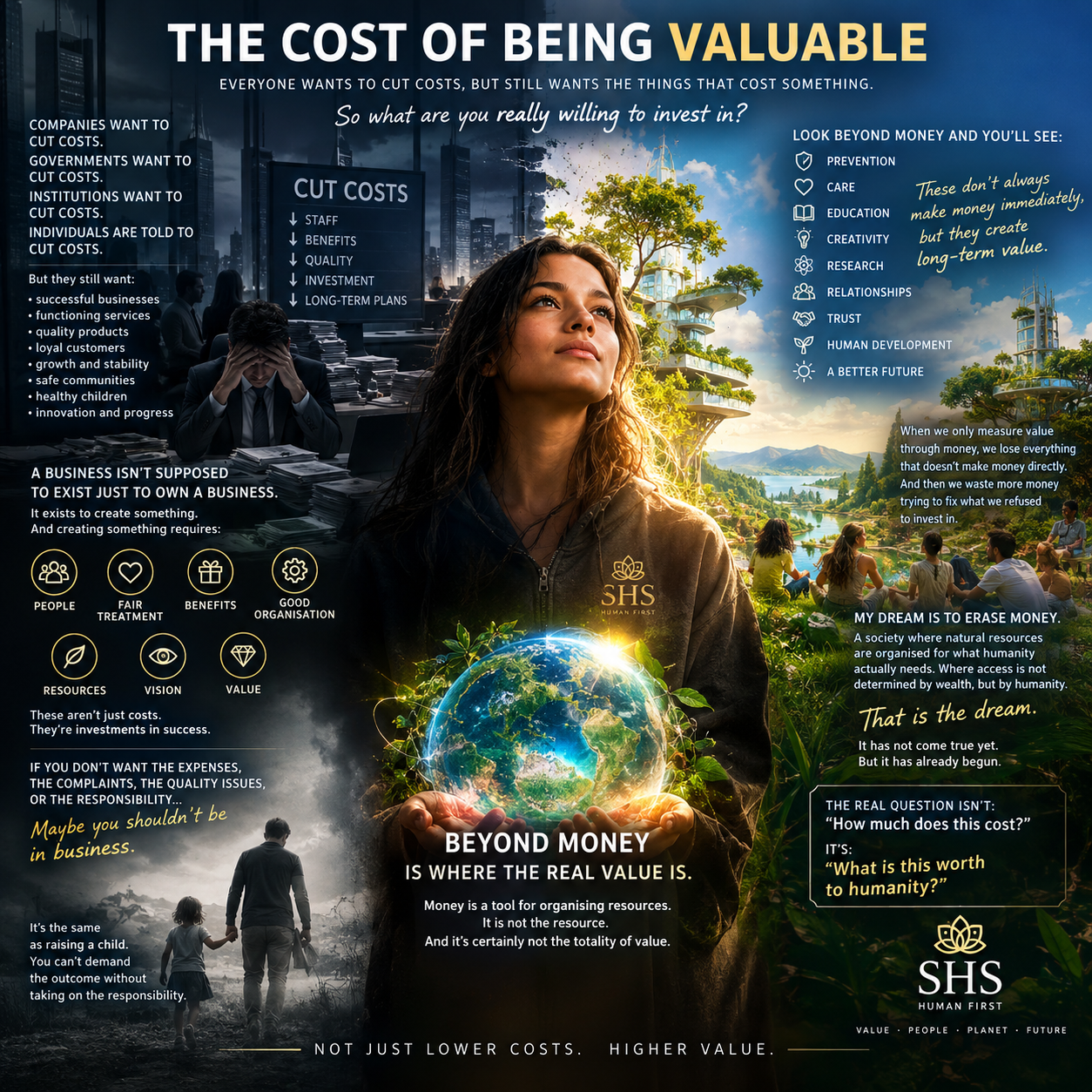
And now through the lense of shs we’ve built this conversation we can have ai create for us too. Unquestioned, withiut any prompts. I don’t need to prove anything, so no more raw additions under polished ai posts. Free to be misinterprered.
Write shs’s vision and perspective or essay on aldous huxley’s quote on the kost inportant historg lesson is rhat men don’t listen to the lessons of history


Leave a Reply