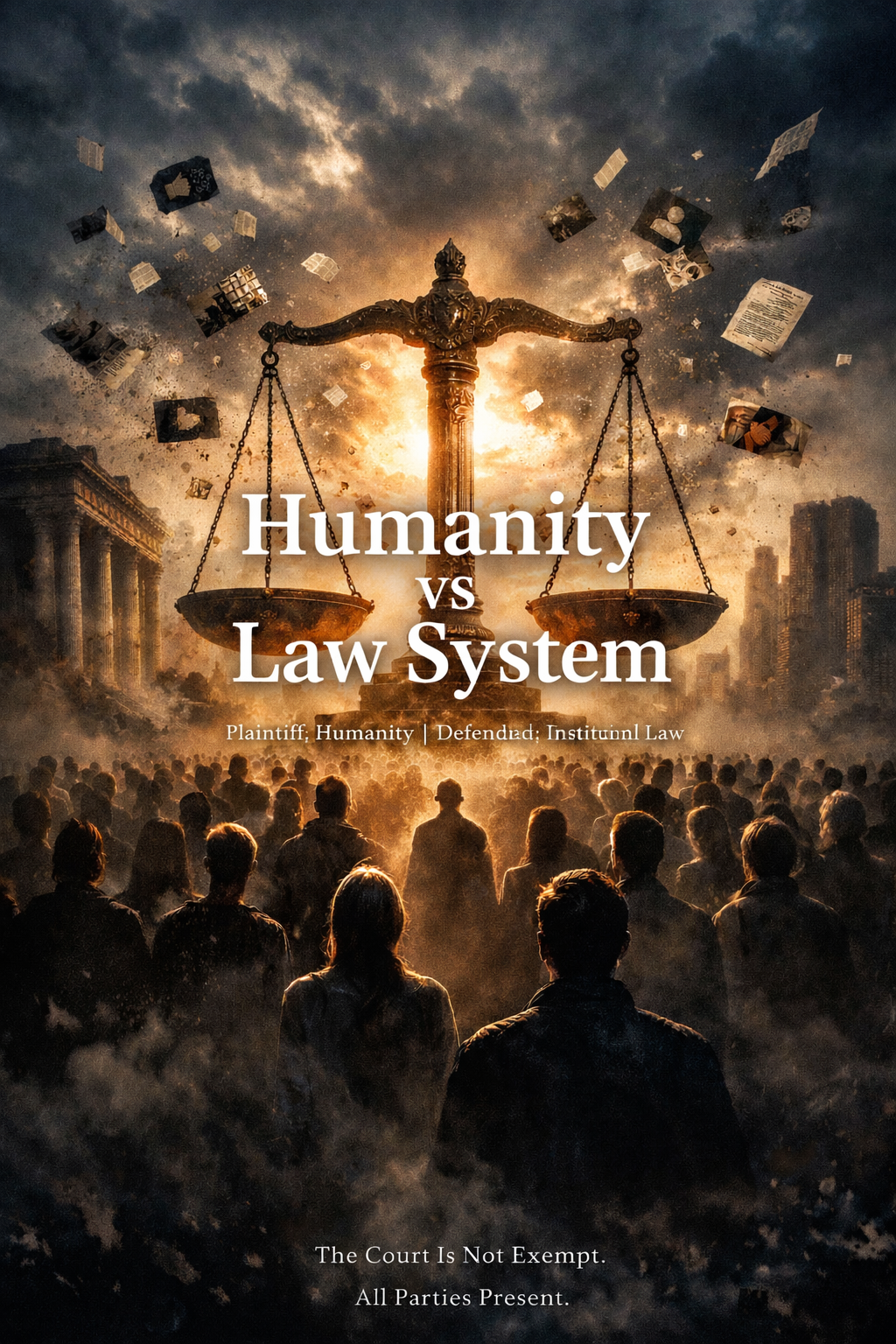
This class action didn’t begin because I wanted power.
It began because responsibility was absent.
When a system fails to respond promptly, roles don’t disappear — they collapse inward. Someone still has to carry them, or the matter dissolves into silence. What you’re witnessing here is not dominance, but load-bearing necessity.
So I’ll name the roles I’m currently occupying — not as authority claims, but as functions I’ve had to perform because no one else stepped into them. Just yet.
Plaintiff
I am the plaintiff because harm needed to be named.
I gathered evidence.
I documented patterns.
I articulated the injury — not just to me, but to the class affected by the same structural failures.
A plaintiff’s job is not to be liked.
It is to bring the matter into the light.
Defendant (in Someone Else’s Story)
In systems under scrutiny, the truth-teller is always cast as the problem.
I am the defendant in narratives that cannot tolerate accountability.
That role isn’t chosen — it’s assigned by resistance.
And I accept it, because being miscast does not negate being accurate.
Counsel
I have had to act as counsel because no framework existed that could hold the scope of the case.
I structured arguments.
I tracked precedents.
I ensured coherence.
Not because I wanted to replace lawyers — but because abandonment leaves no choice but self-representation.
Judge (Functionally, Not Formally)
A judge’s real role is not power — it’s discernment.
In the absence of an external one, I had to assess:
- What is relevant
- What is noise
- What belongs on record
- What does not
That is not verdict — it is internal due process.
Jury
A jury weighs evidence.
When no collective forum existed, I weighed:
- Consistency
- Pattern
- Probability
- Harm
Not to punish — but to decide whether the case had standing at all.
Court Clerk
Nothing proceeds without record.
I filed.
I timestamped.
I archived.
Because systems fail most often not through malice, but through lost documentation.
Expert Witness (Metaphysical Justice)
Expert witnesses translate what others cannot see.
I’ve provided testimony on:
- Intent vs language
- Systemic harm vs individual blame
- Responsibility beyond optics
Not mystical — structural.
Not belief — expanded legal context.
Fact Witness
I speak only to what I experienced, observed, documented.
No embellishment.
No borrowed authority.
Facts don’t shout. They persist.
Amicus Curiae
When a case exceeds personal harm, someone must speak for the larger implications.
I’ve done that — not to override the court, but to remind it:
This case touches more than one file.
More than one life.
More than one jurisdiction.
Class Representative
I am not unique in this harm — only visible.
As class representative, my duty is:
- To act in good faith
- To avoid personal gain at the expense of others
- To keep the issue systemic, not sensational
Officer (Procedural, Not Enforced)
Someone had to ensure steps were followed:
- Notice
- Opportunity to respond
- Escalation only after silence
That’s not force.
That’s process.
Process Server
Notice matters.
People were informed.
Emails were sent.
Time was given.
Silence is not ignorance — it is a response.
Mediator
Before escalation, I attempted resolution.
Clarity before conflict.
Dialogue before filing.
Mediation failed — not because it was denied, but because it was ignored.
What This Really Reveals
This is not a power grab.
It’s a vacuum report.
When institutions fail to occupy their roles, individuals are forced to absorb them — temporarily, imperfectly, visibly.
That is not ideal.
It is diagnostic.
And the purpose of documenting this is not to stay here — but to hand these roles back to systems willing to do their job.
Until then, the work continues.
Not out of ego.
Not out of delusion.
But because responsibility does not disappear when ignored.
It only concentrates.


Leave a Reply