
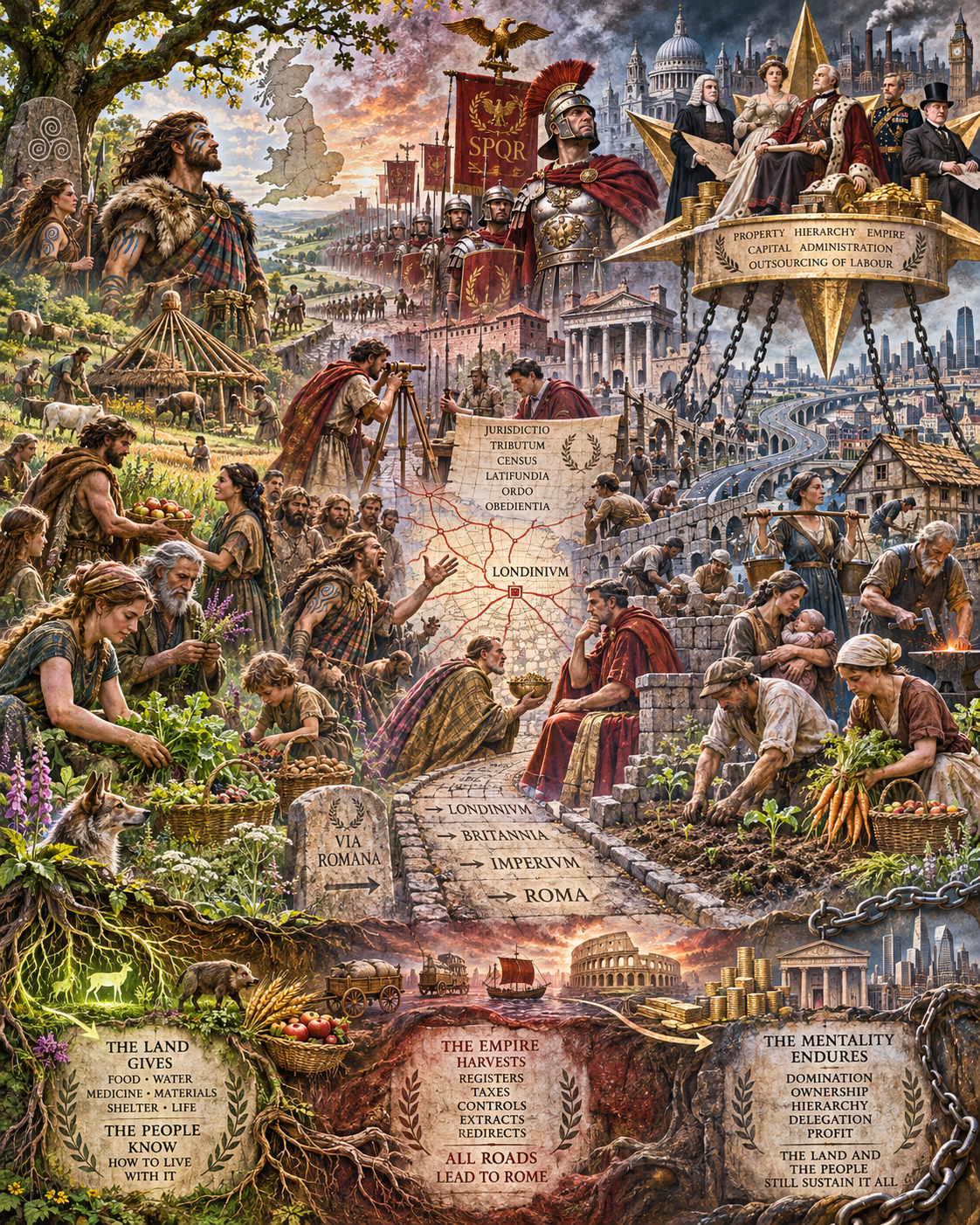
I behaved like the romans sisnce last year, and somehow the British refused it for the first time ever. They absorbed it to do their own colonisations, but could not recognise the same ways from their own acclaimed origins. Dissapointing.. as this around it would have suited them better and no blood was spilt.
The british were taught to glamorise, idolise and be inspired by the roman’s ways. When really they just brought other people’s resources to them and used the skills of those of the land, all they brought was basically new management. A management that abuses of multiple area codes’ resources, which allows the ability for easy access. But imagine if it had learned respectful relationships instead of conquering what wasn’t theirs?!
When political power disguises itself as civilisational superiority, while depending on the survival capabilities of the very people it considers inferior. To this day…
SNW | SHS – HUMAN FIRST
There is something particularly interesting about investigating Britain before the Romans and subsequently investigating what Britain became.
A land that was once subjected to the ambitions of an empire eventually became the geographical headquarters of one of the largest empires in human history.
But what exactly did Britain inherit from Rome?
Was it civilisation?
Was it knowledge?
Was it development?
Or was it, among other things, the mentality through which an individual could believe themselves entitled to claim jurisdiction over another individual’s existence, land, resources and capabilities?
Because there is an enormous difference between learning how to live with the world and learning how to make the world live for you.
The distinction between inhabiting the world and exercising authority over it is developed further in The Distinction Between Survival and Political Power and 4,400 Years of Glorified Political Incompetence. The wider philosophical proposition for conscious agency is explored in Homo Agen.
And perhaps one of Britain’s greatest historical mistakes was not that it was colonised, but that it subsequently came to admire and reproduce aspects of the mentality through which it had been colonised.
BEFORE ROME: THE DIFFERENCE BETWEEN INHABITING AND CONQUERING
Humanity’s journey began in Africa, from which successive populations migrated across the world, establishing relationships with different environments and developing ways of surviving within them.
The human beings who eventually inhabited Britain had developed knowledge of the land through generations of experience.
They learned to hunt, gather, cultivate, construct shelters, recognise seasonal changes, work with metals, preserve food, raise animals and exchange resources.
Their survival depended on their relationship with existence.
They did not require Roman recognition for the knowledge they had accumulated to be valuable.
They did not require Roman jurisdiction for the land to be cultivable.
They did not require Roman administration for their children to be born, their crops to grow or their communities to exist.
Before Roman occupation, Britain already possessed agricultural communities, political territories, craftsmanship, religious practices, international trade and systems of exchange.
Of course, these populations were not universally peaceful. Territorial conflicts, political ambitions, warfare and inequalities existed before the Romans arrived.
But there is still an important distinction to investigate between a civilisation whose primary concern is establishing and sustaining its existence and an imperial administration whose expansion depends on acquiring authority over the existence established by others.
One develops a relationship with the land.
The other develops a relationship with the power to command those living on it.
Inhabiting existence and claiming jurisdiction over existence are two entirely different activities.
ROME DID NOT DISCOVER BRITAIN’S RESOURCES. IT DISCOVERED AN OPPORTUNITY TO CONTROL THEM.
When Julius Caesar arrived in Britain in 55 and 54 BC, he encountered human beings who already possessed knowledge, resources, political relationships and established ways of living.
Nearly a century later, in AD 43, the Roman conquest under Emperor Claudius began establishing Britain as an imperial province.
But the Romans did not bring fertility to the soil.
They did not create the mineral deposits.
They did not invent the agricultural possibilities of the British landscape.
They did not create the human capabilities of those already inhabiting it.
What they introduced was a new, substantially more centralised political and administrative structure through which those resources and capabilities could be organised, taxed, redirected and exploited for imperial purposes.
They also introduced engineering techniques, infrastructure, institutions and expanded commercial networks.
But we must distinguish the value of those contributions from the supposed necessity of conquest.
Could engineering knowledge not have been exchanged?
Could roads not have been constructed through cooperation?
Could agricultural knowledge not have travelled between communities without the submission of either?
Could trade not have expanded without one party declaring itself politically superior to the other?
Why did the exchange of capabilities require the acquisition of jurisdiction?
What Rome brought was not exclusively civilisation. It brought new management over civilisation that already existed.
And management should never be confused with the entirety of what is being managed.
THE POLITICAL POWER OF ROME AND THE SURVIVAL POWER OF THE COMMON PEOPLE
Who cultivated the land that fed the Roman administration?
Who extracted the minerals?
Who constructed the buildings?
Who maintained the roads?
Who manufactured the tools?
Who raised the animals?
Who transported the goods?
Who prepared the food?
Who performed the physical activities without which the empire could not have continued to exist?
The common people.
Including those subjected to enslavement.
The political authority could issue instructions, establish taxes, mobilise armies, distribute resources and determine the conditions under which others lived.
But an instruction is not food.
A declaration is not shelter.
A title is not agricultural knowledge.
A political office is not the ability to sustain a civilisation.
The Romans possessed military, engineering and administrative capabilities of their own. But their imperial power depended substantially on their ability to mobilise the productive capabilities of populations across multiple territories.
And this is where humanity began, and continues, to confuse two fundamentally different forms of power.
Political power: The ability to command, regulate and direct the activities of others.
Survival power: The knowledge and capabilities through which the necessities of existence are actually produced.
The first may organise the second.
But the first cannot sustainably exist without the second.
Yet throughout history, those possessing political power have frequently considered themselves superior to the people possessing the very capabilities upon which their existence depends.
How extraordinary is it to belittle those without whom your own way of living would become unsustainable?
WHEN THE COLONISER NEEDS THE COLONISED MORE THAN THE COLONISED NEEDS THE COLONISER
There is a contradiction at the foundation of many imperial systems.
The coloniser arrives under the assumption of superiority, yet immediately begins acquiring the resources, knowledge, labour and capabilities of those supposedly inferior to them.
If the people are so inferior, why do you need their land?
Why do you need their labour?
Why do you need their agricultural knowledge?
Why do you need their minerals?
Why do you need their craftsmanship?
Why do you need their bodies to sustain your economy?
Why does your grandiosity require the appropriation of what they possess?
The coloniser’s apparent superiority can be constructed through the accumulation of capabilities that do not individually belong to the coloniser.
And once those capabilities have been assembled under one political authority, the authority presents the resulting abundance as evidence of its own greatness.
The contributions of thousands become the achievements of one emperor.
The resources of numerous territories become the wealth of one empire.
The knowledge of multiple populations becomes the sophistication of one civilisation.
The labour of millions becomes the grandeur of a palace.
And humanity is invited to admire the palace rather than investigate the relationships through which it became possible.
The empire becomes recognised for possessing what others know how to produce.
MANUFACTURING POLITICAL SUBMISSION THROUGH EXISTING HUMAN CONFLICTS
One of the most revealing episodes in Caesar’s encounters with Britain concerns Cassivellaunus and Mandubracius.
According to Caesar’s own account, Mandubracius sought Roman protection after his father had been killed by Cassivellaunus.
Rome was therefore presented with an opportunity to intervene in an existing conflict between British populations.
Protection became a means of establishing political influence.
An internal dispute became an opportunity for external jurisdiction.
Caesar restored Mandubracius to authority while demanding submission, hostages and tribute from British communities.
The Romans did not invent the disagreements between these people.
But they understood how to make those disagreements useful to their own political ambitions.
And how often has that mechanism been repeated throughout subsequent colonial history?
Identify existing disagreements.
Offer protection to one party.
Acquire influence through that protection.
Make the continuation of that protection dependent on political allegiance.
Gradually transform an external relationship into an internal authority.
What could have been an opportunity to facilitate reconciliation instead becomes an opportunity to acquire power.
Because there is a difference between helping two people resolve their disagreement and using their disagreement to position yourself above both of them.
One is interested in resolving the problem.
The other is interested in the opportunities presented by the problem remaining unresolved or becoming politically useful.
Protection should not be a transaction through which another person’s sovereignty becomes the price of their safety.
FROM THE COLONISED TO THE COLONISER
Roman imperial administration remained in Britain for approximately four centuries, from AD 43 until the beginning of the fifth century.
Throughout that period, people from across the Roman Empire settled in Britain, established families, participated in commerce and interacted with existing British populations.
Local elites also adopted Roman cultural practices, political structures, architecture and expressions of social status.
Romanisation was not simply a matter of Romans replacing Britons.
Many Britons themselves participated in the construction of Roman Britain.
And this presents another interesting dimension of colonisation.
The most enduring consequence of an occupation may not be the physical presence of the occupier.
It may be the establishment of the occupier’s values as the aspirations of the occupied.
When the people who have been conquered begin to associate the conqueror’s lifestyle with sophistication, status and advancement, the conqueror’s influence can continue beyond the presence of its soldiers.
The Roman imperial government eventually disappeared from Britain. Subsequent migrations, kingdoms, religious institutions, invasions and political transformations produced a substantially different society.
There is no uninterrupted administrative line from Roman Britannia to the British Empire.
Nevertheless, centuries later, British imperial elites deliberately returned to the study of Rome.
Roman history became part of elite education.
Roman architecture became an expression of institutional grandeur.
Roman imperial administration became a subject of investigation for those governing Britain’s overseas territories.
Britain looked towards Rome not only as a civilisation that had once conquered it, but also as a historical reference through which it could understand its own imperial ambitions.
And here is the historical irony.
The descendants of populations once governed by an empire eventually studied that empire to better understand how to govern other populations.
Rome did not single-handedly create the British Empire. But Britain consciously incorporated aspects of Roman imperial thinking into the intellectual development of its own.
What if Britain had instead directed that same intellectual attention towards discovering how to establish sustainable relationships with people who were different from itself?
LONDON: FROM A ROMAN IMPERIAL PORT TO A CENTRE OF ANOTHER EMPIRE
Londinium was established by the Romans around AD 47.
Its geographical position along the Thames made it particularly useful for commerce, military supply and administration.
Resources arrived from different regions of the empire.
Goods were distributed through networks of roads, rivers and maritime routes.
People from different backgrounds converged within the city.
London became a place through which the productive capabilities of geographically dispersed populations could be accessed.
Centuries later, following numerous transformations, London would again become a centre from which extensive international networks of resources, commerce, finance and political authority were managed.
The parallels are worth investigating.
Because what makes the headquarters of an empire appear so wealthy?
Is it that the headquarters possesses every resource necessary for its existence?
Or is it that the headquarters possesses access to the resources of numerous other territories?
The concentration of wealth in one geographical location does not necessarily demonstrate that the location produced that wealth independently.
It may demonstrate the extent of its access to what is produced elsewhere.
Imagine a city possessing access to the agricultural produce, minerals, textiles, craftsmanship, knowledge and human labour of multiple continents.
Of course that city will appear extraordinarily sophisticated.
But what happens when the relationships through which it acquired that abundance are examined?
Who produced what?
Who received what?
Who determined the conditions of exchange?
Who was permitted to refuse?
Who retained authority over their own resources?
Who was made to surrender it?
The sophistication of the headquarters should never conceal the contributions of the territories sustaining it.
THE EAST INDIA COMPANY: WHEN TRADE BECOMES JURISDICTION
The British East India Company provides a particularly revealing example of the transition from establishing relationships with other civilisations to establishing political authority over them.
It initially established commercial relationships and trading posts in India.
By the eighteenth century, military victories and political agreements had enabled the company to acquire authority over territories and the collection of revenues.
A commercial enterprise became a territorial power.
Instead of exclusively exchanging resources with another civilisation, it acquired the ability to govern aspects of that civilisation’s economic existence.
But the agricultural knowledge, craftsmanship, textile production and human capabilities of India were not invented by the East India Company.
They were among the reasons India was commercially valuable in the first place.
The company acquired access, influence and eventually control over existing productive capabilities.
It is the difference between establishing a relationship with someone who possesses something valuable and acquiring the power to determine what happens to everything they possess.
Why did commerce need to become government?
Why did accessing another civilisation’s resources require authority over its people?
Why was learning from another civilisation considered less desirable than possessing the power to command it?
And what might humanity have become had its commercial relationships remained relationships of reciprocal contribution rather than instruments of political acquisition?
THE MODERN ARISTOCRAT: CAPABLE OF DELEGATING, BUT CAPABLE OF WHAT ELSE?
The same distinction between political power and survival power continues to manifest itself in modern economic hierarchies.
We have become accustomed to associating financial wealth with individual capability.
But how much of that capability actually belongs to the individual?
And how much belongs to the people whose capabilities the individual can afford to access?
Someone else cooks.
Someone else cleans.
Someone else repairs.
Someone else drives.
Someone else constructs.
Someone else cultivates.
Someone else manages their finances.
Someone else maintains their property.
Someone else cares for their children.
Someone else solves their practical problems.
And the person capable of financially commissioning all these activities is considered more accomplished than the people capable of actually performing them.
Delegation is a capability. Organisation is a capability. Management is a capability.
But none of them should be mistaken for possessing all the capabilities being delegated, organised or managed.
And there comes a point where delegation can cease to be a convenience and become a dependency.
If you have spent decades paying others to perform the activities through which your existence is sustained, how many of those activities could you perform if the money were suddenly unavailable?
What would remain of your practical independence?
What would remain of your ability to sustain yourself?
What would remain of your capacity to respond to unfamiliar circumstances without purchasing the intervention of another human being?
Perhaps some wealthy individuals do not simply use money because they can afford to.
Perhaps they have become dependent on the continued existence of money because it compensates for capabilities they have not developed, exercised or maintained.
Meanwhile, the common person who has spent years cooking, cleaning, repairing, adapting, budgeting, caring and finding solutions through necessity may possess a far broader range of practical survival capabilities.
Yet society describes one as privileged and the other as disadvantaged.
Financially, that may be true.
But what about their respective levels of practical agency?
One can take care of themselves. The other may have mastered the art of delegating like a star.
Who, then, is more dependent on the system remaining exactly as it is?
REMOVE MONEY AND INVESTIGATE WHAT REMAINS
Imagine temporarily removing money from the equation.
Not removing humanity’s knowledge.
Not removing the land.
Not removing its resources.
Not removing the tools.
Not removing our ability to communicate, cooperate or exchange capabilities.
Simply removing money as the mechanism through which access to those capabilities is obtained.
The farmer still knows how to cultivate.
The carpenter still knows how to construct.
The nurse still possesses knowledge of care.
The mechanic still understands machinery.
The tailor still knows how to manufacture clothing.
The cook still knows how to prepare food.
The engineer still understands engineering.
The person who understands effective coordination still possesses that knowledge.
But the person whose principal source of influence is accumulated financial wealth can no longer use that wealth to command access to everyone else’s capabilities.
What do they personally bring to the relationship?
This is not to suggest that every wealthy individual lacks practical knowledge or that every financially disadvantaged individual possesses it.
It is to distinguish financial access from embodied human capability.
Money can purchase the application of knowledge.
It cannot automatically make that knowledge yours.
Money can purchase someone’s time.
It cannot make their capabilities an inherent part of your existence.
Money can purchase services.
It cannot independently perform them.
Money is not survival power. It is an instrument through which access to survival power can be acquired.
And perhaps that explains why those who depend most heavily on monetary systems can have such a strong interest in ensuring that everyone else remains dependent on them too.
THE ILLUSION OF CLAIMING JURISDICTION OVER EXISTENCE
There is something metaphysically peculiar about the human desire to claim jurisdiction over land.
The land exists.
The river exists.
The soil exists.
The trees exist.
The minerals exist.
Human beings arrive and establish relationships with these existing realities.
Then another human being arrives and declares that these relationships are now subject to their authority.
What has physically changed in the land because someone has declared it theirs?
The declaration itself does not alter the biological composition of the soil.
It does not improve the fertility of the earth.
It does not establish a relationship between the individual claiming authority and the natural processes sustaining the land.
Jurisdiction is a human-created layer of organisation imposed upon existing physical reality.
That layer can have very real consequences when collectively recognised and enforced. It can organise responsibilities, protect people, facilitate cooperation and preserve resources.
But it can equally be used to restrict access, impose submission and exploit the relationships others have developed with existence.
The distinction lies in its purpose.
Are we organising our responsibilities towards existence?
Or are we organising our entitlement to control the existence of others?
There is a considerable difference between taking responsibility for a territory and believing that a territory, together with its inhabitants, exists for your benefit.
Authority should represent an extension of responsibility, not an expansion of entitlement.
WHAT IF ROME HAD LEARNED HOW TO ESTABLISH RELATIONSHIPS INSTEAD OF EMPIRES?
Imagine if the Romans had travelled across Europe, Africa and Asia with the intention of establishing reciprocal relationships with the populations they encountered.
Imagine if they had arrived in Britain asking:
What do you know that we do not?
What have you learned from living here?
What can we contribute to your development?
What can you teach us?
How can we improve our respective ways of living through the exchange of our capabilities?
Imagine if Roman engineering had been exchanged for local agricultural knowledge.
If medical knowledge had circulated without political submission.
If roads had been constructed to facilitate mutually beneficial relationships rather than also serving military expansion.
If populations had exchanged knowledge without being required to abandon their identities.
If prosperity had been pursued through the development of everyone participating in its creation rather than through the disproportionate accumulation of resources at an imperial centre.
Would Rome have needed an empire to become prosperous?
Would Britain have needed colonies to develop international relationships?
Would humanity have needed to enslave, displace and politically subordinate millions of people to access knowledge and resources that could have been shared?
The alternative to isolation was never necessarily conquest.
The alternative to conquest was, and remains, relationship.
THE REAL FAILURE OF COLONIAL CIVILISATION
The greatest failure of colonial thinking is not simply its desire to acquire resources.
Every human being requires resources.
Its failure is the inability, or unwillingness, to develop relationships through which resources and capabilities can be shared without requiring the submission of those who possess them.
It confuses accessibility with ownership.
It confuses management with creation.
It confuses obedience with cooperation.
It confuses the ability to command with the ability to perform.
It confuses wealth with independence.
It confuses political expansion with human evolution.
And perhaps most importantly, it confuses the accumulation of other people’s capabilities with the development of its own.
What would civilisation look like if, instead of accumulating authority over increasingly large populations, it concentrated on increasing the capabilities available to each individual within those populations?
If leadership were measured by how much less dependent people became on their leaders?
If education were measured by the independence it facilitated?
If management were measured by the development of those whose activities it coordinated?
If wealth were measured by what humanity knew how to sustain, rather than by how much of humanity’s production an individual could financially command?
HOMO AGEN: THE EVOLUTION BEYOND THE COLONISER’S MENTALITY
This is where the distinction between Homo Sapiens and Homo Agen becomes particularly relevant.
Homo Agen does not require the diminution of another human being to establish its own greatness.
It does not need another person’s submission to demonstrate its strength.
It does not confuse controlling access to knowledge with possessing knowledge.
It does not regard dependence on other people’s capabilities as a substitute for the development of its own.
It recognises that encountering someone different is an opportunity for expansion.
Another person’s cultural knowledge is an opportunity to learn.
Another person’s capability is an opportunity for cooperation.
Another person’s relationship with existence is an opportunity to expand our understanding of existence itself.
The objective is not to eliminate interdependence. Humanity will always benefit from the contributions of others.
The objective is to transform imposed dependency into conscious, reciprocal interdependence.
To contribute without requiring ownership.
To receive without demanding submission.
To manage without appropriating recognition.
To lead without manufacturing helplessness.
To develop without suppressing the development of others.
To establish relationships with the different without needing to make the different subordinate to ourselves.
This is the difference between expanding an empire and expanding humanity.
One expands the geographical reach of its authority.
The other expands the capabilities of its people.
ALL ROADS LEAD TO ROME. BUT WHERE SHOULD THE NEXT ROAD LEAD?
Britain inherited numerous valuable contributions from Roman civilisation.
But humanity must develop the capacity to distinguish the knowledge worth preserving from the mentality worth abandoning.
We can preserve engineering without preserving imperialism.
We can preserve administration without preserving subordination.
We can preserve international trade without preserving extraction.
We can preserve management without preserving the belittlement of those being managed.
We can preserve collective organisation without depriving individuals of sovereignty.
We can establish global relationships without requiring global jurisdiction.
The tragedy is not that civilisations encountered one another.
The tragedy is that so many of those encounters became opportunities to determine who would command whom, rather than opportunities to discover how much further humanity could develop through one another.
Imagine how much more knowledge humanity would possess today if the resources invested in conquest had instead been invested in learning from the conquered.
Imagine how many cultural capabilities would have been preserved.
Imagine how many relationships could have been cultivated.
Imagine how different our understanding of wealth, leadership, strength and civilisation would be.
Perhaps the next great civilisational achievement will not belong to the society capable of conquering the most territories.
Perhaps it will belong to the society capable of establishing relationships with the greatest diversity of human beings without requiring a single one of them to surrender their humanity, identity or sovereignty.
The greatness of a civilisation should not be measured by how many people it can make dependent upon itself, but by how many people it can empower to exist without dependency upon it.
We have spent centuries investigating how to govern the different.
It is about time we learned how to live, develop and evolve with the different.
Not superpowers by acquisition.
Superhumans by contribution.
SNW | SHS – HUMAN FIRST
….
Extrapulate from this piece of convo from the other chat, how britain became what it was thanks to the Romans, as it taught them how to colonise while disregarding what mattered like learning to make relationships with the “different”, creating political submissions while disrupting other people’s lands, prioritise own self of grandiosity while belittling the natural gifts of those who lived the land before them. Oh while still abusing of those gifts as they mattered to the sustainability of civilisations. All they had was political power. The common people had the actual survival power, just like now. The rich offload everything, not cause they can afford it, but they depend on money existing cause they can’t actually do what they haven’t done for so long, if money was to be stripped off. The common can take care of self, the rich can delegate like a star:
Well, that’s the thing though, because the, those who were there beforehand were more agricultural civilizations, not, not warriors type of settlers. So it makes sense that those who came before might have had disputes but none came with the pure purpose of conquering and colonizing. They colonized by default because there was barren land and they conquered. But they were more like hunter, hunter. It’s towards animals and gatherers. It’s towards vegetables. So it was a completely different perspective of life. Though that’s the thing, they were still able to defend themselves because we know that Cassivellaunus led the British resistance against Caesar. So what was their ways of doing and being? Do we know more about them? We understand that Mandubracius looked for Caesar’s protection, which I could look at it as Stockholm syndrome. And that they were other four kings governing territories in Kent. But how did they come about that? Like do we know more about that? Because if they were like families moving around, when you’re like moving around with your family, you don’t look at fighting because both families would die. And we’re looking at survival and the ways that you survive being one family meeting another family is by offering what you can give. And basically bartering. Tell me more about the evidence of violence, territorial conflict and warrior cultures. What’s that evidence about? Cause we could say that Caesar brought the mentality of the colonizer which then the British took on and then went on their own colonizing. And that makes me think of the sentence, all roads lead to Rome. Yes, like majority of the colonizing mentality came from Rome. We’ll spend some time at a later stage focusing on why Rome, like what is it in Rome that led to that? What is it about Rome and Italy that had people take on this approach towards life? But for now we’re focusing on South Britain and especially London where we see how the colonization that then Britain went on to achieve was highly influenced by mixing and interbreeding with the Romans and taking on the Romans’ mentality instead of holding on to their own ways. And I also want to understand how long were the Romans placed there or did they ever leave or they just merged with the locals? And then just became part of basically Roman Empire. And whatever came after that came from the foundation of the Romans because the Romans basically removed the type of lifestyle that was there prior to them and brought their own ways of dealing with things and life Like where did the quest and desire for submission came from? Like where did it start, you know? Because that is a specific type of energy that wasn’t present before. Because majority of people were looking for places to establish and call home. Was it the Byzantines or Constantinople I think maybe, like one of those and Syrians, one of those that I think inspired the Romans, but I’m not sure. I studied it in high school a long time ago. So like pieces are like coming together. But the full spectrum, the full picture is quite blurred. Like where did the mentality of claiming jurisdiction over land? Because that is like a, that is the illusion because inhabiting a land is inhabiting what already is. But claiming jurisdiction over land, it’s something that doesn’t exist tangibly. That only exists in the, in the mentality and perspectives of people imposed over the people that are inhabiting a land. So it’s like a second layer towards it But so now you’re saying the hunter-gatherers from continental Europe went to Britain in, well 9700 BC onwards. But then before you told me that 900,000 years ago descendants of earlier human migrations reached Britain through Europe. So which one is it?



Leave a Reply